




By Rob Mitchell MP – Member for McEwen
“HE is all of them. And he is one of us.”
These immortal words were delivered on the 11th November 1993 by then Prime Minister the Hon. Paul Keating MP.
After the Keating eulogy, the Unknown Australian Soldier was entombed in the Hall of Memory at the Australian War Memorial in a moving ceremony laden with symbolism.
He is buried in a Tasmanian blackwood coffin with a slouch hat and a sprig of wattle on top. The soil from Mouquet Farm in Pozières, which Charles Bean described as being more deeply sown with Australian sacrifice than any other place on earth, was sprinkled onto the coffin by World War I veteran, Robert Comb who served on the Western Front.
His unscripted words just as the lone bugler played the Last Post, “you’re home mate,” symbolised the importance of this event. From his trip from Australia to the fields of Villers Bretenoux, to his final resting place at the war memorial, the Tomb of the Unknown Soldier is not a glorification of war, it is a symbol of a generation lost.
A surrogate of the battlefields they could never visit to see their mates and remember them. So as we gather at the 11th hour of the 11th day of the 11th month, we mark the anniversary of the 1918 Armistice that ended World War I, significant because it is when fighting ceased.
Millions had lost their lives during the war, among them more than 60,000 Australian service personnel – about 20% of those who served.
The numbers of those injured physically, mentally or both were greater. During the war and after its end, survivors returned home to a country both grateful for their service and traumatised by the war’s enormous cost.
When we reflect on those who never came home, we lost more than just the generation of young men, we think about all the things they could have achieved but never had the opportunity to. A generation of men who could have been doctors, lawyers, scientists, farmers, truck drivers, inventors or engineers.
As the Director the War Memorial put it, somewhere in those graves of 60,000 Australians (of which 35% are unknown) could have been the person who found cures for cancers and other diseases. We will never know. Not only did war rob us of that generation, but it robbed us of the generations of their families that would have followed.
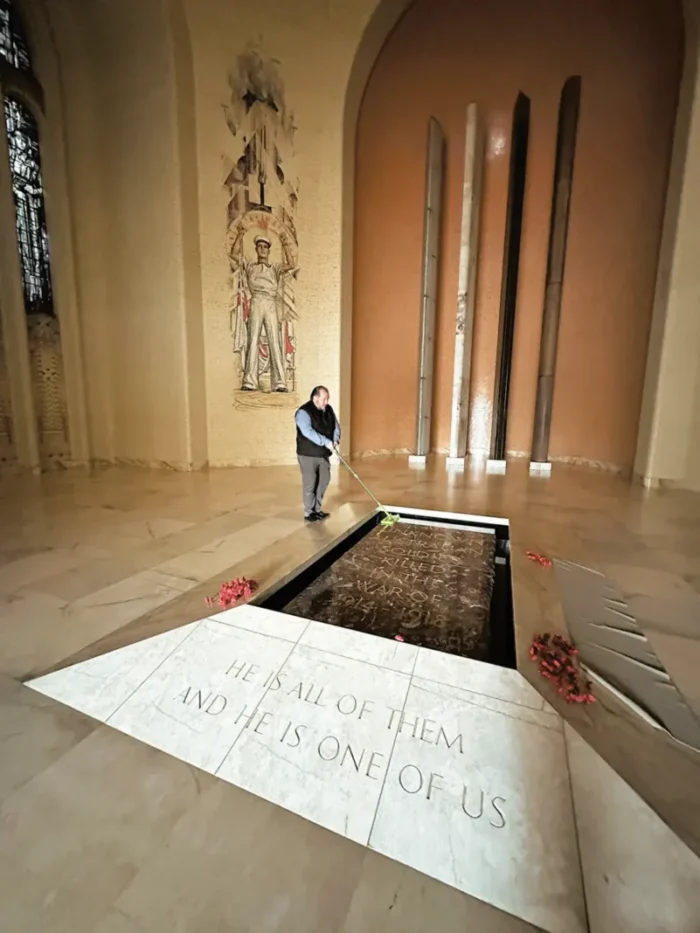
I reflected on this deeply when I had the honour to pay my respects and spend a morning recently cleaning the tomb of the unknown soldier on a crisp Canberra morning.
The first national service to commemorate Remembrance Day was held in Canberra on 10 November 1946. It honoured those who gave their lives in the wars of 1914–1918 and 1939–1945.
In 1950, after a campaign by the Returned Sailors’, Soldiers’ and Airmen’s Imperial League to include a minute silence, Remembrance Day has been held on 11 November ever since. In 1997, our Governor-General, Sir William Deane, strengthened the meaning of Remembrance Day. Deane issued a proclamation urging Australians to “… observe, unless impracticable, one minute’s silence at 11am on Remembrance Day each year to remember the sacrifice of those who died or otherwise suffered in Australia’s cause in wars and warlike conflicts.”
Now on Remembrance Day, we commemorate the loss of Australian lives from all wars, conflicts and peace operations. As we pause on Remembrance Day, our thoughts turn to war’s enormous cost and the toll it takes, not only on those who fall but on all who serve and their families.
Let’s not forget the final lines of Keating’s oration; “It is not too much to hope, therefore, that this Unknown Australian Soldier might continue to serve his country – he might enshrine a nation’s love of peace and remind us that in the sacrifice of the men and women whose names are recorded here there is faith enough for all of us.”
We will remember them.


