

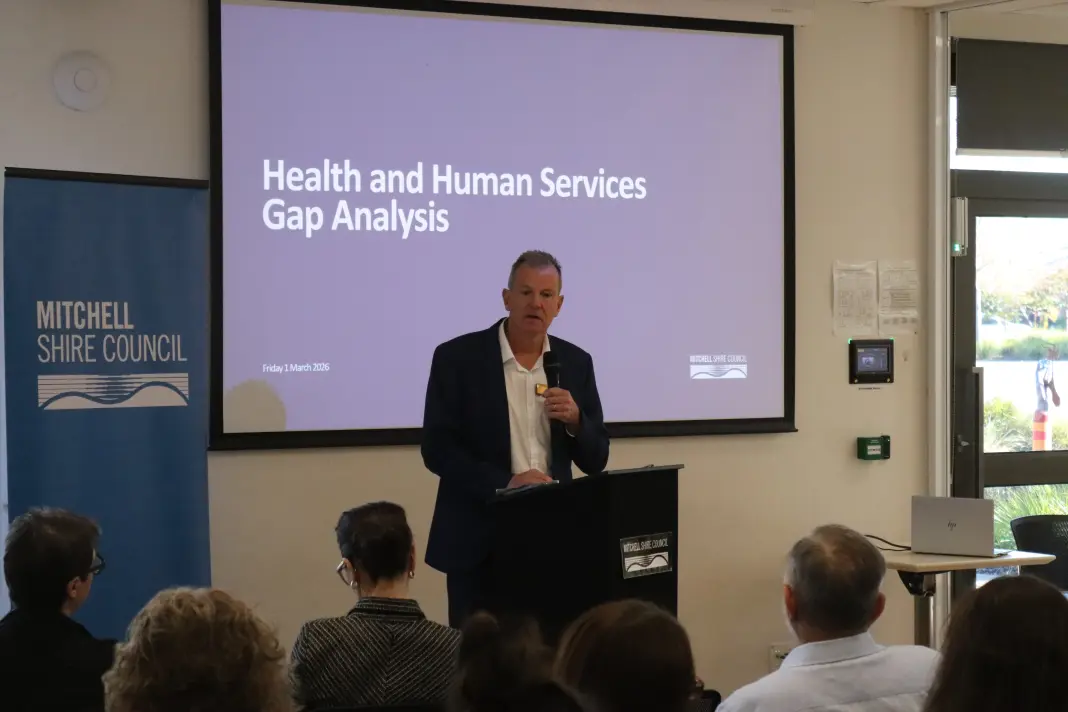



FACED with a population boom at the speed of a hypersonic rocket, and delivery of key services lagging far, far behind at a haphazard snail’s pace, Mitchell Shire is staring into an abyss of helplessness to meet residents’ rising demands unless governments come to the party with a funding splurge to boost services, a damning report has warned.
The Health and Human Services Gap Analysis Report, prepared for Mitchell Shire Council by Craig Kenny OAM of 42 Squared Consulting, paints a humbling scenario with little cheer for an anticipated 245 per cent rise in population by 2046 as services fail to keep pace with rising demand.
The report, launched at Beveridge on Friday last week, warns Victoria risks repeating and worsening long-recognised service gaps in outer growth areas as Mitchell, the state’s fastest-growing municipality, prepares to more than triple in size, with resident numbers rising to more than 221,000 by 2046 compared with 64,175 in 2025 – the highest growth rate of any local government area in Victoria.
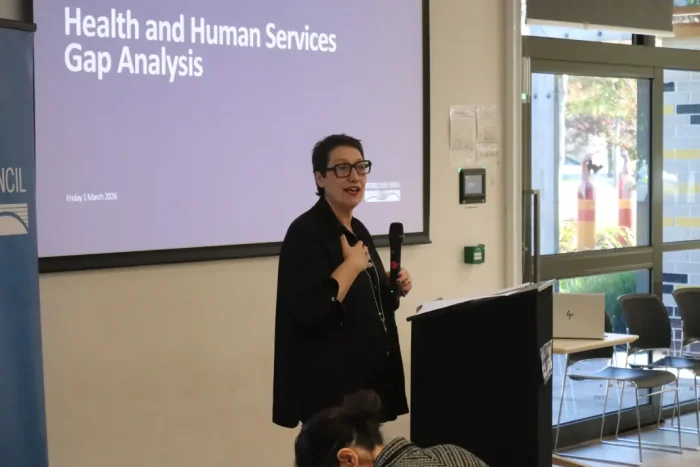
The report puts the spotlight on widening gaps in housing and services and finds while Victoria’s planning framework effectively guarantees land supply and housing delivery, health infrastructure and services are often planned after development has already started.
The report says Mitchell Shire is at a crossroads. Its growth trajectory is unmatched, yet its service network and supporting infrastructure lags dangerously behind.
It warns that without decisive, coordinated intervention from all levels of government, the shire risks embedding long-term disadvantage and escalating costs for communities and governments alike.

Mitchell Shire Mayor John Dougall is rightly worried about the worsening trend. The report suggests Victoria risked repeating patterns identified in earlier growth areas, where housing development arrived years before essential services. Mitchell’s growth trajectory suggests it may be repeating that model – only at three times the scale, Cr Dougall said.
“It’s unprecedented growth without guarantees, and our community is already feeling the impact. But unlike some growth areas, Mitchell is not starting from a strong service base. Residents are already travelling long distances for care and struggling to access basic health services such as GPs,” he said.
“If service lag continues, pressure will not remain just in Mitchell – it will show up in emergency departments across Melbourne’s north.”
In a worrying sign, the report identifies a 20-25 year vulnerability window, during which population growth surge is expected to outpace the shire’s financial capacity to independently close infrastructure and service gaps.
The report finds state and federal governments’ investment has not kept pace. It says business-as-usual planning and budget processes leave health and community services absent from precinct structure plans (PSP), resulting in residential housing estates delivered years before schools, clinics and community hubs.
In another warning, the report says service lags identified in earlier interface reports (2003–2017) appear to have deepened, and Mitchell is the only growth area council without a committed major hospital or post-secondary training facility. Allied health, mental health, housing support, and family services remain below metropolitan benchmarks.
Mitchell Shire Council has called for structural reform, including:
Mandated health and human service participation in growth planning
Early land reservation and capital commitment for health infrastructure
Growth-indexed funding tied to population projections
Greater transparency and place-based reporting of health service allocation
“This is not a short-term funding request,” Cr Dougall said. “It is a call to ensure Victoria’s growth model reflects what we already know – that communities function best when services grow with them, not years behind them.”
The report finds that Mitchell Shire is planning for unprecedented population growth, but unless state and federal governments identify emerging need and fund required infrastructure and services commensurate with growth, local planning alone will not deliver a resilient, liveable community.
The report says that In Beveridge and Wallan, population density and growth is much higher than planned for in PSPs and families are moving in years before promised schools, health, and community facilities, leaving new suburbs as “housing first, services later.”
It says Kilmore is poised for steady growth, but it faces its own infrastructure gaps and needs a boost in services. Seymour is emerging as a pivotal regional centre – a role it can only fulfil with sustained investment in community and health infrastructure.
The report finds that Mitchell Shire sits at the heart of Melbourne’s northern growth corridor, yet it remains the only growth area without good access to a major regional hospital, committed community hospital, or tertiary training facility in the current state investment pipeline. While neighbouring LGAs — Whittlesea, Hume, Melton, and Brimbank — are receiving billions in new health projects, Mitchell’s residents must continue relying on small rural hospitals in Kilmore and Seymour or travel long distances to Northern or Goulburn Valley hospitals.
The report’s key recommendation is to establish a Northern Growth Corridor Infrastructure Commission to fast-track planning and delivery of health, education, and community infrastructure in Mitchell’s PSP areas (and timetabling of delivery of regional infrastructure in the adjacent Cloverton Metropolitan Activity Centre).
Cr Dougall said the council has shared the report with local Members of Parliament and there is a clear willingness to engage with the findings, with Member for Kalkallo Ros Spence also attending the launch.
“These are not new issues – we’ve been advocating on them for years. What this report does is bring together the evidence to support that advocacy and clearly show what needs to change.
“Our focus now is on progressing the recommendations that will have the most immediate and meaningful impact, while continuing to advocate for broader reform.
“We know what the issues are – this is about making sure we act on them.”
Asked for comments on the report’s finding, the State Government did not provide a direct response. But a government spokesperson said the government is investing in growing suburbs to deliver better healthcare, better public transport and better services.
“We’re boosting services on the Seymour line and expanding local bus networks — so communities like Beveridge, Wallan and Kilmore stay connected and supported.”


