Home Blog Page 650

Ray Carroll’s ‘From the Boundary’: April 11, 2023

Playing the game

During the long years at the helm of football and cricket at Assumption College Kilmore, it was great to be invited to sports and services clubs across Victoria and the Riverina to speak at functions.

From Wagga Wagga in the north, Mornington in the south, Mortlake in the west and Thorpdale in the east – there may have been some three hundred such visits.

Invariably the hospitality was great and I did not require or accept payment. Some such invites have extended beyond college times and I really appreciate this.

Coaching notes

A contact, a long-time official in my old home town, asked for some coaching notes in the pre-season.

Though a bit dated I believe the following outcome is relevant to this day:

The real team player should strive to possess these attributes:

  1. Ability to read the play
  2. Take the ball cleanly – grab and play ball close to body
  3. Stamina and running power
  4. Balance – allied to recovery
  5. Control – dispose with either foot or hand to advantage
  6. Reflex action – quick reaction, prop, baulk, turn and so on
  7. Coolness: this is vital
  8. Competitive nature – fight and confidence

And remember:

  • The will to win is not as important as the will to prepare to win;
  • What your team-mate is doing for you is not nearly so important as what your are doing for him: that is what determines his attitude towards you;
  • Hard luck is composed of laziness, poor judgement and poor execution;
  • Failure is the path of least persistence;
  • A champion is a winner who has lost often;
  • Nobody is a failure till he quits trying;
  • The real champ is the player who keeps going when he can’t.

A bit hackneyed some of the latter points and doubtless you’ve heard them before but they bear repeating I feel.

As I said earlier, our game is most definitely faster now than ever before. AFL games often are contested these days at breath-taking speed. There is little room for error.

The star-versus-star confrontation of yesteryear is no longer such a feature of our code.

Lightning-quick exchanges are the order of the day. This trend has come to all ranks of football.

To survive at any level, teams cannot afford to rest on their laurels.

There has to be constant effort to ensure that speed is accentuated, skills enhanced. Because of the frenzied nature of modern-era football, motivation now plays an increasingly vital role.

There is basically no shift in ability level from last week to this week to next week but the attitude of the players can vary dramatically.

It is not possible to have teams playing on a high, game after game through a long, testing season.

So it is now the coach who must ensure that his players are ‘psyched’ for the right occasions: the important clashes where the rival sides cancel each other out in areas of skill, ability, physique and know-how.

For it is then that motivation and attitude take over and decide the day.

Then too, I’d better mention something that is so vital: the ingredient known as fighting spirit. Fighting spirit: What is it? I believe teams live or die by the depth of their fighting spirit.

It is that intangible that turns average players into good players and good players into champions.

It is the ability to fight to the last ditch and beyond in quest of victory – a dogged refusal to acknowledge defeat and a willingness to play through reasonable pain and discomfort.

A team sportsman who is not prepared to do this has no place in a team game structure.

To go further, the real team man and true fighter is the one who gives his best at all times, not just some of the time; who accepts the umpire’s verdict without question; and who, at the end of the toughest encounter, can smile and be equally gracious in victory or defeat.

Team sport is a great teacher and a great builder of character, but only if the involved pupil is willing to learn the lessons therein.

Coaches of youth teams do have an enormous responsibility.

They can influence their charges for good or ill and it is essential for the game’s future that the right men, or women, get to be the mentor.

People who will emphasise that football is a wonderful skill and fun game.

Play to win, yes, for all of life is a competition. But never lose sight of the fact that the game, any game, is greater by far than those who play it or direct it.

I think a person has to have a flair for coaching and the only way to check oneself out in this area is to have a go.

Undoubtedly there are good, mediocre and bad coaches. I’d go along with the tag ‘great’ in some cases. I’m not so sold on the super coach label though.

I think any coach of any sport, at any level, is at the mercy of his or her players. No material, no result.

I’m convinced a top coach can get maximum results from players, can lift them to greater heights; just as surely as poor coaches can drag down their teams’ and players’ achievements levels.

I’ve seen some shocking ‘coaches’ at junior level, that so vital formative period. It amazes me how some of them get the job. Ranters and ravers, ego-trippers – crude, lacking basic knowledge. This type do untold harm.

But don’t get me wrong. There are many, many, many good and sincere coaches at all levels who give of their utmost in time and devotion to duty.

To the best of their knowledge and ability they instruct wisely and have real concern and respect for those entrusted to their care.

By and large coaching is a thankless task, I guess.

More than ever in this day and age, only the winners get the acclaim and it is painfully true that all are only as good, in the eyes of the public, as their last performance.

Young gun cyclist

Another really welcome visitor was Lauren Cummins. The name features strongly across ACK history.

Lauren and three sisters were at Assumption in the early 2000s and each made a significant mark. Lauren and sister Hannah were excellent officials for the First XI and XVIII.

Lauren is ‘boss’ of a goldmine bakery she established in Mulwala, just over the river from Yarrawonga.

Now married to Dean Holgate, their young son Max, pictured below, is a highly-talented cyclist.

Shortly he and his dad will complete in father-son rides in Belgium. Aside from his folks, one of Max’s heroes is the legendary Aussie cyclist Cadel Evans.

***

Collingwood’s impressive opening round win over reigning premiers Geelong delighted their army of followers.

Though the club has only won the flag twice in this past 64 years it remains the most supported sports club in the nation.

There remains a mystique that goes back to the long ago days of legendary coach Jock McHale and the fabled philanthropist John Wren.

***

Former Socceroo’s coach Ange Postecoglou has become a darling of the famous Celtic clubs in Glasgow. Celtic and Rangers are the great rivals of Scottish football.

Celtic has a strong connection with the Marist Brothers. It was founded in 1887 by the Marist community at St Mary’s Church, its initial purpose was to alleviate poverty in East Glasgow.

Scenes of joy

Watching a fair bit of cricket from South Africa in past weeks, it was wonderful to see the enthusiasm and pure joy of the multi-racial crowds enjoyed the spectacle in total harmony.

The fans in attendance may have been even more boisterous than crowds in cricket crazy India. The current happy spectation in South Africa is a far cry from the cruel apartheid era when all non-white spectators were herded into barbed wire enclosures.

The great Nelson Mandela loved cricket and he spoke of Australia’s Noel Harvey being his idol after watching him in 1949 when South Africa hosted Australia in tests.

Star connection

Australian cricket star Beth Mooney, one of the finest players in the world, has a distant connection with Assumption.

Her great grandfather Ted Moroney was a student at the college around the 1930s. The family lived at Moranding on the Northern Highway.

Ted was a good sportsman and a great pal of Dave Joss who captained the First XVIII and First XI in 1929-30-31 and was also a champion athlete.

Ted and Dave came often to watch ACK play until the late 80s.

A well-played 50

It was nice to meet up last week with a fine couple – Felicity and Lado Kuret, the former a career nurse, the latter a longtime primary school teacher.

One of Lado’s early postings was principal of Pyalong school, of which he retains happy memories of the residents and children. Felicity has been a highly-regarded nurse.

The couple sent four sons as day students to ACK and one Eric, was one of Assumption’s finest captains and players.

He led the First XVIII to memorable AGSV and Herald Sun Shield titles in 2001. Eric’s deputy was Kilmore lad Matthew Rea and he and Eric’s folks have been great friends ever since.

Congratulations to Lado and Felicity as they celebrate 50 years of marriage.
New CFA vehicle set to help volunteer health

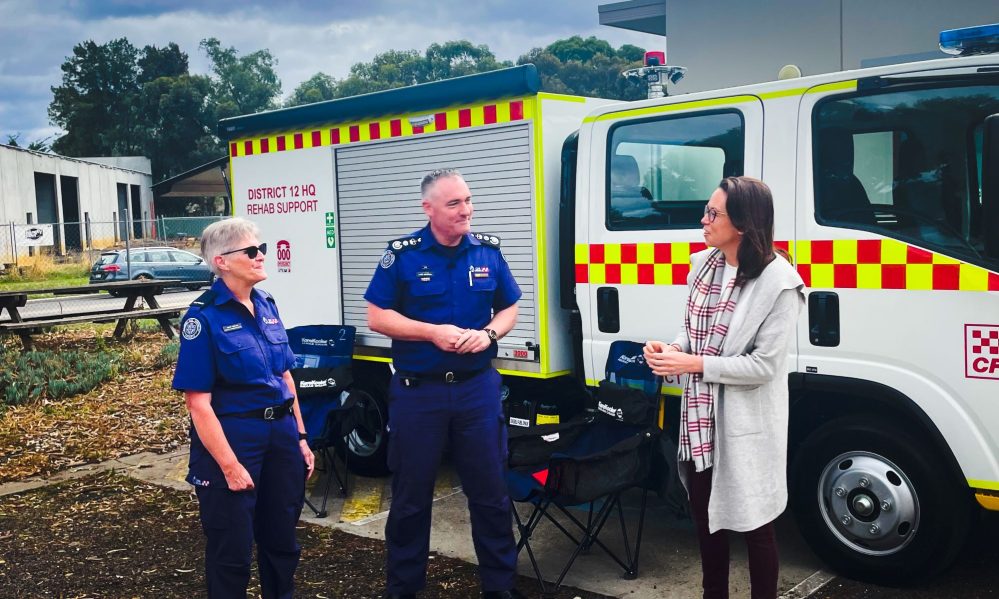
A new rehabilitation vehicle has already been put to use by Country Fire Authority, CFA, District 12 Headquarters Brigade at the Flowerdale fires in February.

The $129,00 appliance is a purpose-built vehicle that enables health monitoring facilities for firefighters working in difficult conditions, and is an addition to all brigades in CFA’s north-east region.

Captain Kathy Quinlan said the brigade covered a large response area including the areas of Mitchell and Murrinidndi shires, supporting a total of 38 brigades in CFA District 12.

“The brigade and community alike will greatly benefit from this new asset,” she said.

“The vehicle boosts our capacity to safely respond to a wider range of emergency incidents. Our members take the new truck out and about whenever we can to familiarise themselves with the features and benefits of the vehicle.”

Since becoming operational in December, the vehicle has supported CFA nine times this year during emergency response.

District 12 Headquarters Brigade first lieutenant Darrel Warren said he was grateful for the benefits of the specialised equipment.

“The new appliance not only provides rehabilitation and health monitoring for firefighters at staging areas, but it is also well equipped for use on the fireground,” he said.

“We have a good team of current and former health professionals, who can provide basic health monitoring including examining vital indicators such as temperature, blood pressure checks and blood oxygen levels, as well as monitoring hydration and carbon monoxide levels.”

The State Government provided funding under the 2020-21 Volunteer Emergency Services Equipment program, with the brigade contributing $3500.

Minister for Emergency Jaclyn Symes, who visited the brigade last month to officially hand over the new vehicle and thank volunteers, said the program delivered crucial resources that would serve and protect communities.

“Victorian firefighters work tirelessly to protect lives and properties across the state – this new rehabilitation appliance will provide crucial support for firefighter health and wellbeing when responding to incidents,” she said.

Strengthening Rural Communities in Seymour and Macedon Ranges

THE Foundation for Rural Regional Renewal, FRRR, has provided $2.3 million in grants to 176 community projects as part of the Strengthening Rural Communities, SCR, program.

The SRC program helps small communities across rural, regional and remote Australia access funds for projects that benefit the local area and people.

The program is split into three categories – Small and Vital, Prepare and Recover and Rebuilding Regional Communities, which supports recovery for COVID-19.

Goulburn Valley Sports Assembly Inc in Seymour was a successful recipient of the Prepare and Recover grant, receiving $10,000 to improve the recovery of flood impacted communities and wellbeing outcomes with a mental health referral and support program.

Successful in the program’s Small and Vital grant that helps strengthen communities, Macedon Ranges Further Education Centre, in Gisborne, received $8,759 to create a comfortable environment for older residents engaging in wellbeing activities which includes accessible furniture and a smart television for online group sessions.

Jill Karena, place portfolio lead at FRRRA, said the latest round of grants was the largest on record in terms of both funding awarded and the number of projects funded.

“In the history of the SCR program and its predecessors dating back to 2000, we’ve never awarded this amount of money or this many small grants,” she said.

“That in itself speaks volumes about the need for resources and support in rural communities around the country.”

Environmental concern on Broadford-Wandong Road

By Pam Kiriakidis

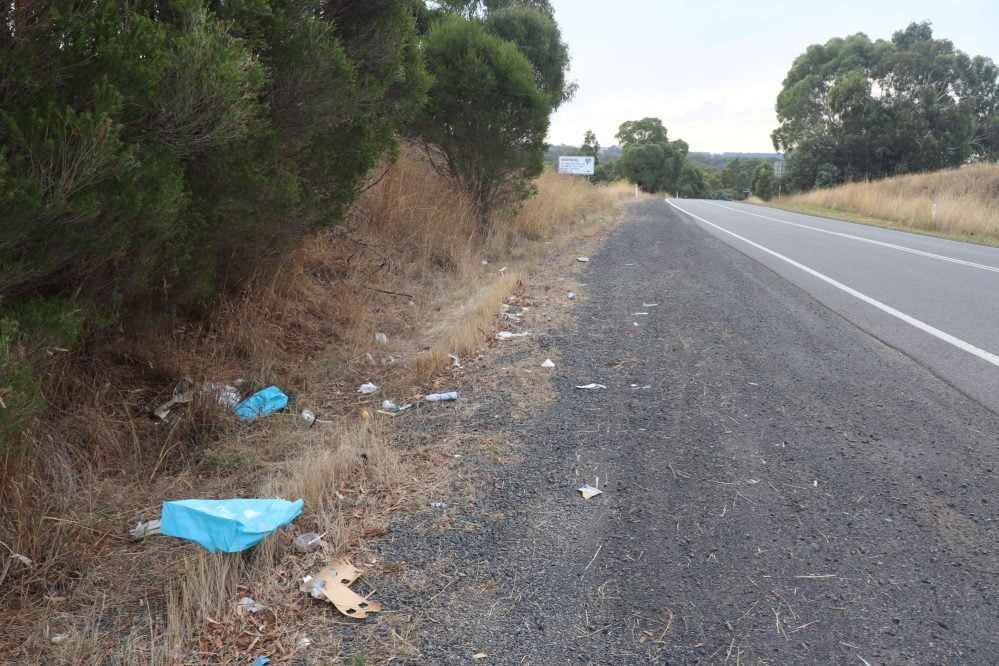
Conditions along the Broadford-Wandong Road has sparked environmental concern, with dumped rubbish and dead animals found alongside the road.

Resident Terrence Hanlon, who has lived off Broadford-Wandong for 36 years, said the 17-kilometre road through Sunday Creek to Broadford was ‘constantly’ a site for pollution, specifically near where the road met the Hume Freeway.

With the road parallel to the Sunday Creek, Mr Hanlon said he was worried about the creek’s environmental status.

“All animals and dead animals are environmental issues especially when they’re sitting there and they heat up and just desegregate,” he said.

After notifying the Mitchell Shire Council and the Environmental Protection Authority Victoria, EPA, several times, Mr Hanlon said council should have kept a better watch on the conditions alongside the road.

“Once a year would be grouse, maybe even better than what they have done so, but realistically it should be regularly maintained,” he said.

Mitchell Shire Council chief executive Brett Luxford said the site would soon be cleared.

“This site does not present any immediate danger to the general public, unlike several recent illegal dumping in the shire that have delayed the clean-up of Broadford-Wandong Road,” he said.

“However, we understand the dumped waste causes significant amenity impact and we are working to have it removed as quickly as possible.”

Council has spent about $6000 on the clean-up of illegal dumping on Broadford-Wandong Road this year alone.

Mr Luxford said council would spend more than $150,000 this year to dispose of illegal waste across the whole shire – a figure that would increase over time.

”Illegal dumping is a significant issue in Mitchell, which is why we have installed cameras across the shire to catch and help prosecute offenders,” he said.

Mr Luxford encouraged residents to report illegally dumped waste and provide any information they have about offenders to council.

To report illegally dumped waste contact council’s locals laws department by calling 5734 6200 or by using the online Report It tool.

Residents can contact EPA Victoria’s 24-hour pollution hotline on 1300 372 842.

Abandoned puppies a timely reminder to desex animals

The discovery of five abandoned puppies in Mitchell Shire has highlighted the importance of desexing animals.

The Pomeranian cross Jack Russell puppies were left in a box on a roadside in Pyalong.

They were found, seen by a vet and are now with Save-A-Dog Scheme, a community-based not-for-profit animal welfare organisation that saves hundreds of dogs and cats every year.

The puppies will be held for the required quarantine period and then assessed for adoption in the coming weeks.

Like most councils across Victoria after the pandemic, Mitchell has seen an increase in the number of animals entering the pound in the past few months.

However council has also seen an increase in the number of adoptions, with more than 20 adoptions in the past month.

Mitchell Shire Mayor Fiona Stevens said she was glad the puppies were safe after they were ‘senselessly abandoned’.

“They could have been surrendered responsibly to our pound or other animal care facility free of charge. It was just so cruel to dump them,” she said.

“I wonder how their mum is being treated. Desexing your pet is the best way to stop overpopulation and reduce the amount of unwanted dogs and cats coming to the pound.”

As well as helping to stop pet overpopulation, desexing also helps address health and welfare risks including reducing the risk of cancer and other diseases of the reproductive organs.

Desexing also reduces the risk of female animals suffering from physical and nutritional exhaustion from continual breeding.

Desexed animals are also less prone to wander, fight and get lost or injured and have reduced territorial behaviour.

Cr Stevens said eligible residents could apply to receive a discount voucher for the desexing of their cats or dogs. .

She said it also a timely reminder for people to check their animals were microchipped ahead of the April 10 renewal due date and to make sure their contact and pet details were up to date, especially if they have moved or relcoated to Mitchell for the first time.

For more information about the Save-A-Dog Scheme and how to help, visit saveadog.org.au.

Report calls for more Federal Government advertising in local newspapers

A national report into local news sustainability is challenging the perception that print newspapers are dead and is calling on governments to revise their advertising rules to help local news providers and better target regional and rural communities.

The Media Innovation and the Civic Future of Australia’s Country Press includes 22 recommendations, which provide a blueprint to preserve and grow rural and regional news for future generations.

The report was the first of its kind in Australia and was a culmination of a three-year Australian Research Council project, led by Deakin University, in partnership with Country Press Australia and RMIT University.

Project lead Professor Kristy Hess, of Deakin’s School of Communications and Creative Arts, said the project’s aim was to examine the local media landscape to identify challenges and opportunities for sustainability and innovation.

The study began at the start of the COVID-19 pandemic, which resulted in the temporary or permanent closure of dozens of local mastheads across Australia and a shift among some to digital-only platforms.

The research team conducted two main national surveys – one with local news audiences and one with those who do not engage with local news; 35 interviews with Australian news editors and proprietors; and seven focus groups with editors, journalists and advertising managers within the Country Press Australia network.

One key finding was the strain on local mastheads hit with lost revenue from local, state and federal government advertising, which in recent years had prioritised social media and metropolitan news outlets with a larger digital reach.

Victoria is the only state to receive a significant commitment of placing paid advertisements in all members of the Victorian Country Press Association.

“Our research found there is this obsession with digital reach. That’s all well and good, but a local masthead, whether in print or online, isn’t designed to reach 1 million people. If we use the digital reach metric as an indicator as to which news outlets should get government advertising, these independent regional and rural outlets are going to lose out every time,” Professor Hess said.

The report supports a recent Parliamentary Inquiry recommendation that stipulates 20 per cent of all Federal Government advertising expenditure be directed to regional and rural news organisations.

Data from the study also showed government funding schemes for local news outlets were often tied to digital innovation, for instance to buy drones and other technologies, when what local news providers needed was financial support to upgrade print infrastructure or to hire more staff.             

“Print is not dead for many regional and rural communities. We need to remember there is a digital divide in Australia that means some communities still struggle with poor-quality and unreliable internet connections. Some segments of the community, including older citizens, find it difficult to use newer technologies. Younger audiences also like the look of a printed newspaper,” Professor Hess said.

The report also recommends better incentives, including pay, to attract seasoned reporters to the regions. Governments are also urged to provide seed funding for journalist-led news start-ups to counteract local ‘news deserts’ developing in some parts of Australia.

“Our research shows people in these communities want more local news content, including stories on locals’ achievements, successes and milestones. They also want news on local events and more investigative-type pieces,” Professor Hess said.

Country Press Australia president Andrew Manuel said the report should be seen as a beginning and not an end, and highlighted the essential role local papers play in serving their communities and delivering civic journalism.

“The report stands as a beacon for government, for policy makers and for the community to take the appropriate and necessary actions to ensure newspapers can continue to play such a vital role,” he said.

“The study was done across the most tumultuous time the media industry has experienced, and local papers remain such an integral cog in regional and rural Australia, despite the hardships we’ve all endured.

“The report defines regional and rural papers as essential services to the community, and better support from government, and a better understanding from government around this is an important next step.”

Mr Manuel said people living in country areas remain passionate and engaged with their local mastheads, and the report highlights the need to better support local news, and equally, the pivotal role and responsibility of country papers to communities scattered across the continent.

“We urgently need government to recognise the importance of our members in the local community and for government to adapt the way they seek to engage our readerships, just as we have adapted our businesses during particularly the past few years,” he said.

“Acting on the recommendation for 20 per cent of the Federal Government’s advertising expenditure to be allocated to regional and rural news organisations, but in a way that reflects the Deakin University led research findings, would be a welcome first step.”

The report suggests government policies and advertising spend remains the most influential factor in providing baseline surety to the long-term sustainability of small, independently-owned news outlets across Australia, but questions whether taxpayer funds to support media might have been misdirected.

It claims the shift away from traditional media and towards social media and larger metropolitan news outlets with greater digital reach has led to a decline in engagement with regional and rural audiences, as well as a financial strain upon publishers in these areas.

The report describes a ‘digital shiny things bias’ towards digital innovation at the expense of supporting initiatives that may be most beneficial to regional audiences.

A greater appreciation for place-based public interest journalism and the need for collaboration among publishers were other key findings.

The report also calls for a national campaign to recruit more journalists and address perceptions about careers outside of metropolitan areas.

“Newsrooms in regional and rural areas can offer some of the most varied, fulfilling and interesting work to journalists, and it should never just be about country papers being seen as merely a stepping stone to a job elsewhere in the city,” Mr Manuel said.

Mr Manuel said Country Press Australia members would continue to innovate and adapt their businesses, and to seek ways to work together for a better media industry, but the need for more effective government support and understanding would be crucial to the long-term sustainability of country papers.

The full report can be found at www.localnewsinnovation.org.

Macedon Ranges business awards open for voting

Macedon Ranges Shire Council is encouraging residents and visitors to the area to vote for their favourite local businesses in the inaugural Telstra Macedon Ranges Community Choice Awards.

An extension of the Business Excellence Awards program, the awards seek to recognise and celebrate those who go above and beyond in their day-to-day business.

The awards also aim to promote businesses in the shire who are consistently performing to an excellent standard, whether they be well-known or hidden gems.

A total of 79 businesses were nominated. Nominations for Excellence in Customer Service will be decided by popular vote in each of the following five categories:

  • Agribusiness and Primary Production, sponsored by Macedon Ranges Business and Tourism Associations.
  • Health and Wellbeing, sponsored by Macedon Ranges Shire Council.
  • Hospitality and Accommodation,  sponsored by Macedon Ranges Industry Groups.
  • Retail and Service sponsored by Telstra.
  • Trades and Manufacturing, sponsored by nbn Local.

Telstra’s regional engagement manager Marcus Swinburne said the Telstra team was proud to be partners of the awards for 2023 and 2025.

“We look forward to celebrating some of the Macedon Ranges most exciting small [and] medium-sized businesses, putting them in the spotlight and helping provide a platform to recognise their achievements,” he said.

Mayor Annette Death said the Macedon Ranges had an abundance of outstanding businesses committed to delivering exceptional customer experiences.

“As a community, it is important we recognise and acknowledge the contribution our dedicated business owners make to our local economy, and support them so their businesses continue to thrive,” she said.

“We would love for visitors to get involved in nominating their favourite businesses and letting us know what keeps them coming back to our beautiful shire.”

Council’s planning and environment director Rebecca Stockfeld said it was amazing to see such a positive response to the call-out for nominations.

“It shows how passionate our community is about supporting and rewarding local businesses for good service,” she said.

“The power is again with the people – I encourage everyone to follow up on these initial nominations and support who you think is deserving of this recognition with a vote.”

Voting closes June 2 and winners will be announced on June 13.

.

Lancefield brewery helps bolster region’s tourism

Lancefield’s Lost Watering Hole brewery and restaurant has now been operating for several months, helping to bolster the tourism industry of the Macedon Ranges.

The independent brewery has produced 2000 litres of beer per week since December 2022 and has served a total of 14,000 meals at its restaurant since opening.

Member for Macedon Ranges Mary-Anne Thomas said she was proud to see the Lost Watering Hole flourishing with the support of State Government funding.

“It’s fantastic to be able to support innovative new businesses, creating jobs and putting the spotlight on regional Victoria as a world-class producer of fine food products,” she said.

“The Lost Watering Hole is becoming a popular attraction for tourists and locals looking for unique food-focused experiences in the beautiful Macedon Ranges.”

The brewery celebrates the history of the area including its proximity to one of Australia’s richest fossil deposits of extinct species, which were discovered by a well-digger in the late 19th century.

Animals such as the giant kangaroo and giant wombat feature at the brewery in the form of embedded fossils in the floor and some of the Lost Watering Hole’s branded beers.

The brewery has been supported by the Regional Jobs Fund through the Regional Jobs and Infrastructure Fund to help encourage tourists to visit and experience regional businesses. .

New tech brings Northern Health into the home

Northern Health is the first public health service in Australia to use a newly-developed digital examination tool that will enable better access to specialist assessment for patients, from their own home.

A small, portable hand-held device – developed by telehealth company TytoCare – includes a comprehensive exam kit, featuring a digital stethoscope for heart and lung examinations, a thermometer, and a tongue depressor to examine throat and tonsils.

The device is easily paired with a user-friendly app and clinician dashboard to become a complete telehealth platform for sharing exam data and conducting live video exams.

Northern Health’s head of heart failure unit Associate Professor Gautam Vaddadi said while heart failure was a life-long chronic illness that often caused patients to be repeatedly admitted to hospital, Northern Health had developed an innovative program using the device that delivered hospital-level care for patients with heart failure, in their own home.

“This tool is critical for assessing fluid on the lungs, which is a common problem that affects patients with heart failure,” he said.

“This technology will allow us to make the best possible medical decisions when treating our heart failure patients at home.”

Chief health outcomes officer of clinical leadership, effectiveness and outcomes Dr Katharine See said TytoCare played an integral role in her team’s mission to implement new interventions and technologies that would facilitate better health outcomes for the community.

“TytoCare is already being used widely and successfully internationally, with encouraging results,” she said.

“We wanted to bring these same technologies to the Australian healthcare setting. The device is currently being piloted in our heart failure virtual ward, and will support the team to deliver remote healthcare where appropriate.

“We hope this will benefit patients by reducing the need to be cared for in hospital and provide faster access to their clinical team virtually.

“Physical examination has not previously been possible via telehealth for specialists and nurse practitioners. Now, they are able to hear the heart and lung sounds in real-time, and make clinical decisions using the results of the virtual examination, as well as the observations from the Hospital In The Home nursing staff.”

Dr See said the introduction and implementation of new technologies, including the Victorian Virtual Emergency Department and Remote Patient Monitoring, were exciting opportunities for Northern Health to provide and support healthcare for individuals.

“As a remote digital solution, these tools increase the value of consultation for both patients and clinicians by allowing high quality remote examination, while also optimising patient flow and access to care,” she said.

“One of the challenges of providing high quality virtual care is the inability to effectively examine patients. We’re bridging that key gap, allowing patients to receive equivalent care from the comfort of their home.”

Aged care ratings detail quality of care in the region: SEE THE RESULTS

Special report by Grace Frost

The Federal Government’s assessment of aged care quality and safety has found nearly four out of five aged care homes in the Mitchell Shire, Macedon Ranges and City of Whittlesea fail to provide a ‘good’ quality of care for residents.

The ratings of more than 2500 government-funded aged care homes across the country received a score between one and five stars based on four key areas of performance – compliance, quality measures, residents’ experience and staffing.

The statistics were first published online in December, after the Royal Commission into Aged Care Quality and Safety recommended star ratings based on measurable information be published.

A one-star rating was given if significant improvement was needed, two stars if improvement was needed, three stars if the service was acceptable, four stars if it was good and five stars if it was excellent.

Of the 24 aged care homes assessed in the municipalities across the region, none received an overall five-star rating.

Nineteen homes were given three stars overall, an ‘acceptable’ ranking, while five were given four stars.

The region’s aged care homes performed poorest in quality measures and staffing, receiving an average of 2.5 stars and 2.3 stars respectively.

Mitchell Shire received the poorest quality measures rating in the region, averaging 1.2 stars across its five aged care homes.

However, Mitchell Shire aged care homes achieved the highest ranking with regard to staffing compared to the broader region, but still failed to meet an ‘acceptable’ ranking, averaging 2.8 stars.

Aged care homes in the City of Whittlesea were ranked worst in the region for residents’ experience, averaging 2.9 stars across 15 facilities.

Macedon Ranges-based aged care homes saw the highest overall average at 3.25 stars between four homes, the only region to receive an ‘acceptable’ rating or higher for compliance, quality and residents’ experience.

The national data showed more than 1600 homes fell short of the three-star minimum acceptable ranking.

Analysis by The Age in December showed almost one in 10 aged care facilities were ranked poorly for residents’ experience, 17 per cent ranked poorly for quality of care and seven per cent failed to meet the acceptable threshold for compliance measures.

Staff shortages, mostly caused by staff being burnt out from the pandemic, have been telling in the ratings.

TABLE: Star ratings for the district’s aged care homes

Aged Card Table 2023
The district’s aged care star ratings at a glance.

Staffing a key issue

More than 70 per cent of aged care homes across the Mitchell, Macedon and City of Whittlesea municipalities failed to meet an ‘acceptable’ time of care provided by nursing and personal care staff.

The government requires all residents to achieve about 200 minutes of care by either a registered nurse, enrolled nurse or personal care worker each day, and about 40 minutes of care from a registered nurse, with times varying slightly between homes.

Two homes in the district, Caladenia Nursing Home and Seymour District Nursing Home, achieved a perfect five-star rating in regard to staffing.

Aged care 1

Kilmore District Health interim chief executive Jennifer Gilham said Caladenia Nursing Home was ‘proud’ to have received the top rating.

“Like all public sector aged care facilities, we staff our facilities in line with the Safe Patient Care Act, according to required ratios, and we have a registered nurse on site 24 hours per day,” she said.

However, nearly 30 per cent of aged care homes in the region only received one star, and 42 per cent two stars – some falling below target times by as much as 51 minutes.

The Oaks Nursing Home in Gisborne was one of seven homes in the district to receive a one-star rating for its staffing.

A Benetas spokesperson said the team at Gisborne Oaks was working hard to overcome workforce shortages, as was the broader aged care sector.

“We have a range of programs to try and attract new workers, such as targeted traineeships and our new graduate nursing program,” they said.

“Our main focus is providing the best level of care for our residents. As part of that commitment, we ensure that we develop rosters that meet the individual care needs of our residents.”

chart 4
Distribution of the region’s aged care homes based on their star ratings for staffing.

Quality

More than 40 per cent of homes across the region required improvement or significant improvement of the quality and safety of care provided at the home.

The quality measures rating, which contributed to 15 per cent of the overall rating, ranked the prevalence of pressure injuries, physical restraint, unplanned weight loss, falls and major injury, and medication management, and compared each home with the national average.

All homes in the Mitchell Shire, one in the Macedon Ranges and four from the City of Whittlesea required improvement for quality of care.

Caladenia Nursing Home Kilmore was one of five homes to receive just one star for its quality measures.

Fifty-four per cent of residents at the home were physically restrained, 32 per cent above national average, and 17 per cent of residents were prescribed antipsychotic medications without a diagnosis of psychosis, seven per cent above national average.

Ms Gilham said Kilmore District Health worked closely with its stakeholders to ensure safe and quality care and continued improvement to its services.

Though some of its practices, aimed to provide additional assistance for aged care residents, have resulted in a low quality measures score.

Physical restraint includes mechanical restraints – devices that stop, restrict or reduce a person’s movement – which for Caladenia Nursing Home includes their use of key-pad entry to secure places.

“We strive for excellence in the delivery of care to all patients, including our residents at our aged care facilities, Caladenia Nursing Home and Dianella Hostel,” Ms Gilham said.

“Our patients’ safety is our priority and our practices reflect our commitment to that.

“These practices include the use of key-pads to secure doors to ensure residents who require additional assistance, such as dementia sufferers, always have a staff member supporting them when they leave the facility.

“Some residents of our facilities are prescribed medications by their treating GP to manage their conditions. This is done in consultation with the resident and if required, their next of kin.”

chart 3
Distribution of the region’s aged care homes based on their star ratings for quality measures.

Residents report varying experiences

Nearly four in five aged care homes failed to achieve a ‘good’ four-star rating for residents’ experience, based on a 12-question survey given to residents by an independent team.

Residents at Epping Meadows Care Community, which was one of two homes in the region to receive two stars for residents’ experience, were unsatisfied across a variety of areas.

Thirty six per cent said staff knew what they were doing only ‘some of the time’, and 43 per cent reported they ‘never’ or only ‘some of the time’ had a say in their daily activities.

Though 57 per cent of residents said they liked the food served ‘most’ or ‘all of the time’, 14 per cent of residents reported they ‘never’ liked it.

Epping Meadows Care Community spokesperson said the home was always looking at improving its services and had taken feedback onboard from residents.

“We have actively been doing food focus groups and taking feedback onboard from our residents. As part of this process, we have hired a new chef with extensive experience in the care sector,” they said.

“We are confident our team members are well trained and conscientious.

“Nevertheless, a relatively small proportion of residents had an alternative perception about their capabilities. As a result, we have increased our face-to-face training and online learning.”

The spokesperson said the home also hosted monthly resident and relative meetings where residents chose activities for the following month, of which some preferred to not be involved.

The Oaks Nursing Home, Gisborne, was one of the highest rated homes for resident experience, with 93 per cent of residents agreeing they ‘always’ received the care they needed and staff ‘always’ treated them with respect.

A Benetas spokesperson said the team at Gisborne Oaks ensured they were doing their best to keep residents safe and happy.

“While we are currently below current government staffing targets, our resident scores show we are still able to deliver high quality care,” they said.

chart 2
Distribution of the region’s aged care homes based on their star ratings for residents’ experience.

Compliance

Aged care homes in the district rated best for ‘compliance’ – their adherence to government regulations and standards – averaging 4.5 stars.

Compliance contributed to 30 per cent of the overall rating.

To receive four stars, a home must have had no compliance issues for one year.

Whittlesea Lodge received three stars in its March rating, updated from only two stars after it received a non-compliance notice for the second time since April 2021.

Whittlesea Lodge facility manager Kaye Simpson said the home was pleased to report that every issue had been rectified, and the work of staff and management of Whittlesea Lodge had been acknowledged by the Aged Care Quality and Safety Commission, ACQSC.

“We are proud of our staff, especially of their passion and dedication in delivering the highest quality of care for our residents to enable them to live their best lives,” she said.

“Continuous improvement is a normal part of the work we do and we at Whittlesea Lodge will endeavour to maintain those high standards into the future to the satisfaction of our residents and their loved ones.”

chart
Distribution of the region’s aged care homes based on their star ratings for compliance.

Federal Government focus on reform

A STAR rating system forms just one part of the Federal Government’s aged care reforms.

From July 1, older people in residential aged care will have access to a registered nurse 24 hours, seven days a week.

Mandatory average care times for residents will be further increased to 215 minutes from October 1, 2024.

The government will also deliver a pay rise of at least 15 per cent for aged care workers on the minimum award, starting this year.

March 1 marked two years since the Royal Commission into Aged Care Quality and Safety’s final report was tabled in Parliament.

In a statement earlier this month, Aged Care Minister Anika Wells said the report was a damning assessment of an aged care system in crisis.

Ms Wells said creating the star rating system increased choice, accountability and transparency.

She also pointed to other government achievements in aged care, such as implementing the inaugural code of conduct for providers and workers to protect older people; capping home-care charges and exit fees to stop the rorting; appointing an interim inspector general to be an independent champion for the sector; and enhancing safeguards for restrictive practices.

“I have visited more than 20 aged care homes since being sworn in as minister, talking with residents and workers about how our reforms are impacting their daily lives,” she said.

“I have witnessed exceptional care being delivered, have seen problems that still need to be addressed and issues that clearly need improvement.

“This is just the start of our reform mission.

“What we are working on right now is bedding in our current reforms while addressing more royal commission recommendations.

“We are drilling into ways to boost the numbers of aged care workers, helping aged care providers recruit and train thousands of personal care workers to care for older people at home or in residential facilities, reforming in-home aged care and working on the National Dementia Action Plan.”

Ms Wells said she was determined to make people ‘the beating heart of a strengthened aged care system’ that replaced fear with trust.

“Older people helped build this country. The very least we can provide them is quality care,” she said.

“We have critical reforms to tackle over the next 12 months and are working hard to ensure they not only address current issues but set the sector up for long term success.”

Member for McEwen Rob Mitchell said the government was committed to reforming the aged care system, and had already directly addressed 37 recommendations of the Royal Commission into Aged Care Quality and Safety.

“We have implemented major changes to reform the aged care system, including the capping of home care package admin fees, supported a meaningful pay rise for aged care workers, legislated 24/7 nurses in aged care homes from July 2023 [and] legislated more care minutes in aged care homes from Oct 2023,” he said.