

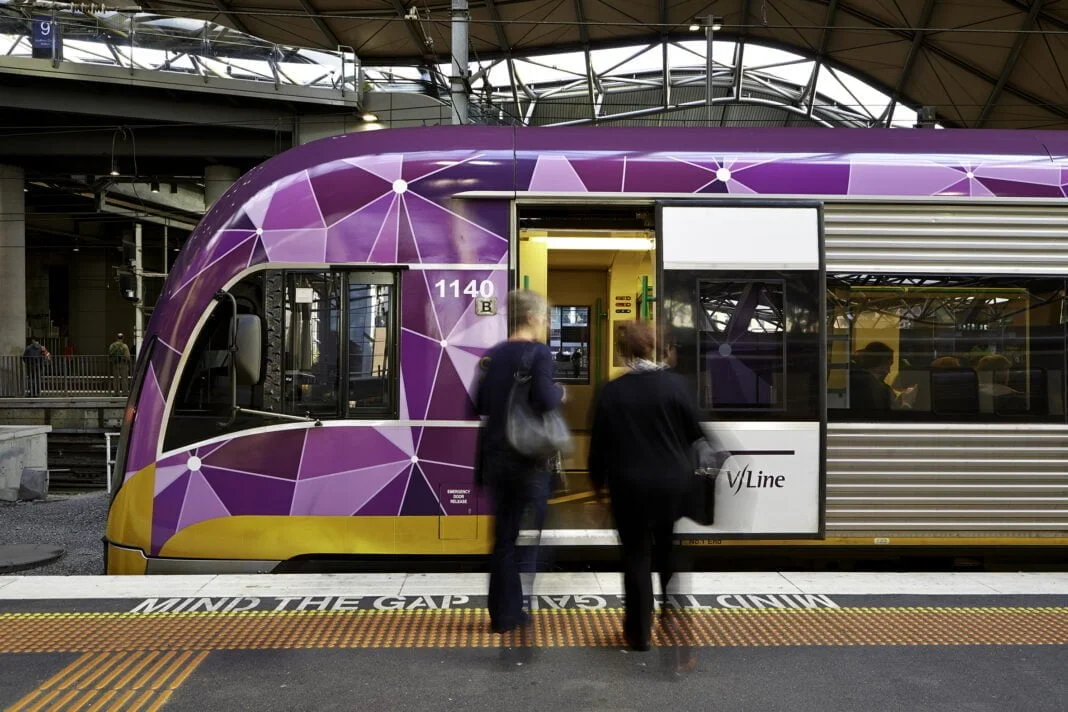


FURIOUS passengers on the Seymour and Shepparton lines were affected heavily by a Telstra communications outage which left V/Line scrambling for two days to help customers get to and from school, work and appointments.
Trains were left stranded across Wednesday as the outage started, continuing on into Thursday, before gradually resuming services following extensive testing from midday onwards later that day.
“Before resuming services, V/Line conducted its own testing and operational checks to ensure communications between network controllers and train crews were stable, continuous and reliable,” V/Line wrote on Thursday.
“These tests were successful and confirmed that critical communications systems are operating at the level required for the safe operation of trains across the network.
“We acknowledge this has been inconvenient to many people and thank passengers for their patience as we worked with Telstra and the Australian Rail Track Corporation to safely restore services.”
State Premier Jacinta Allan was fuming after the outage left country residents across the state stranded with limited options to get home.
“It is completely unacceptable that so many Victorians were stuck without an essential service for so long,” she wrote in a media release.
“V/Line trains stopped because the Telstra outage knocked out both the train radio system and interfered with the backup system.
“Telstra should compensate Victorians and help make sure it never happens again.
“To start with, V/Line will reimburse regional rail passengers who incurred extra costs.
“I expect Telstra to match it, dollar for dollar.
Ms Allan then announced customers would be given two days of free travel on V/Line services to be served yesterday and today.
“Australians have endured too many major outages – and it’s always country people who bear the brunt,” she wrote.
“The telcos must lift their game.
“It’s time they caught up with how critical their networks have become to our essential services.”
State Member for Euroa, Annabelle Cleeland, said the community was let down by the failure.
“Communities across my electorate rely on these train lines every single day,” she said.
“People reasonably expect that if they need to get somewhere, they can get there. Instead, they were left standing on platforms with no certainty, no clear alternative and barely a replacement coach in sight.
“We’ve had locals missing medical appointments they’ve waited weeks for. Students unable to get home. Commuters stuck in Melbourne with no way back after a full day’s work.
Ms Cleeland believed road conditions exacerbated the problem, saying many locals avoided the roads due to potholes.
“A lot of people catch the train because our roads are in such poor condition. When the trains stop running too, people are left with nowhere to turn,” she said.


I was at the station to get the train to arrarat and then catch a bus to Dimboola .Their was total confusion at Spencer street then over the loud speakers some one said that no country trains are going so you all will have to find your Owen ways home. Any way I went and got a hotel for the night. I know I can get my money back, but I can not find out how it is done. It is like a big secret on how to get reimbursed. Can some one tell me please?
Could not get a bus home. Family member had to drive to Craigieburn to collect me. Had to take an annual leave day on the Thursday as I can not work from home.