

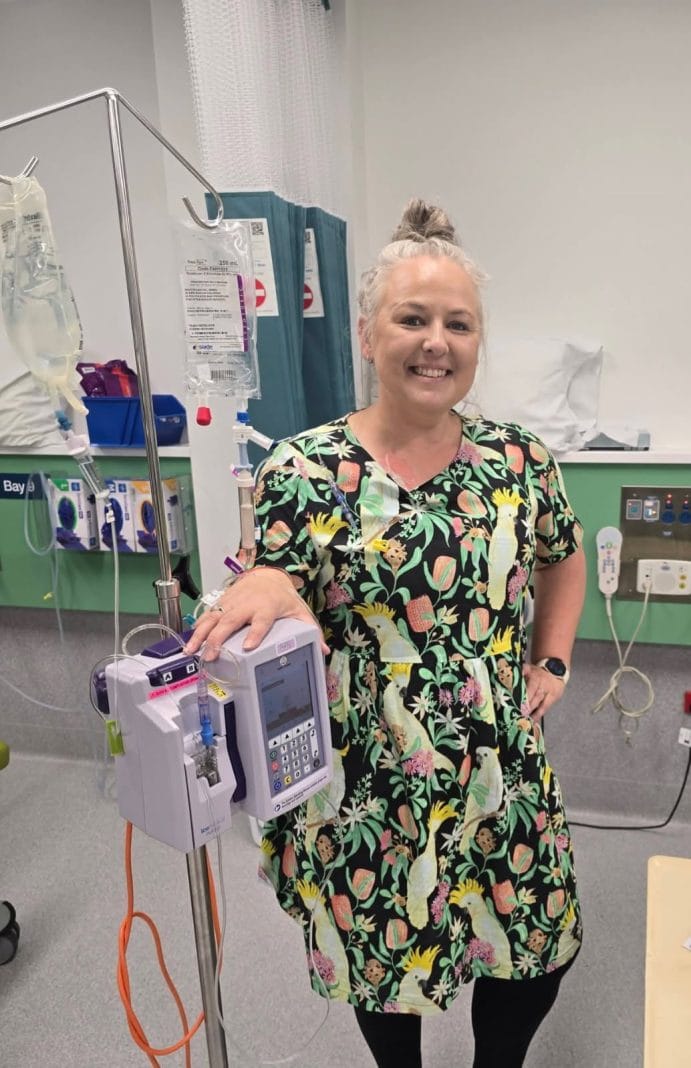



KILMORE mum of three and bowel cancer survivor Tegan Nedelkos is pushing for bowel cancer to be better understood so people can detect it earlier, giving them more chance at survival.
Tegan’s story began in 2023 at the doctors for a general checkup in the sight of a potential addition to her already young family.
She received a clean bill of health, despite some low iron, fatigue and postpartum bleeding from her third child.
With no family history, no alcohol or smoking, the tired mother of three was shocked to hear that she had a diagnosis of stage four bowel cancer only four months later.
If she was properly checked and tested for bowel cancer just that month earlier, her rates of surviving may have been close to 99 per cent.
Instead, the odds for a person with stage four bowel cancer to survive for five years are 11 per cent but she continually fought on for several months using radiation and loads of chemotherapy to beat the odds and the cancer.
After the stress and pain of multiple surgeries alongside the treatment, she was officially cancer free, but in December 2025, it had returned and she again had to tackle the horrible challenge.
Only recently in April, she again had liver resection surgery and has now been cancer-free for six weeks.
This is part of the reason why the mother of three is pushing for more people to recognise that the cancer is starting to affect younger people more often.
“I want people to know that bowel cancer does happen in younger people, the symptoms can easily be attributed to much less sinister reasons. Ask your healthcare provider to rule it out through screening, opt in for the screening if you fit the age group, or for peace of mind test kits are available commercially,” she said.
Ms Nedelkos is one of 50 early on-set patients invited up to parliament house in Canberra for Bowel Cancer Awareness Month to help spread awareness.
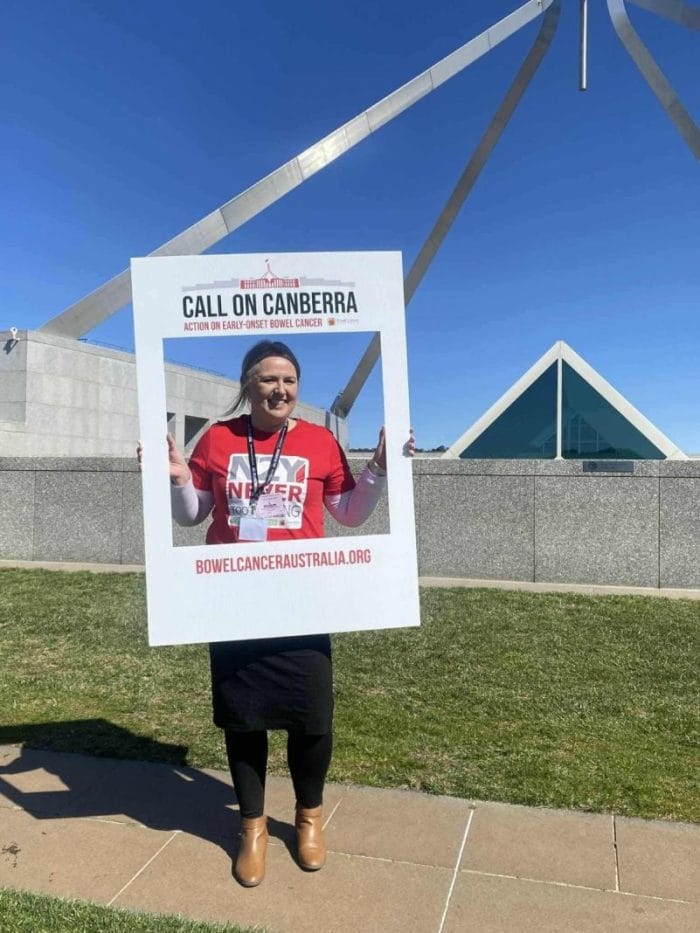
Bowel Cancer Australia invites them to a lunch and encourages them to get in touch with their local MPs, who can then devote their 30 second time slot in parliament to help raise awareness.
The three areas that are being pushed in parliament include more investment for research, early detection and to develop clinical practices and guidelines for younger people going through it.
Detections are showing up differently in people aged 25 to 49 compared to people over 50.
If you are experiencing any symptoms such as, blood in the stool, obvious change in your bowel habit, weight loss you can’t explain, extreme tiredness for no reason or lumps/ swelling in your abdomen, you need to get in contact with your local GP or hospital and ask them to rule out bowel cancer.
Ms Nedelkos told the Review her main message to others would be – “If anything doesn’t feel right or doesn’t feel normal when it comes to any of those, ask your doctor to rule out bowel cancer. If we can find it earlier, the treatment and outcomes are a lot better.”
Her goal is to help raise $1000 for the charity who helped her, if you interested, head to event.bowelcanceraustralia.org/page/Tegan-59434694 for more information.


