

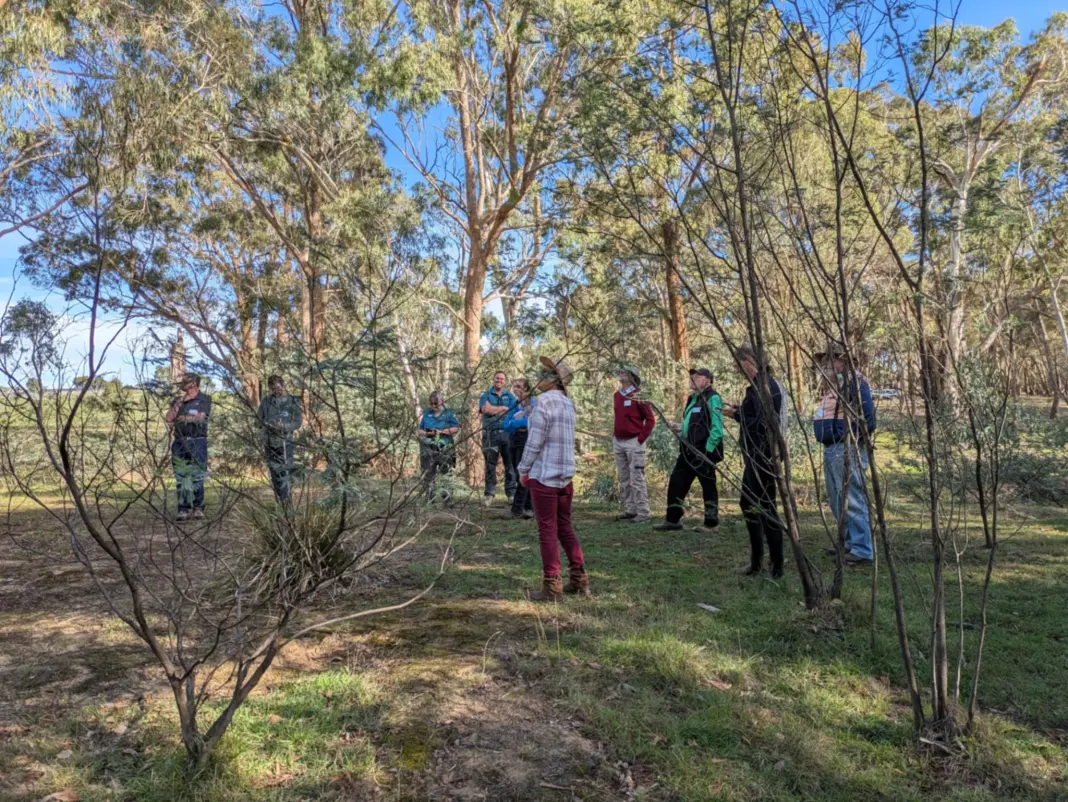



A SMALL nature reserve along Jeffereys Lane on the outskirts of Broadford is a storehouse of rare native bees, a researcher has discovered.
Jeni Kalowsky, who is heavily involved in trying to protect Broadford’s butterfly, moth and wildflower population and describes herself as a self-funded naturist and citizen scientist, says the reserve is home to many invertebrates, flora, fauna and birds.
“It’s a special place that needs better protection and conservation,” she said.
Reflecting on her research, Ms Kalowsky said: “In 2022 and 2023 I happened to be volunteering for a conservation group. During one of our butterfly surveys in the Broadford reserve a single native bee was seen and photos were taken.”
“I uploaded the photo to a native bee Facebook group and to my surprise we had stumbled across something rare, endangered and special.
“With guidance from a world-renowned native bee expert, from the Entomological Society of Victoria, I have just completed four years in the field studying and gathering scientific information.”
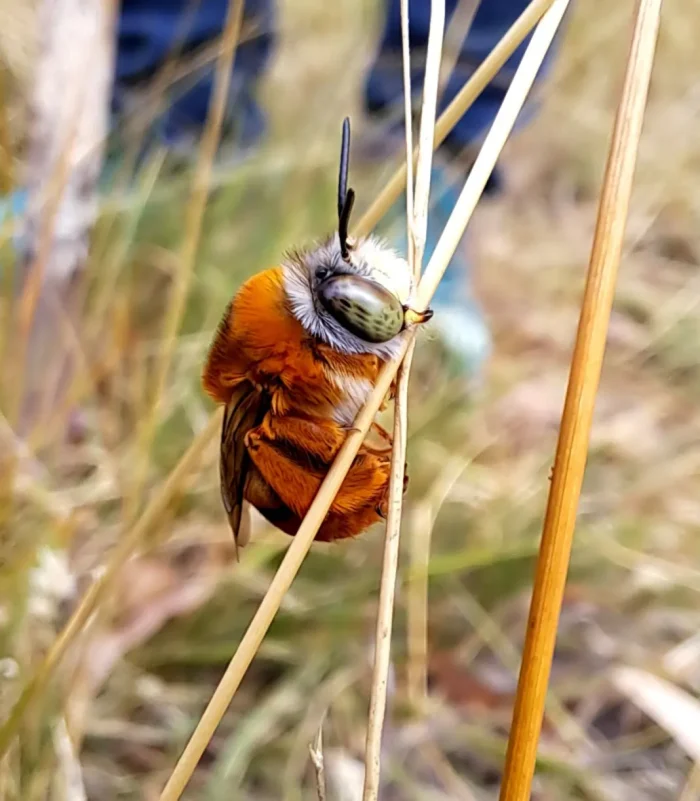
Ms Kalowsky said the reserve has Amegilla Asaropoda albiceps (Rayment 1951), a native Australian bee, thought lost due to the eradication of mistletoe flowers from Melbourne to make way for urban sprawl. These bees are solely dependent on mistletoe flowers to survive.
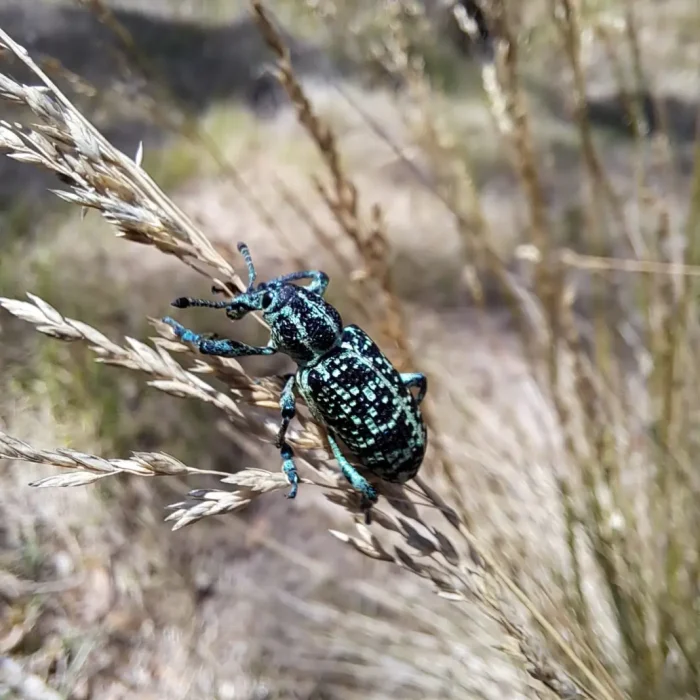
The reserve also has proof of Small Ant-blue butterflies (rare and endangered), coconut ants, and a large population of Botany Bay weevils, also a rarity.
An on-ground meet-and-teach session was organised on April 1 to stress the importance of preserving the reserve.
It was attended by officials from the CFA, Parks Victoria, ecological experts, landowners and local environmental groups, including the Sunday Creek-Dry Creek Landcare Group.
“It was to highlight the reserve’s ‘sensitivity’, discuss issues and conservation concerns and how we can look after it, and find out who is responsible for the reserve,” Ms Kalowsky said.
She said the meeting went well. Everyone was interested. “All asked to be kept in the loop as we move forward.”
Ms Kalowsky said: “Our end goals are simple, though hard to achieve. Put the reserve under better conservation and environmental management. Organise conservation management for what is in there. There should be weed management, soil conservation, more scientific studies and better signage and entry to the reserve.”
She said the reserve is being “misused” with rubbish dumped there and firewood removed.
“It’s a beautiful little spot that was set aside many years ago in the hope to preserve against a growing Broadford. It’s forgotten, but not by those who love nature and realise how special it actually is. It needs help.”
In her reserve project and conservation attempts, Ms Kalowsky has been helped by Melbourne University graduate and ecologist Ruby Martin.
“We are hopeful of a great outcome for the Broadford reserve, but now need like-minded volunteers to help,” Ms Kalowsky said.


Great to see how Council, locals and local environment groups are helping preserve these pockets of remnant bush. More can always be done. Volunteers are always needed