The North Central Review is hosting two candidate forums in the lead-up to the November state election.
All lower house candidates in the seats of Yan Yean, Kalkallo and Euroa will be invited to participate in the respective forums.
The first forum, for the seat of Euroa, will be at Seymour Salvation Army Hall, 8-10 Victoria Street, Seymour, from 7pm to 9pm on Tuesday, November 8.
The forum for the seats of Yan Yean and Kalkallo will be on Wednesday, November 9, at Wallan Secondary College auditorium, at 100 Duke Street, Wallan, from 6.30pm to 8.30pm.
Review general manager/editor Lauren Duffy said the forums would feature a short introduction about how the forum would run, followed by a series of questions about key issues in the electorate and the state election.
“Each candidate will have an initial three minutes to speak and introduce themselves,” she said.
“Then we’ll get into the candidates answering questions from the public, followed by a time for candidates to present a closing statement.”
Ms Duffy said she had already had a strong response from candidates to attend the forum.
“We’ve invited all the candidates that we know of in the three electorates, but if there are people who have raised their hand to stand or are planning to run in the seats of Euroa, Kalkallo or Yan Yean, please get in touch with our office,” she said.
Ms Duffy also encouraged residents to attend the forums.
“We’re hoping we’ll have lots of people interested to attend the forums, and take an interest in political issues that affect our local area,” she said.
“It’s a great opportunity for people to ask questions and hear directly from the candidates, and can help make an informed choice when the state election comes around on November 26.”
Light refreshments will be served afterwards for those in attendance.
People can register via the Eventbrite page, where they will submit their questions.
For the Seymour forum, visit and for the Wallan forum, visit .
Macedon Ranges Shire is among six local government areas added late last week to the flood affected areas to receive Federal Government payments.
The government is making the one-off, non-means-tested Australian Government Disaster Recovery Payment available for people.
The payment of $1000 per eligible adult and $400 per eligible child is now available to people who live in the Macedon Ranges and Mitchell shires.
The Australian Government’s Disaster Recovery Allowance available to people living in specific flood-affected local government areas in south-eastern Australia.
The Disaster Recovery Allowance assists employees and sole traders who experience a loss of income as a direct result of a major disaster and is payable for a maximum of 13 weeks. The Disaster Recovery Allowance is a taxable, fortnightly payment.
Member for McEwen Rob Mitchell said flood-affected communities faced a long road ahead but would get through it together.
“I am relieved the work we have been doing to support these affected communities has paid off as I know first hand what they are going through,” he said.
“This will provide some much needed support to families and whole communities doing it really tough and the examples of how these communities have come together is second to none.
“We always know we will stand together as we always have in times of crisis.”
Federal Minister for Emergency Management Murray Watt said the government was doing everything possible to provide support as quickly as possible.
“As the extent of the damage is discovered, the Albanese government is continuing to extend support to impacted areas,” he said.
“This is a very serious situation across multiple states and we know that there may be more communities impacted by these flooding events over the coming days.
“As the full extent of the damage continues to become more apparent, we will keep working to provide assistance as it’s needed.” Claims can be made online through myGov, 24 hours a day.
For information on all the assistance the federal and state governments have made available to individuals, businesses and councils following the extensive flooding, visit www.nema.gov.au.
LAWYER and victim advocate John Herron will stand for Victoria’s upper house as a member of Derryn Hinch’s Justice Party at next month’s state election.
Mr Herron, a Riddells Creek resident, contested the federal seat of McEwen at this year’s federal election, but said the Justice Party aligned more closely with his personal values.
Mr Herron’s daughter Courtney was murdered three years ago by a man who was released early from prison after a prior conviction for a violent crime.
Mr Herron has since used his professional standing as a lawyer to advocate for an overhaul of the justice system to better support victims of crime.
He will run alongside current Member for Northern Victoria Tania Maxwell in the Victorian Legislative Council.
Mr Herron said he already had a close working relationship with Ms Maxwell, who was elected in 2018.
“I had been approached by some other parties to stand, but they weren’t covering the issues I’ve been advocating for since the death of my daughter,” he said.
“I work with Tania Maxwell and [Member for Western Victoria] Stuart Grimley anyway … we work with a lot of victims and survivors who come to them or me, so I’m doing that work in the background in any case.
“We help people out at the ground level. We help them navigate the system and provide support for them if there’s any liaison that needs to be done with authorities, which is where I come in as a lawyer.”
Mr Herron said there was ‘an endless list’ of families he had assisted in the Macedon Ranges region.
He said the potential for his daughter’s killer to be allowed to leave the psychiatric facility where he has been since 2019 on day release made his campaign more urgent.
He described the attitude of Labor and the Liberal-Nationals Coalition towards victims of violent crime as ‘indifferent’.
“The Justice Party aligned with the advocacy that I’m doing … My plan is to continue to work with victims alongside Tania Maxwell,” he said.
“On the campaign trail I’ll attend the venues that Tania is speaking at and I’ll try to get the message out there as much as I can. I want to speak not only about my own situation, but also what the party is trying to achieve.
“There are people in great need, and there are a lot of them – there are more every day. A lot of them have nowhere to go, so it’s that need that I’m trying to fulfil on their behalf, and that’s the essence of what the Justice Party is trying to do.”
This month’s flooding could put the need for a levee bank in Seymour back in the Mitchell Shire Council spotlight.
A Goulburn River flood levee had been discussed for more than a decade when councillors unanimously voted not to build one at a 2020 meeting, citing negative community response to the proposal.
Council had secured $5.8 million in state and federal government money to build a levee, but argued the project would put undue burden on Seymour ratepayers.
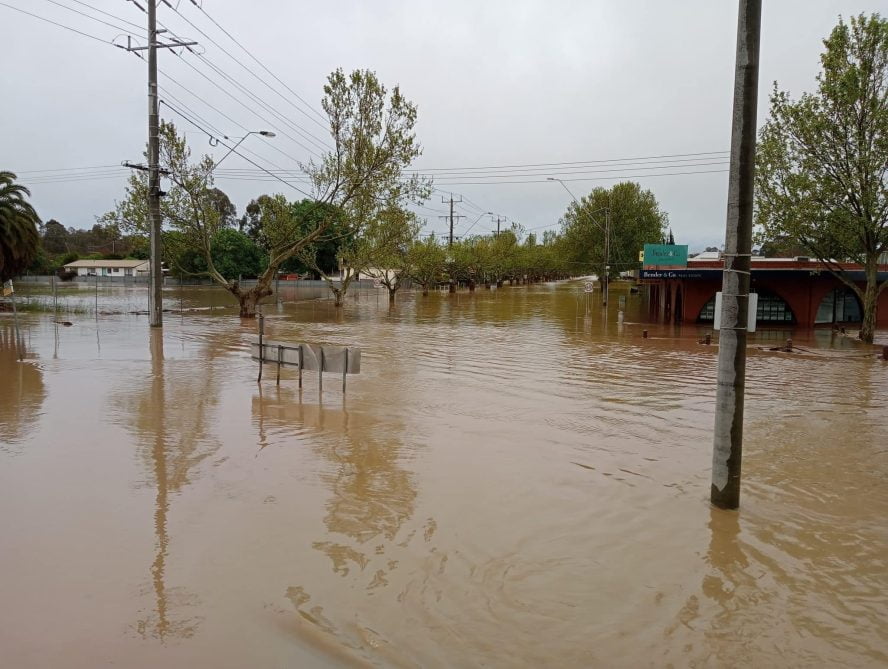
However, since floodwaters rose during heavy rain earlier this month, inundating much of central Seymour, some businesses and residents have called for a levee to be put back on the council’s agenda.
Fred Sartori, who owns Sartori’s Panel Works on Emily Street, said he was spared the worst of the flooding after paying to build up the property in the 1990s, but that most other businesses in the west of the town suffered.
Mr Sartori has long advocated for a levee in Seymour, arguing it would eliminate costly building requirements for new businesses and bring the cost of insurance down.
Emily Street levee crossing (north) with barrier and water mockup, 2019
Some Seymour residents and businesses were uninsured when flooding struck, citing the prohibitive cost of paying for flood insurance.
Mr Sartori said most people were unaware of the cost of building requirements in the absence of a levee.
He said when supermarket chain Aldi built its shop on Tallarook Street, it was required to raise the site by 1.3 metres. He estimated the cost of doing so at a minimum of $250,000.
“Your average person who wants to build a shed and start a business isn’t going to be able to afford that,” he said.
Mr Sartori said flood insurance was another problem for many Seymour locals.
“I picked a house … that was built in the 1960s and rang an insurance agent and asked him … [to get] three or four quotes to insure it for $300,000,” he said.
“That house would cost about $800 or $900 to insure normally, and the cheapest quote was about $1800 and the most expensive was $4000 because of where it is. Most people are not going to pay that.
“And if that house in a flood area burns down, you cannot rebuild it at the same level, you have to raise it – that’s another thing you’re up against.”
A spokesperson for the Insurance Council of Australia called for the state and federal governments to spend more money on protecting flood-prone communities.
“In late February, the Insurance Council released our report Building a More Resilient Australia, which argued that the Federal Government should increase its investment in measures to better protect homes and communities from the impacts of extreme weather to $200 million a year, and this should be matched by the states and territories,” they said.
“The Victorian Government contribution was calculated to be $111 million over five years, which, when combined with an equal investment from the Commonwealth, was calculated to provide a return of investment of $3.185 billion to 2050, or 14 times the value of the investment.
“The Insurance Council recommended this program include a $522 million Local Infrastructure Fund, and identified both Shepparton and Seymour as areas that would benefit from flood mitigation projects such as levees and floodways.”
Mitchell Shire Council Mayor Bill Chisholm said council would consider re-examining the need for a levee after flood clean-up efforts concluded.
“Council is focused on supporting our communities to recover from these floods and has not discussed revisiting the proposed flood levee,” he said.
“However, council is not afraid of making difficult decisions and when the time is right, the issue of the flood levee can be discussed again.
“This discussion will involve the community feedback from 2019, where a majority of the community did not want the flood levee.
“But council will evaluate new information and will continue to listen to the community about the flood levee issue.”
Mr Sartori said council had put the cost of the levee onto ratepayers as a means of ‘[letting themselves] off the hook’.
“Two years ago the council put it back on the ratepayers to build a levee bank, and naturally if you don’t know anything about it, you’re going to vote no,” he said.
“I don’t think there’s an easy solution to all of this, but I think we need businesspeople and everybody else to sit down and discuss it.
“It’s been 48 years since the last flood, but it could only be one year until we get another one – you just don’t know.”
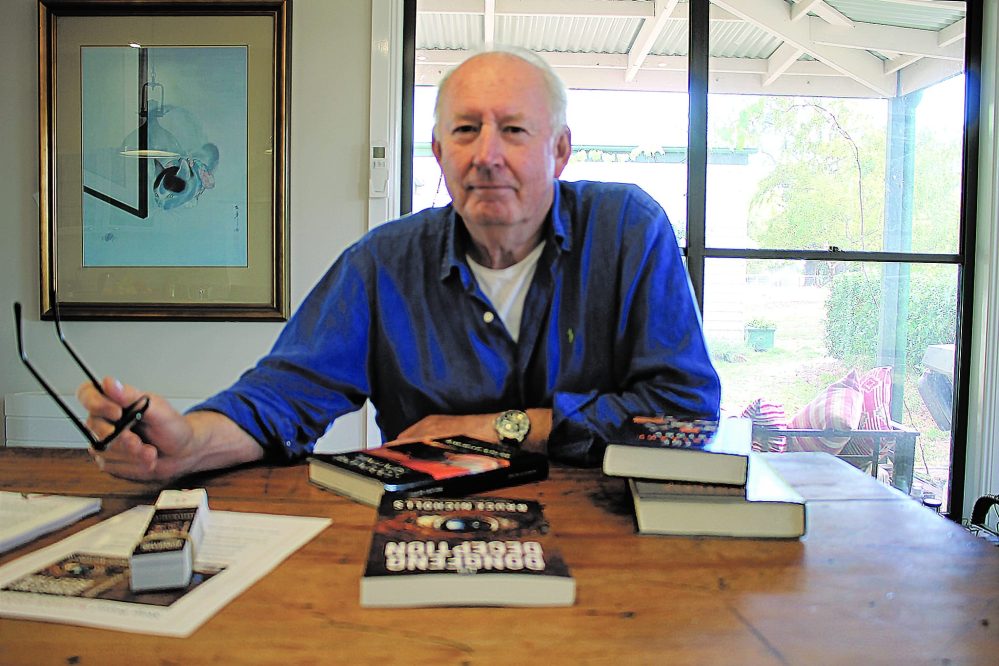
FORMER diplomat, businessman and author Bruce Nicholls has been remembered as a pillar of the Mitchell Shire community after dying last week at the age of 74.
Mr Nicholls, who grew up in Wollongong and rural Queensland and lived in Sydney for many years, moved to Victoria 22 years ago with his wife Annie, settling first at Glenaroua and then at the Carlsberg property in Kilmore.
As a foreign trade commissioner with postings in India, Germany, Switzerland, China and Hong Kong, a president of the Australia-China Chamber of Commerce and Industry, chairman of the Royal Automobile Club of Australia and trustee of the Committee for Economic Development of Australia, Ms Nicholls said her late husband was a man who thought on a global scale.
“I always joked that he was the big-picture person and I had to fill in the gaps. That was our life together,” she said.
“He was a very funny man, a super intelligent person and incredibly passionate about public policy – that was his driver.”
Ms Nicholls said Mr Nicholls was able to bring his international expertise to bear on a local scale as a member of the Rotary Club of Southern Mitchell, a board member of Kilmore District Health, deputy chair of Bendigo Community Bank in Wallan and Kilmore, and chair of the Mitchell Business Network.
He also served as a director of Goulburn Valley Water, the Port of Melbourne and the Victorian Ports Corporation.
Ms Nicholls said no matter what role Mr Nicholls filled, he maintained a mantra of ‘local first’.
She said even as he approached death after being diagnosed with lung cancer five months ago, his attitude never wavered.
“Bruce was never a bettor, but from his hospital bed on Saturday [October 15] he decided we needed to have a bet on the Everest,” she said.
“He said we had to back Giga Kick because it was the only Victorian horse in the race. I put $5 on each way and some of [our son] Mike’s friends put a lot of money on. We all cleaned up because of this horse at 20-1 odds.
“It was signature Bruce. That’s how he approached his role as a trade commissioner – everything had to be Australian, and this horse was Victorian so we had to support the local.
“That’s what he did, and it paid off for all of us.”
Mr Nicholls – who has published several books, including the non-fiction political treatise The Plato Prophecy earlier this year – set down his memoirs after being diagnosed with cancer.
Ms Nicholls said his family was preparing to publish it.
She felt thankful Mr Nicholls’ family was able to surround him in his final days and that he lived a full life with no regrets.
“He knows he packed a lot into his 74 years. As his son Mike said, he left nothing out there,” she said.
“He was at home right up until the last few days when he went to hospital. He loved this community and he did so much for it.”
Mr Nicholls’ funeral was yesterday at St Patrick’s Church, Kilmore.
Yan Yean residents and sporting clubs are set to benefit if the Liberal-Nationals Coalition can win government at the November state election, with the development of a modern sporting and recreation hub at Yarrambat War Memorial Park.
Multiple clubs – including Yarrambat Football Club and Plenty Valley Cricket Club – call the Yarrambat War Memorial Park home, however the park is limited by non-compliant club rooms with poor disability access and no female changerooms, as well as outdated courts and parking spaces.
Yarrambat Football Club is the largest football club in the area, while Plenty Valley Cricket Club is also home to the region’s only Premier League women’s team.
Liberal candidate for Yan Yean Richard Welch last week announced a the Coalition would deliver a new sporting hub for Yarrambat, featuring new clubrooms and a two-court indoor basketball stadium to cater for Yarrambat Phantoms Basketball Club.
The facility will also be home to Yarrambat Netball Club and be used by Yarrambat Primary School and casual users through Nillumbik council.
Mr Welch said the new facility would mean families and community members would no longer need to travel to nearby Doreen, Mernda and South Morang to access quality sporting facilities.
“This much needed facility will increase participation, support the growth of local clubs and provide desperately needed indoor sports space with present facilities in the region being at capacity,” he said.
“With this important upgrade, the Liberals and Nationals will make sure locals will be supported for many years to come.”
Some Seymour businesses have reopened their doors with cautious optimism as others continue to count the cost of this month’s devastating floods.
With a large swath of the town centre – including parts of Tallarook, Wallis, Emily and High streets – inundated early on October 14, many business owners have painstakingly dredged waterlogged shops and sifted through ruined stock for more than a week.
The Vinnies Seymour op shop was forced to dump all of its goods after water sat in the store for two days, riddling items with damp and mould.
Other businesses, while affected by the floods, had better luck, with Toyworld able to reopen its doors on Thursday after a concerted clean-up effort.
Kelly Hebard said the store saw a steady stream of volunteers who helped clean up the store on the morning of October 14.
“We came in first thing on the Friday and pretty much right from then we had volunteers coming in, bringing supplies and cleaning,” she said.
“All the toys were off the ground so that was fine, it was just a huge effort to clean the store. We didn’t ask for any help and we didn’t need to – everyone was just here.
“People you didn’t even know that well went to Bunnings off their own bat and got supplies to drop off or just came in and started working.”
Toyworld owner Carol Baumann said many business owners were humbled by the support they received.
“We were so well supported by the local community, many of whom had nothing to do with any of the businesses,” she said.
“A quick response made it a much more successful recovery.”
Ms Hebard said the quick response had an additional flow-on effect.
“Once we were done cleaning up here, we were able to go out and help others,” she said.
“That’s why we didn’t reopen until [Thursday], because there were other people who needed help too. People coming to help us here freed us up to help more people.”
Ms Baumann admitted she had mixed emotions at reopening the store while other businesses continued to clean, but expressed gratitude for the help she and others received.
“It’s daunting enough when families arrive back to their home or businesses – just to have a group of people who can get in there and make it happen quickly helps so much,” she said.
“We’ve had teenagers, down to 10-year-olds who were prepared to come in and work.
“We can’t reiterate enough how fortunate we were when some people didn’t have a bed to go home to.”
The State Government has made several new announcements in the past week to assist flood-affected communities.
The following is a summary of the announcements, of which applies to the Mitchell and Macedon Ranges shires.
The $77.3 million Health and Education Recovery Fund will support the estimated 320 schools and 28 health services affected by the floods in Victoria this month – alongside a support package to give TAFE students training continuity, fund replacement uniforms and equipment for school students and set up temporary infrastructure to keep health services operating.
Every affected government school will see its immediate remediation costs covered – with works such as repairing roofs, drying out inundated buildings, replacing floors and restoring utilities across school grounds. Grants of $10,000 will also help schools clean up their outdoor equipment like playgrounds.
Eleven TAFEs, including GOTAFE, have suffered damage or been cut off after the floods, and $8.3 million from the fund will support site assessments and immediate equipment replacement, as well as securing extra work placements for students to make up for any delays.
The government is also providing more than $23 million to support public health efforts, including deploying more healthcare staff to affected health services, and support to make sure VCE students can still complete their schooling successfully and deliver free kinder in flood-affected areas for the rest of term four.
The Victorian Curriculum and Assessment Authority and Department of Education and Training will work with schools to make sure no student is disadvantaged during this exam period, with Derived Examination Scores to be automatically available to students who are directly affected by the flooding.
There will also be $5.5 million for a food relief package to deliver extra food to areas that need it most.
Food charities Foodbank Victoria, OzHarvest, Second Bite and FareShare will each receive up to $750,000 to help with food purchasing, extra staffing and delivery logistics, while $500,000 will help neighbourhood houses across the state to provide extra food in their communities and stay open for longer to support more Victorians.
Clean-up assistance is being provided through the jointly-funded federal and state Disaster Recovery Funding Arrangements with an initial investment of $150 million to prioritise hazard assessments and clean-up.
The first phase of the program will be coordinated by Emergency Recovery Victoria, ERV, who will work with local contractors to demolish, remove and dispose of structures that were destroyed or damaged beyond repair by the floods.
Volunteers and donations
The State Control Centre will partner with Disaster Relief Australia to coordinate a volunteer effort.
Not-for-profit donation service GIVIT, which supports communities across Australia affected by fire and flood emergencies, will act as a central point for financial donations. People can contribute at givit.org.au/storms-and-flooding.
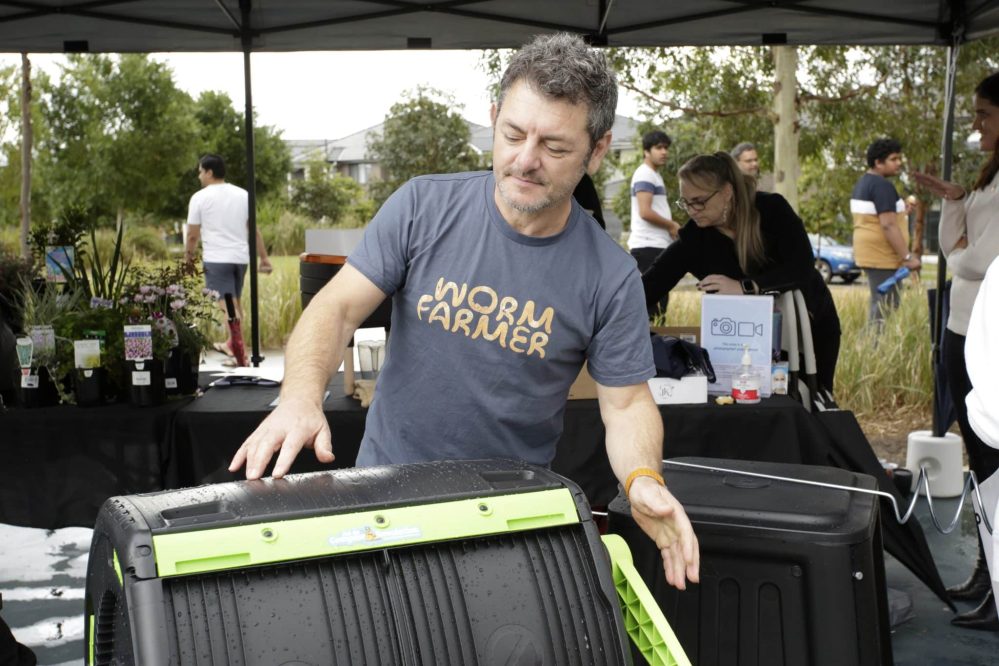
STOCKLAND will soon be delivering a program to its masterplanned communities to support the better disposal of organic waste, helping to reduce landfill and avoid greenhouse gas emissions.
In a partnership with Compost Revolution, the program is being rolled out across 28 of Stockland’s masterplanned communities across Australia, giving households access to free composting equipment.
Compost Revolution is an education initiative that has operated across Australia since 2012 and is currently working in partnership with 36 councils, helping to divert waste from landfill and reduce greenhouse gas emissions in developing communities.
Stockland Katalia in Donnybrook is one of the masterplanned communities that will benefit from the roll out of the program in the coming years.
Stockland national sustainability manager Amy Hogan said about 50 per cent of what the average Australian household discarded was compostable, creating more than half a tonne of unnecessary organic waste in landfill every year.
“This program will help to educate the community, increase resilience, and empower our residents to dispose of organic waste appropriately and reduce their own carbon footprint,” she said.
“When we launched our pilot program across four of our communities in 2020, we saw a great response from residents, resulting in more than 15,000 kilograms of carbon dioxide emissions saved.”
The partnership with Compost Revolution is part of Stockland’s 2030 sustainability strategy to adopt and implement circular models within its masterplanned communities, encouraging residents to minimise their environmental impact and address climate change.
Compost Revolution chief composting officer David Gravina said the group was excited to work with Stockland to educate residents about being more environmentally conscious.
“The partnership makes it affordable and easy for Stockland’s households to nurture their gardens and grow healthy, organic food for their families,” he said.
“We’re looking forward to continuing our work with Stockland in the coming years to create greener, more abundant and resilient communities across Australia.”
Households in Stockland’s communities will receive a $120 voucher to spend at Compost Revolution and can choose from a range of products including worm farms, compost bins and eco tumblers, kitchen caddies, and garden beds.
Stockland will be able to view real-time metrics as part of the program, providing a better understanding of the program’s impact on the community and environment.
For more information on Compost Revolution, people can visit compostrevolution.com.au. For more information on Stockland, people can visit www.stockland.com.au.
Key precincts for employment and linking to health and education facilities are key elements of Northern Councils Alliance’s Strategic Plan 2022-2026 launched last week.
The alliance’s five-year blueprint for regional advocacy incudes four strategic priority areas and an accompanying document, Advocacy Priorities 2022-2023.
The strategic plans was developed by the municipalities of Whittlesea, Mitchell, Banyule, Darebin, Hume, Merri-bek, and Nillumbik in conjunction with regional partners.
Melbourne’s north is home to one million people, 20 per cent of the population of Greater Melbourne.
It’s one of the fastest growing regions, with a population of 1.5 million forecast by 2036 – a growth rate of 2.8 per cent, compared to 1.6 per cent for Greater Melbourne.
One in six Victorians live in the northern Melbourne region.
Northern Councils Alliance chair, and Banyule councillor, Elizabeth Nealy said the population growth needed to be matched with the necessary investment in infrastructure and strategic projects that would improve access to jobs, health services and education.
Cr Nealy said the next step was to advocate to federal and state governments for support and funding to achieve the plan’s goals.
“Melbourne’s north is the engine room of Victoria’s economy, but it needs significant and strategic investment if it is to reach its full potential,” she said.
“Investment in our region was urgently needed before COVID-19 … and it’s even more critical today.”
Cr Nealy said investment in strategic priorities was essential for transport connectivity, precinct development, business and employment growth, access to education and health services, future proofing the economic and social development of Melbourne’s north, and ensuring equality and liveability for the community.
The projects identified in the documents will form the basis of the alliance’s regional advocacy efforts over the next 12 months.
City of Whittlesea chair administrator Lydia Wilson said for Victoria to succeed, Melbourne’s north needed to succeed.
“Targeted investment in the north will be critical to the economic response to, and recovery from, COVID-19 – not just for our region, but for the state, and for the country,” she said.
“Development of our key precincts as employment, industry and activity locations, linking to health and education facilities, will be essential in terms of future regional development.
“Efficient connectivity will be key to their success and there should be a focus on sustainability.”
Ms Wilson said electric vehicles were also important to help communities transition to lower carbon lifestyles.
“We are currently undertaking a regional, community-wide electric vehicle transition plan and we require government support for its implementation,” she said.