Home Blog Page 114

Funds for Mitchell Shire libraries

MITCHELL Shire libraries have received a major funding boost, with the latest round of the State Government’s Living Libraries Infrastructure Program set to invest in 18 libraries across the state.

Mitchell Shire Council has received $76,682 for a technology upgrade. The project will deliver faster, more reliable, and more accessible services, improve resource management, and free up staff to focus on learning programs and personal support.

Minister for Local Government Nick Staikos announced the recipients of $4 million.

Since 2014, the government has invested $57.6 million into 176 different library infrastructure projects, with a combined end value more than $522 million.

The Living Libraries Infrastructure Program supports initiatives that deliver tangible benefits to local areas, and increase access to learning, participation and engagement with community libraries.

Member for Northern Victoria Jaclyn Symes said the funding would strengthen Mitchell Shire’s ability to provide safe spaces and essential learning resources, creating real benefits for the community.

For more information on the Living Libraries Infrastructure Program, or to view the full list of recipients, visit localgovernment.vic.gov.au/grants/living-libraries-infrastructure-program

Community feedback steers Seymour Hub

COMMUNITY voices have helped shape the final design for stage one of the Seymour Community Wellbeing Hub, with Mitchell Shire Council confirming a series of improvements following two rounds of consultation.

The $17 million project, funded through $15 million from the Federal Government’s Growing Regions Program and $2 million from Mitchell Shire Council, will deliver a modern, two-storey facility in central Seymour, bringing health, learning and community services together under one roof.

The new hub is a cornerstone of the long-running Seymour Revitalisation Project, a partnership between Council, the Victorian Government and the local community aimed at improving wellbeing, strengthening social connections and expanding access to essential services. A dedicated health and wellbeing centre was identified in 2018 as a priority to help break cycles of disadvantage and better support residents.

Stage one will include a contemporary library with community learning areas, multipurpose meeting rooms, upgraded event spaces, a café, and a health hub featuring clinical and non-clinical consulting rooms for visiting service providers. Landscaped outdoor areas will provide accessible and inviting spaces for community use.

Initial consultation occurred in mid-2024, with revised draft plans placed on public exhibition in August and September 2025. Feedback from residents, community groups and service organisations prompted several key changes to the final design. These include expanding the meeting room and café area, adding 57 square metres to the building footprint, introducing an operable wall to allow the space to be divided, and incorporating upgraded audiovisual and acoustic features to better support movie screenings and large events.

Other additions include direct kitchen access for functions, an area for creative arts activities, and increased desk spaces and plug-in points throughout the ground floor to support study and work. The design improvements have resulted in an additional $572,893 being referred to Council’s capital works budget for allocation.

Mitchell Shire Mayor John Dougall said the project had been shaped by strong community input.

“We heard from residents, service providers and community groups who told us what was most important to them, and we’ve acted on that,” he said.

“While the additions increase the project cost, they’re practical improvements that will make the hub more welcoming, functional and inclusive for the whole community.

“The hub will deliver long-lasting benefits by bringing key services together in one central place. It will make it easier for people to access support, learn new skills and stay connected. It’s a significant investment in Seymour’s future, and I want to thank everyone who shared their ideas, your feedback has helped shape a facility we can all be proud of.”

Detailed design work is expected to be completed in early 2026, with construction scheduled to begin in mid-2026 and finish by mid-2027.

Further information and project updates are now available at mitchellshire.vic.gov.au/seymour-hub.


Road works for motorcyclists

MOTORCYCLIST safety is a focus from the State Government, with a Mitchell Shire road part of a $10.6 million project designed to help motorcyclists on the road.

Through the Road Safety Program under the Motorcycle Safety Infrastructure Program, new motorcyclist-friendly barrier treatments, signage improvements and sealing of dangerous intersections will be performed.

One of the eight roads as part of the project will be the Broadford-Flowerdale Road near Strath Creek.

Victorian Minister for Roads and Safety, Melissa Horne, said this was designed to reduce road trauma, with 54 motorcyclists losing their lives on Victorian roads through to December.

“Motorcyclists are among our most vulnerable road users and are sadly overrepresented in road trauma, which is why we are continuing to prioritise making our roads safer through the Motorcycle Safety Levy,” she said.

“This is why we are investing in vital road safety improvements to ensure they can get where they need to go safely.”

A dream comes true

By Ashok Verma

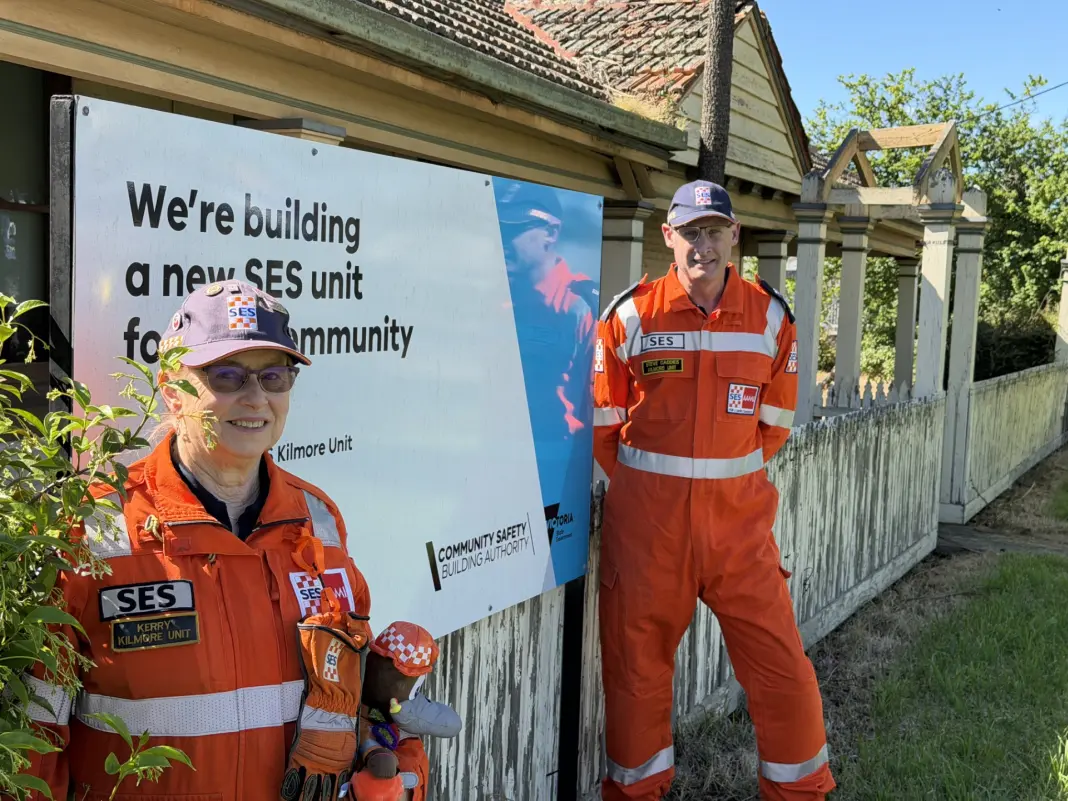
THE ceremony to mark the start of the new headquarters on Tuesday was a special occasion for Kilmore State Emergency Services (SES) Unit Controller Steve Caddies.

The new facility will realise a much-longed-for dream for the unit.

“This is one of the busiest road rescue units in Victoria and it’s also our busiest storm response unit. As you look around here, the population continues to grow, and it (the unit) will get busier and busier. So, this new facility for SES and our local volunteer members is hugely important, not just for responding to jobs, but it would also be a place where you train,” Mr Caddies said.

“It’s going to be fantastic. It will also mean that we are able to retain members for having such a state-of-the-art home to work. We really appreciate it. We can’t wait to see the end products.”

The unit, which has 60 active members, responds to a growing number of calls for help, including storm damage, floods and road accidents. It has responded to significant events such as 2020 storms and 2022 Victorian floods. It has responded to 357 requests for assistance this year so far, 403 in 2024 and 237 in 2023.

Mr Caddies said: “Today is a really significant moment for Kilmore SES and for the wider Mitchell Shire. For our members, this new unit means a safe, modern, purpose-built place to work from. You guys (members) give so much of your time and energy, often in tough conditions and at all hours.

“You really deserve a facility that supports you, encourages participation and help you train, prepare and respond (to calls for help) with confidence. This new facility will do exactly that.”

Turning back history pages, Mr Caddies said: “It’s worth reflecting on where we started. More than 40 years ago, we started in the kitchen-lounge room of the building we’re about to demolish, to build this new unit. There’s something pretty special about that. And I want to sincerely thank Kerry (De Gabrielle) and the original founding members of Kilmore (including Pat and John) who laid the foundations of everything Kilmore SES is today and what it will be when the building is complete”.

Mr Caddies thanked Member for Northern Victoria Jaclyn Symes, who, he said, along with the previous unit controller, worked hard “to make this vision for the new facility a reality”.

“(The project) is a source of pride because I’m a local and I rely on you guys if anything happens in my community, so it’s particularly special to be able to be involved in this project. It has been a bit of time coming, but the fact that we’ve got this under way, you guys would be at a new home about mid-next year, having a cornerstone landmark in the middle of Kilmore to service the broader community,” Ms Symes said.

She said the new facility would be able to attract the next generation of volunteers, with more or more people joining a tremendous organisation.

Committed to a noble cause

By Ashok Verma

STEEPED in history, this impressive Powlett Street house was owned by founding members of the State Emergency Services’ Kilmore unit, Sam and Kerry De Gabrielle.

But after Sam’s death and their two sons moving out after getting jobs elsewhere, Kerry has sold her much-loved house of more than 40 years, but she is not sad as it is for a cause close to her heart.

The house is set to be demolished and make way for the new $6 million headquarters of the Kilmore SES unit.

“It was becoming pretty difficult to manage looking after the house and it will now serve a great purpose for the community,” Kerry said.

As a retired person, Kerry never tires to volunteer her services for the SES and remains one of the most active members of the unit.

“She has turned out to more jobs than anyone else,” said Kilmore Unit Controller Steve Caddies.

Sam, Kerry and a small group of volunteers started the Kilmore unit in 1981.

“Since its start, the Kilmore unit has become one of the busiest in the state, and we are there to help the community in need,” Kerry said.

Meeting like-minded people, helping people in need and learning new rescue skills and training are the motivating factors for Kerry’s continuous volunteering work.

“We keep training, learn skills like chain-sawing, sandbagging, first-aid, and other search and rescue operations.

“It’s sort of variety (being an SES volunteer). It’s never the same thing twice … from everything to do with storms and accidents and checking on a leak for someone … every job is different … you never get bored.”

During all these years, Kerry remembers some “funny things” like digging out some little dogs that had fallen into rabbit or wombat holes, and very bad times like attending to several floods.

“We have had several years where the floods have been quite bad, the worst being when Darraweit Guim was severely flooded (in 2022). Several areas got completely flooded out … school (Darraweit Guim Primary School) was very badly hit.”

Kerry remains undaunted by her tough job as a volunteer and remains committed to continue serving the community.

Making education history

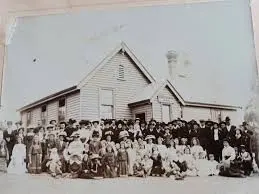
WANDONG Primary School has celebrated a remarkable milestone, marking 154 years of education, community spirit and local heritage with a day of festivities that brought together families, alumni and residents from across the district.

WandongPS02 Pic 2 1068w WebRdy

Founded in 1871, Wandong Primary began as a modest bush school serving the children of early settlers and workers from the region’s timber and rail industries. The original timber building, warmed by pot-belly stoves in winter and cooled only by open windows in summer, was the centre of early community life. Children arrived on foot, horseback or by the early rail services that helped shape the town.

As Wandong grew through the early 20th century, the school became a social hub, hosting picnics, sports days and community gatherings. The mid-century years saw a steady expansion of facilities, with upgraded classrooms, a library and improved play spaces supporting a growing enrolment. Despite modernisation, the school retained the small-community feel and deep local involvement that have defined it for generations.

In more recent decades, Wandong Primary has embraced contemporary learning, introducing digital technologies, environmental programs and strengthened wellbeing initiatives, all while maintaining its connection to local history and community traditions.

Last week’s 154th anniversary celebrations showcased that blend of old and new. The afternoon fete transformed the school grounds, with families enjoying food and market stalls, heritage displays, and entertainment from students and local performers. Children flocked to rides and attractions, including carnival-style games and face painting, while past students spent time revisiting decades of photos and memorabilia.

Classrooms were decorated to reflect different eras of the school’s past, and the community showed strong support through raffles and fundraising stalls that will help provide new resources for students.

The milestone event not only honoured the school’s long history but also highlighted the strong community spirit that continues to underpin Wandong Primary School after 154 years.

Council’s campaign starts

THE Mitchell Shire Council has marked the start of its 16 Days of Activism campaign with its Seymour Parkrun event, draping the track around the Goulburn River orange in partnership with Seymour Rotary Club, Victoria Police, Zonta and the Brotherhood of St Lawrence.

Approximately 70 runners made the trek to mark the fourth annual walk around the river, with a multitude of trees and the catchment area draped in orange to mark the 16 Days campaign.

Mayor Councillor John Dougall addressed runners prior to the start of the event, highlighting how important the 16 Days campaign is to the Mitchell Shire Council.

The event is the fourth annual run held between Seymour Parkrun in conjunction with the Mitchell Shire Council, Zonta, Rotary, Victoria Police and the Brotherhood of St Lawrence.

Grant to make history

THE Wandong History Group has secured a significant boost for its newest storytelling venture, receiving $9,405 from the Foundation for Rural and Regional Renewal (FRRR) to create an intergenerational documentary titled Moments That Matter.

The project will see local schoolchildren work with the History Group to capture Wandong’s past and present on film, a creative bridge between generations designed to preserve community memory while fostering youth engagement. Once completed, the documentary will be shared with the wider community, ensuring Wandong’s stories continue to be told well into the future.

Formed in 2001, the Wandong History Group has spent more than two decades preserving the rich social, industrial and environmental heritage of Wandong and Heathcote.

The grant is part of FRRR’s Strengthening Rural Communities program, which this round will support 78 locally led projects across the country. FRRR, the only national foundation focused solely on remote, rural and regional Australia, received 331 applications, highlighting the growing demand for grassroots investment.

Jill Karena, FRRR’s Head of Granting, said the projects funded reflect both the resilience and the immediate needs of regional communities.

“Grassroots organisations are the backbone of rural Australia. They deliver vital services, create opportunities for connection and respond to local needs with creativity and commitment. These locally led efforts result in tangible improvements and build stronger, more inclusive communities,” Ms Karena said

For the Wandong History Group, the funding marks another milestone in its long-running mission: ensuring that the stories that shaped the township are never forgotten, and that the next generation understands the place they call home.

Wandong’s heritage showcase

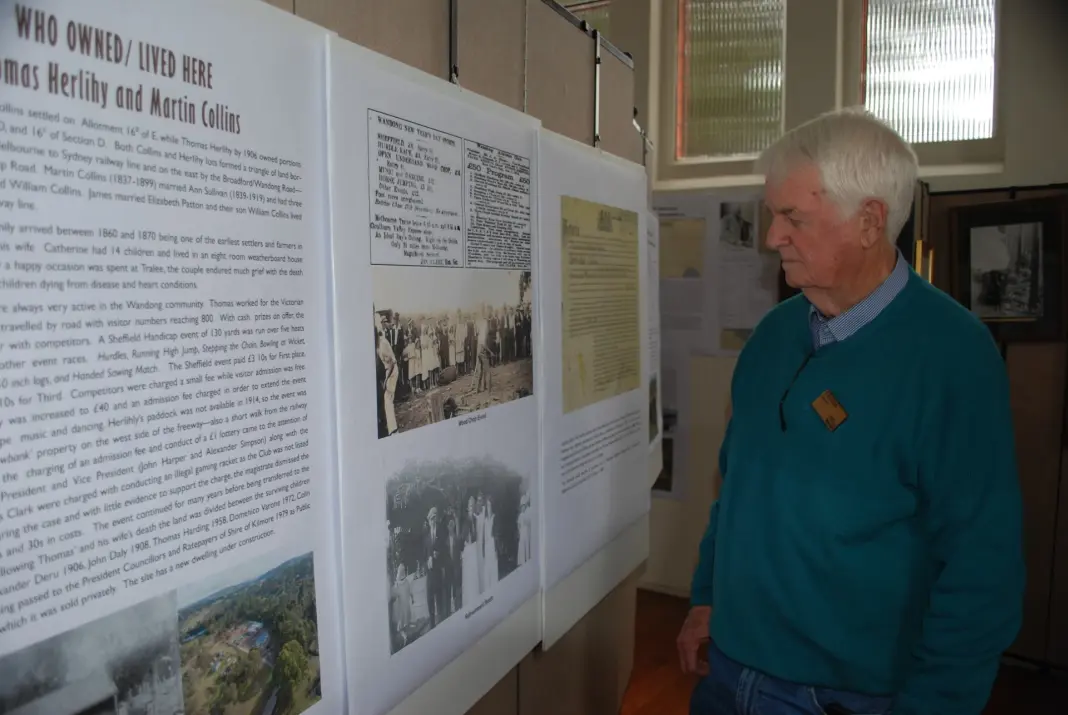
WANDONG took a thoughtful look back at its history last Friday when residents gathered for the Wandong History Group’s anticipated “then-and-now” exhibition at St Michael’s Catholic Church.

The display brought together an engaging mix of archival photographs, written accounts and modern-day images, allowing visitors to trace how the township has transformed over the decades. Attendees were able to wander through the collection at their own pace, comparing familiar landmarks and learning about the people who shaped the early character of the area.

Held alongside the Wandong State School’s 154th birthday celebrations, the exhibition added to the festive atmosphere in the community, creating a shared moment of reflection on both heritage and progress.

The event ran for four hours on Friday, November 28, with a well-attended PowerPoint presentation at 5.30pm offering additional insight into key milestones in Wandong’s development. Many visitors commented on the depth of local knowledge showcased throughout the afternoon.

A nostalgic display of school memorabilia, featuring old photographs, classroom materials and past students’ work, provided an endearing reminder of how education in the district has changed over time.

By the end of the evening, the exhibition had clearly struck a chord with the community, sparking conversations, shared memories and renewed appreciation for Wandong’s unique story.

Emergency services get $30m grants

Emergency services volunteers across northern Victoria will receive more trucks, equipment and modern facilities to help keep communities safe.

This year’s round under the State Government’s Volunteer Emergency Services Equipment Program (VESEP) delivers more than $30 million in grants – the largest ever – across the Country Fire Authority (CFA), Victoria State Emergency Service (VICSES), Life Saving Victoria, Volunteer Marine Search and Rescue, and other emergency service organisations.

Member for Northern Victoria Jaclyn Symes congratulated the recipients of this year’s VESEP grants, which will deliver new vehicles, equipment and facility upgrades across Victoria.

Funding for this round includes almost $20 million for more than 40 vehicles, more than $5 million to update 15 facilities and more than $1 million for operational equipment across the state. Seymour Fire Brigade received $445,000 for a medium tanker.

Seymour SES received $1253 for equipment. District 12 Headquarters received $4739 for a generator replacement. Strath Creek/Reedy Creek Fire Brigade got $101,500 for a field command vehicle.

CFA has welcomed more than $22.6 million in grants. The VESEP funding been spread across 168 projects which included a range of facility upgrades and replacement vehicles for brigades including 14 medium tankers, 12 ultralight tankers and 31 field Command vehicles (FCV).