





This content is part of a paid partnership with Google to promote Google Trends.
Electric and hybrid vehicles are becoming an increasingly prominent part of the global automotive industry as manufacturers and consumers consider alternatives to traditional petrol-powered cars. However changing search trends suggest public interest for the two is not following the same path.
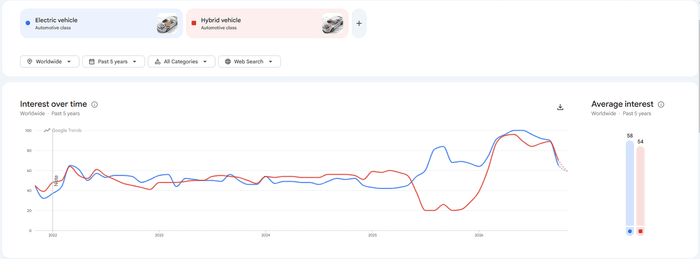
Google Trends data comparing worldwide searches for electric vehicles and hybrid vehicles over the past five years reveals several shifts in consumer interest, particularly throughout 2025 and into 2026.
Since 2022 both vehicles followed similar patterns, experiencing comparable fluctuations in search interest. However, the trends began to separate at the start of 2025, when searches for hybrid vehicles briefly moved ahead of electric vehicles.
By the middle of last year, the pattern had changed significantly. Search interest in electric vehicles increased, while interest in hybrids dropped sharply. Moving into 2026, the trends shifted again, with hybrid searches recovering alongside the peak of interest in electric vehicles.
So, what is driving the changing interest?
In 2025 there was a major global market and an increase in the availability of electric vehicle models. According to the International Energy Agency (IEA), global electric car sales exceeded 20 million in 2025, a 20 per cent increase from 2024. The growth was particularly strong in Europe and China. The availability of more affordable electric vehicles, like the ones manufactured in China had also helped introduce the technology to new markets which attracts potential buyers.
As electric vehicles gained momentum across major markets, public attention may have shifted fully towards electric technology, contributing to the contrasting search trends, as hybrid vehicles show a large drop in searches at the same time electric vehicles searches ascended.
The increase in both searched topics at the beginning of 2026 reflects a consumer interest in comparing vehicle options. Now that manufacturers have expanded their ranges and governments continue to adjust policies and incentives around vehicles, people are comparing both technologies for consideration.
Within Australia the joint climb at the start of the year stems from a seasonal explanation. Research from Australian automotive marketplace carsales identified January as a particular active period for vehicle shopping, with website audience traffic increasing by 14 per cent compared to December. Due to the Christmas and summer holiday period giving consumers more free time to research their next vehicle as well as using the start of the year to reassess their transport needs.
While electric vehicles continue to expand across global markets, the consistent interest in hybrid vehicles highlights the importance of affordability, convenience and accessibility in shaping consumer decisions. Rather than choosing one over the other, people appear to be exploring and researching which option best suits their needs.

