Home Blog Page 149

Cricket record 218 innings

Also by Seymour and District Cricket Association President Mitch Itter

Seymour Club A Grade

IN round four one day matches, the SDCA resumed its season following its recess for the Melbourne Cup.

The crowd cheered on their respective teams, Tallarook, and Yea for its grand final rematch at Tallarook.

Yea won the toss and chose the pitch, but they found themselves in early trouble.

Fifth in the order, Edi Waghorn was able to steady the ship with 39 runs and at the end of the order, Austen Ross and Will Dalton had a 33-run partnership creating a Tigers capital of 129 runs.

Tallarook’s Blake Munari-O’Dwyer, Xavier Arandt, and Matt Archibald each claimed two wickets and five of those were assisted by catches. Arandt was grippy with three and Andrew Dundon, two.

Tallarook got off to a slow start in its chase, with some tight bowling up front.

Joshua Rudge (37), Mitch Itter (42), and Lachlan Watts (38 not out) batted in that order and helped the home side defend their top position on the ladder, 131 to 129.

At the Puckapunyal Army base, the home side hosted Avenel.

sport Puckapunyals wicket taken by Avenels Jamison Black not pictured 1068w WebRdy
HOW’S THAT!: Puckapunyal’s Henry Long lost an early wicket to Avenel bowler Jamison Black on Saturday.

Despite winning the toss, Avenel fielded first, to tryout a new spin bowl its captain Travis Stefanos said.

Jamison Black quickly dismissed Henry Long (1), but it was all one-way traffic from there as Charles Davies produced a record innings for Puckapunyal in one of the most dominant performances the SDCA has seen (218 not out).

Davies played 138 balls including 17 fours and 12 sixes, and a partnership with Nicholas Bennetts thrilled the crowd (65) until Warren Dowley claimed his wicket.

With such a mammoth total to chase down, Avenel was never really in the game and a couple of early wickets from Ciaran Fountain made sure of it.

Stefanos carried his bat, (75 not out) but Avenel’s innings was 139 runs short, 315 to 176.

Alexandra made the trip to Seymour and made the Maroons work hard for the win after posting a competitive total, 159.

Vinu Hewage (44) and William Ashton (30) were pivotal for Alexandra through the middle order before Justin Leary added some valuable lower order runs (21).

It was an even spread with the ball for Seymour as Brodey Pointon, Braidon Horkings and Daniel Bergowicz all finished with two wickets.

Seymour got off to a steady start before the match winning partnership was formed between Lachlan Drummond (51) and Bergowicz (28).

Despite a flurry of late wickets, Seymour was able to get over the line with two batters left in the sheds, 159 to 157.

Atmos Renewables B Grade

B grade also saw home side victories, some closer than others.

Tallarook defeated Yea, 78 to 73 and Puckapunyal closed the gap against Avenel, 117 to 116, and Seymour was no match for Alexandra, 205 to 95.

In round five, Pyalong are back from the dry, I mean bye. They take the security check to play Puckapunyal and Tallarook head north to play Avenel, while Yea is hosting Seymour and Alexandra have a bye.

As always, the B grade matches are reversed and, in each grade, Tallarook are the team to beat.

Pet of the week

OUR VIP pet is Monty.

Monty is a rescue cat who was adopted as a two month old kitten.

Monty is dearly loved by the Wood family from Broadford and they said he has had a rough trot in his first year of life catching cat flu and then the deadly FIP virus.

Thanks to devotion and TLC, Monty has just been given the all clear and is now fully recovered.

Do you own a Very Important Pet?

Email us their best picture to news@ncreview.com.au with their name and town, or hand in a photo to our reception staff at 3/87 Sydney Street, Kilmore.

2026 brings GR Corolla upgrades

TOYOTA has announced a suite of performance-focused upgrades for its GR Corolla hot hatch, with the refreshed model due to arrive in Australian showrooms in early 2026.

Drawing on the brand’s motorsport experience, including development work in Japan’s Super Taikyu Series, the latest updates aim to improve driveability, cooling efficiency and overall handling when the car is pushed to its limits.

A major change is a significant boost in chassis rigidity. Toyota has increased the use of structural adhesive by 74 per cent—now totalling 32.7 metres throughout the vehicle—concentrated around the underbody and rear wheel wells. The strengthened structure is designed to better manage the severe vertical and lateral G-forces encountered during hard driving, while also improving everyday responsiveness.

Engine performance has also been refined. A new cool-air duct has been added to the secondary intake, opening at high revs to draw in outside air from the front grille and help stabilise temperatures. Toyota says this allows the 1.6-litre turbocharged G16E-GTS engine to maintain consistent performance under high loads for longer bursts.

Inside, the GR Corolla receives an audio upgrade, with the existing eight-speaker JBL system expanded to nine speakers through the addition of a cargo-area subwoofer. Noise management has been improved via updated Active Noise Control, while a new Active Sound Control system enhances engine tone in three selectable patterns tied to drive modes.

The updated model retains its 221kW/400Nm turbo triple, paired with either a six-speed manual or eight-speed automatic, and continues to offer all-wheel drive with limited-slip differentials for maximum traction.

Aircraft ready for fire season

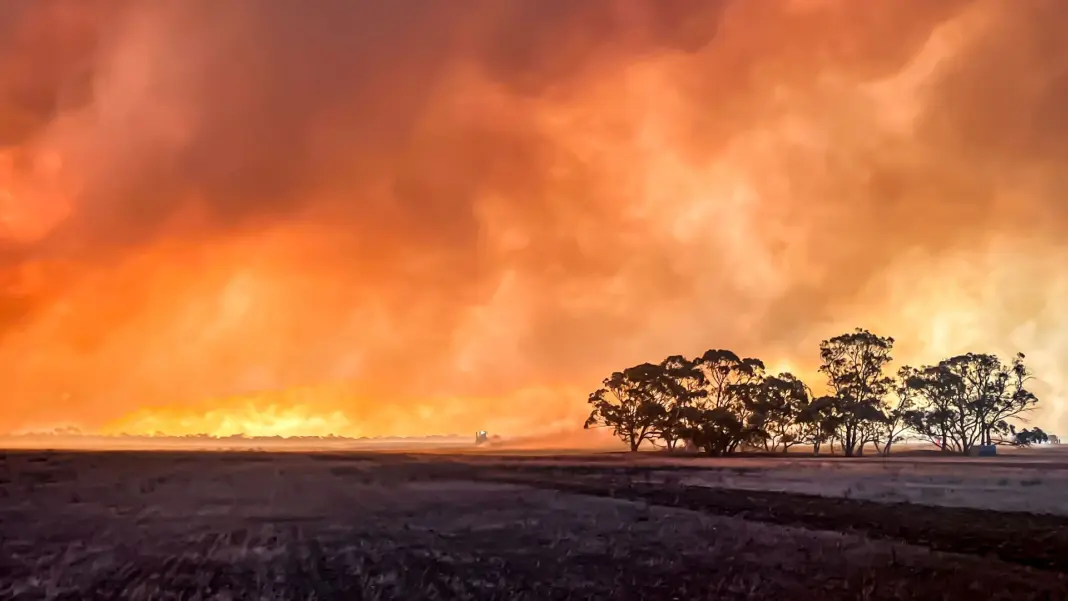
VICTORIA is ramping up its bushfire preparedness ahead of what’s expected to be a challenging fire season, with firefighting aircraft deployed early to key regions across the state.

Emergency Management Commissioner Tim Wiebusch said the early deployment of aircraft would provide vital support for ground crews as the state enters a period of elevated fire danger.

A total of 15 regional aircraft have been stationed ahead of schedule with the flexibility to move across Victoria according to emerging risks. The state’s aerial firefighting fleet includes firebombing, air supervision and information-gathering aircraft, forming a crucial part of Victoria’s bushfire response strategy.

Victoria also maintains a “call-when-needed” capacity of up to 100 additional aircraft, which can supplement the core fleet throughout the year. The remainder of this season’s fleet will arrive through November and early December, remaining on contract until at least late March, with extensions possible depending on conditions.

Commissioner Wiebusch said the early readiness of resources was critical given the dry conditions affecting much of the state.

“Emergency services will do everything they can to support the community, but preparedness is a shared responsibility. Ensure you have downloaded the VicEmergency app and understand how to use it so you know what to do and where to get information,” he said.

The Country Fire Authority (CFA) has also been working to enhance preparedness measures, increasing water storage capacity across regional areas and upgrading community refuges and fire danger signage.

With below-average rainfall recorded across Victoria authorities are urging residents to take steps now to prepare their properties and review their fire plans.

For up-to-date information on preparing for fires and other emergencies, visit emergency.vic.gov.au or download the VicEmergency app.

Prepare and plan for Fire Season

MITCHELL Shire Council has released its Annual Summer Fire Plan that uses the Victorian Fire Risk Register – Bushfire assessment process to identify, analyse and evaluate bushfire risk in the municipality.

This assessment process is facilitated by the Country Fire Authority (CFA) throughout Victoria, with members of the Municipal Fire Management Planning Committee providing the local information to undertake the assessment.

As warmer months approach, Council is reminding residents that a well-prepared property is more likely to withstand the threat of bushfire. Taking a few simple steps now can make a big difference when fire risk increases.

Council advises homeowners to start with practical actions around their property including clearing gutters and remove leaves, bark, and other debris around buildings, mowing or slashing grass and weeds to less than 10 centimetres.

Residents should also trim low branches and vegetation near buildings and fences and remove rubbish, garden waste, and other flammable materials.

For rural or semi-rural properties, additional precautions are recommended including reduction of fuel loads for at least 20 metres around homes, boundary fences, and neighbours’ assets.

Landholders should also build a fire-safe paddock or refuge area for livestock, including a mineral earth break and maintaining low fuel loads and create a 10-metre firebreak around property boundaries adjoining townships.

Council is also taking steps to prepare for the season, including the annual roadside slashing program, fire prevention property inspections, and maintenance of parks and open spaces.

Residents can find more local advice and download the Summer Fire Plan at Mitchell Shire Council’s emergency page or access detailed guidance from the CFA at cfa.vic.gov.au/plan-prepare.

State’s funding record for the Animal Welfare Fund

MINISTER for Agriculture, Ros Spence recently announced that applications for the Animal Welfare Fund are open as $1.6 million will be spent to support companion animal welfare across Victoria.

Over the past decade, the Animal Welfare Fund (AWF) Grants Program has shared over $14.75 million in funding to not-for-profit animal shelters, foster care organisations and community vet clinics, directly improving the wellbeing of companion animals across Victoria.

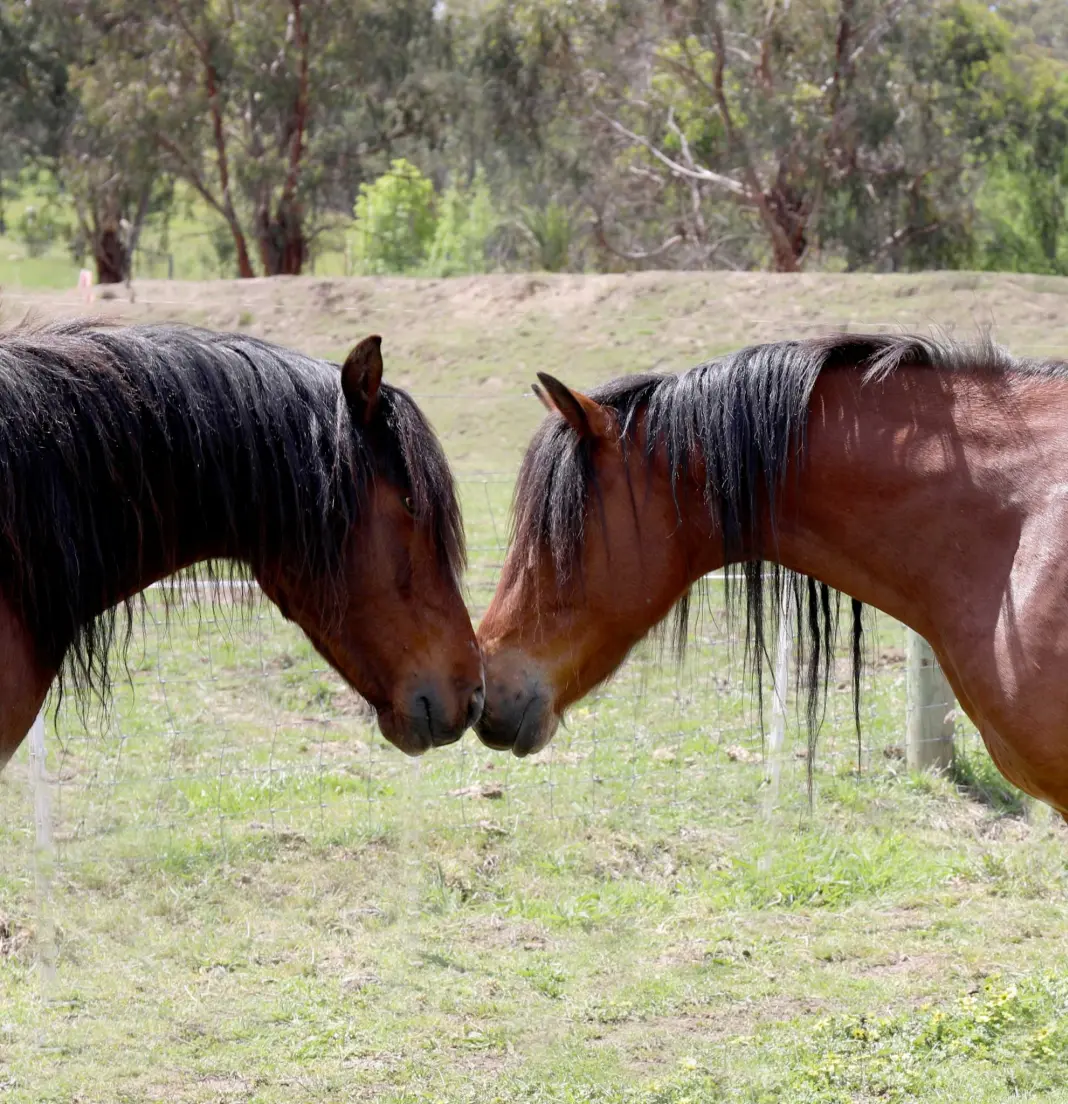
In 2023, the Mountain Brumby Sanctuary Broadford received $86,000 to help streamline its sanctuary operations under the pet desexing and equine rehabilitation grants program.

Vice President Jo Curtis said its day to day operations changed forever.

“The fact that we could get a tractor, a crush, a trainer, and cover some vet bills was a real lifesaver,” she said.

“The tractor has been a game-changer. Making it easier to manage the paddocks and the round bales of hay, it reduced the physical demands on our volunteers.

“Our team [has] achieved remarkable success in training and rehoming a large number of Brumbies, exceeding initial expectations.

“Handling has facilitated smooth transitions, ensuring a better chance at forever homes.

“Working with the Brumbies has been an incredible opportunity for our volunteers to learn and grow and acquire new skills and confidence.

“We are facing a challenging time due to a shortage of volunteers, and we urgently need more local help to ensure its smooth operation.

“Although the process is time-consuming, we’ve chosen to reapply for another grant to obtain necessary funds and facilitate the rehoming of additional Brumbies, through training and veterinary care.”

To apply and for more information, visit animalwelfare.vic.gov.au

Applications close on Thursday, November 27.

Funding for wildlife volunteers

The Victorian Government is also supporting its wildlife rehabilitator volunteers who dedicate their time and expertise to care for sick, injured and orphaned wildlife.

The grants are providing more than $310,000 to support 150 wildlife shelter operators and foster carers by improving the standard of care they provide, enhancing facilities to treat, house and rehabilitate wildlife for release, and boosting their skills and knowledge through education and training.

Since 2015, the Victorian Government has invested $7.4 million to support the work of foster carers, authorised wildlife shelter operators and key wildlife organisations.

The Government committed $7.2 million from the 2023-24 State Budget for wildlife welfare and preparedness actions.

The 2025-26 State Budget allocated an additional $2.1 million to support the protection of wildlife, which will continue support for Wildlife Victoria Hotline and provide support for shelters and carers to rehabilitate wildlife.

This funding delivers on the Victorian Government’s long-term plan to protect the environment – Biodiversity 2037.

For more information, please visit wildlife.vic.gov.au/grants/wildlife-rehabilitator-grants

Major upgrades for Seymour Greyhound Adoption

GREYHOUND Racing Victoria (GRV) will undertake major upgrades to its Greyhound Adoption Program (GAP) facility in Seymour, strengthening its commitment to the welfare and wellbeing of retired racing greyhounds.

The $5 million redevelopment will be jointly funded through $3 million from the Victorian Racing Industry Fund and a $2 million contribution from GRV.

The project will deliver refurbished and modernised facilities, including upgraded veterinary operations, new exercise yards, an administration centre and additional kennels – boosting the centre’s capacity by 40 per cent.

Since 1996, the Greyhound Adoption Program has been helping retired racing greyhounds transition from the track to family life, becoming Australia’s largest greyhound rehoming agency.

The Seymour site has served as the program’s main hub since 2003 and plays a crucial role in caring for and preparing greyhounds for adoption, supported by a smaller centre in Tullamarine.

When completed in 2029, the upgraded facility will allow an additional 55 greyhounds to be adopted each year giving even more dogs the chance to find loving homes.

The redevelopment follows recent improvements at the Seymour site, including new day yards that provide more space for dogs to play and exercise freely.

GRV Chair Tom Salom said the redevelopment would have a lasting impact on greyhound welfare.

“This project to improve and expand our Seymour facility will enable our retiring greyhounds to have the best quality of life before they are adopted into loving families,” he said.

GRV said the upgrades demonstrate its ongoing commitment to animal welfare and maintaining the program’s standing as a world leader in greyhound rehoming.

For more information on adopting a greyhound, visit gap.grv.org.au.

Reflecting on the Tomb of the Unknown Soldier

By Rob Mitchell MP – Member for McEwen

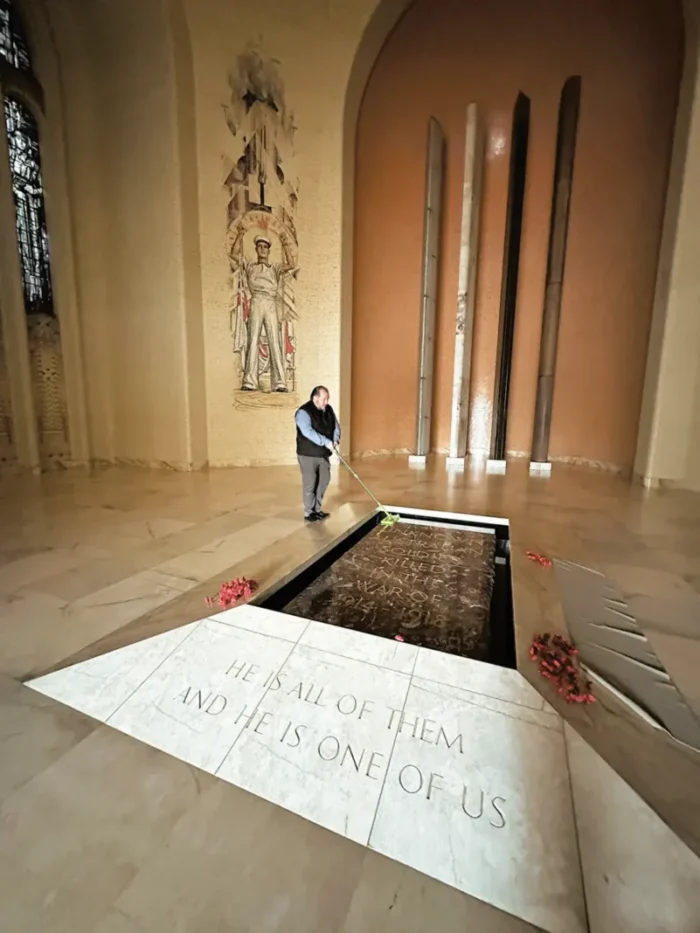
“HE is all of them. And he is one of us.”

These immortal words were delivered on the 11th November 1993 by then Prime Minister the Hon. Paul Keating MP.

After the Keating eulogy, the Unknown Australian Soldier was entombed in the Hall of Memory at the Australian War Memorial in a moving ceremony laden with symbolism.

He is buried in a Tasmanian blackwood coffin with a slouch hat and a sprig of wattle on top. The soil from Mouquet Farm in Pozières, which Charles Bean described as being more deeply sown with Australian sacrifice than any other place on earth, was sprinkled onto the coffin by World War I veteran, Robert Comb who served on the Western Front.

His unscripted words just as the lone bugler played the Last Post, “you’re home mate,” symbolised the importance of this event. From his trip from Australia to the fields of Villers Bretenoux, to his final resting place at the war memorial, the Tomb of the Unknown Soldier is not a glorification of war, it is a symbol of a generation lost.

A surrogate of the battlefields they could never visit to see their mates and remember them. So as we gather at the 11th hour of the 11th day of the 11th month, we mark the anniversary of the 1918 Armistice that ended World War I, significant because it is when fighting ceased.

Millions had lost their lives during the war, among them more than 60,000 Australian service personnel – about 20% of those who served.

The numbers of those injured physically, mentally or both were greater. During the war and after its end, survivors returned home to a country both grateful for their service and traumatised by the war’s enormous cost.

When we reflect on those who never came home, we lost more than just the generation of young men, we think about all the things they could have achieved but never had the opportunity to. A generation of men who could have been doctors, lawyers, scientists, farmers, truck drivers, inventors or engineers.

As the Director the War Memorial put it, somewhere in those graves of 60,000 Australians (of which 35% are unknown) could have been the person who found cures for cancers and other diseases. We will never know. Not only did war rob us of that generation, but it robbed us of the generations of their families that would have followed.

Mitchell 2 1068w WebRdy

I reflected on this deeply when I had the honour to pay my respects and spend a morning recently cleaning the tomb of the unknown soldier on a crisp Canberra morning.

The first national service to commemorate Remembrance Day was held in Canberra on 10 November 1946. It honoured those who gave their lives in the wars of 1914–1918 and 1939–1945.

In 1950, after a campaign by the Returned Sailors’, Soldiers’ and Airmen’s Imperial League to include a minute silence, Remembrance Day has been held on 11 November ever since. In 1997, our Governor-General, Sir William Deane, strengthened the meaning of Remembrance Day. Deane issued a proclamation urging Australians to “… observe, unless impracticable, one minute’s silence at 11am on Remembrance Day each year to remember the sacrifice of those who died or otherwise suffered in Australia’s cause in wars and warlike conflicts.”

Now on Remembrance Day, we commemorate the loss of Australian lives from all wars, conflicts and peace operations. As we pause on Remembrance Day, our thoughts turn to war’s enormous cost and the toll it takes, not only on those who fall but on all who serve and their families.

Let’s not forget the final lines of Keating’s oration; “It is not too much to hope, therefore, that this Unknown Australian Soldier might continue to serve his country – he might enshrine a nation’s love of peace and remind us that in the sacrifice of the men and women whose names are recorded here there is faith enough for all of us.”

We will remember them.

Grant applications made easy

COMMUNITY organisations across rural, regional and remote Australia now have a powerful new resource to back up their funding bids, with the Foundation for Rural and Regional Renewal (FRRR) launching a free online Community Data Tool.

Launched on November 6, the tool gives local groups easy access to up-to-date and reliable data to demonstrate the need behind their projects, strengthen grant applications, and inform local service delivery.

Developed by Seer Data and Analytics, commissioned by FRRR and funded by the Australian Government through the Rebuilding Regional Communities program, the tool consolidates information from a range of trusted public data sources into one easy-to-use platform.

FRRR’s Head of Granting, Jill Karena, said the new tool makes it simpler for community groups to access credible, location-specific information that can help tell their community’s story.

“We commissioned the FRRR Community Data Tool to make it super simple for groups to pull up key data about their community, just by entering their location,” Ms Karena said.

“It provides information such as population, gender split, remoteness classification and SEIFA rating, all drawn from reliable public data sources. Users can also explore more detailed insights into health, wellbeing, workforce and income levels.”

Ms Karena said access to this kind of data, at no cost, will help grassroots organisations better advocate for their needs and highlight the impact of potential funding.

Community leader Tim Whitaker, from the Bega Valley Data Collective, has been trialling the tool and described it as “invaluable” for regional initiatives.

“Accessible, reliable local data is the foundation of genuine community resilience. The FRRR Community Data Tool is the first step for community groups to prove the need for effective, place-based solutions,” Mr Whitaker said.

Community organisations are encouraged to explore the tool and share feedback to help refine it further.

The FRRR Community Data Tool is available at frrr.org.au/grantseeker-resources.

IN part three of the Review’s history series, 57-59 Sydney Street, MacNamara’s Irish Pub features as a building which is still a popular destination for solo, family and group travellers.

The Kilmore Historical Society has carefully curated a blurb to populate a plaque which has been attached to the building’s street frontage to stimulate local history and provide a point of interest for tourists and weekend historians.

Its plaque reads:

Former Hay & Grain Store 1861

Erected in 1861 by John Kelly Trainor as a hay and grain store and was later converted to the Hibernian Hotel about 1864. It was renamed the Railway Hotel to coincide with the construction of the North East rail line in 1871.

It was a popular place to hold meetings and one such event took place when the Kilmore Dairy Company held its annual meeting of shareholders on September 4, 1920.

The hotel has seen many owners and licensees over the years. Patrick O’Neill was licensee 1874-93, Mr. Williams c1926-38 and Nora and Jack Harrington from the 1940’s to 1952. The hotel was renamed ‘Macs’ by then licensee Duncan McPherson in 1957.

It is also sometimes referred to as MacNamara’s Irish Hotel, following an ‘Irish’ makeover in 2006.

A small weatherboard addition was added to the south side in 2006.

Funding for its plaque was generously provided by the Inland Rail project.

Behind the scenes, the historical society has been preparing a publication, Kilmore: a Walk through History.

“It will be going to the publishers in the next couple of weeks and should be on sale by the end of November,” committee member Rose King said.

“It’s 120 pages and will cost $25. There is a map giving the location of each building/site. The QR code will take you to a page with more information about the site/building.

“It’s a really good way for residents, particularly newer residents to explore and find out more about the town.”

What a wonderful Christmas present.

In the meantime the Review will feature another historic building in next week’s edition, 69 Sydney Street, its Former Blacksmith’s Shop c1860.