THE City of Whittlesea has responded to questions from the Whittlesea Review following last week’s story about a local resident who was fined while his car was parked in his son’s driveway.
A Council spokesperson said the City of Whittlesea does not comment on individual infringement matters but emphasised that parking restrictions are enforced in accordance with the Road Safety Road Rules 2017 (Vic) and Council’s Local Laws.
“Council officers enforce parking restrictions in accordance with the Road Safety Road Rules 2017 (Vic) and Council’s Local Laws to ensure safety, accessibility and fair use of public spaces,” the spokesperson said.
“Under Victorian road rules, a vehicle must not be parked in a way that obstructs a footpath, nature strip, or access to a property. Even when parking in a private driveway, any part of a vehicle that extends over a footpath or nature strip creates a safety hazard, particularly for people with a disability, parents with prams and others using the footpath.”
The spokesperson added that anyone who believes a fine has been issued in error, or who has special circumstances, can request a review.
Details on how to seek a review are available on the Council’s website at www.whittlesea.vic.gov.au/fines or by calling 9217 2170.
A WOLLERT woman is celebrating a life-changing $2.5 million TattsLotto win and she’s making sure her beloved dog will also share in the spoils.
The jubilant lady held one of eight division one winning entries nationally in TattsLotto draw 4621, drawn on Saturday, November 1, taking home an incredible $2,554,585.80.
While she plans to retire as she approaches her 70th birthday, the lucky winner said her four-legged companion will be the ultimate beneficiary of her windfall.
“I’m turning 70 soon, and I think it’s time to finally finish work. I’m currently telling my dog that we’ve won Lotto! He’s going to have the biggest inheritance,” she said.
The thrilled winner said she had no idea she’d become a multi-millionaire until she finally picked up a call from lottery officials after missing several earlier attempts.
“Oh my god! What did you just say? I’ve won $2.5 million? Wait! I need to write this down. I had absolutely no idea that I had won! I usually receive an email if it’s a winner, and I’ve been busy working from home, so I haven’t had time to check my ticket,” she recalled in shock.
Laughing through tears, she described the moment as “the best phone call ever.”
With retirement on the horizon and her westie’s luxurious future assured, the Wollert woman said she plans to take time to “let it all sink in” and enjoy her newfound freedom.
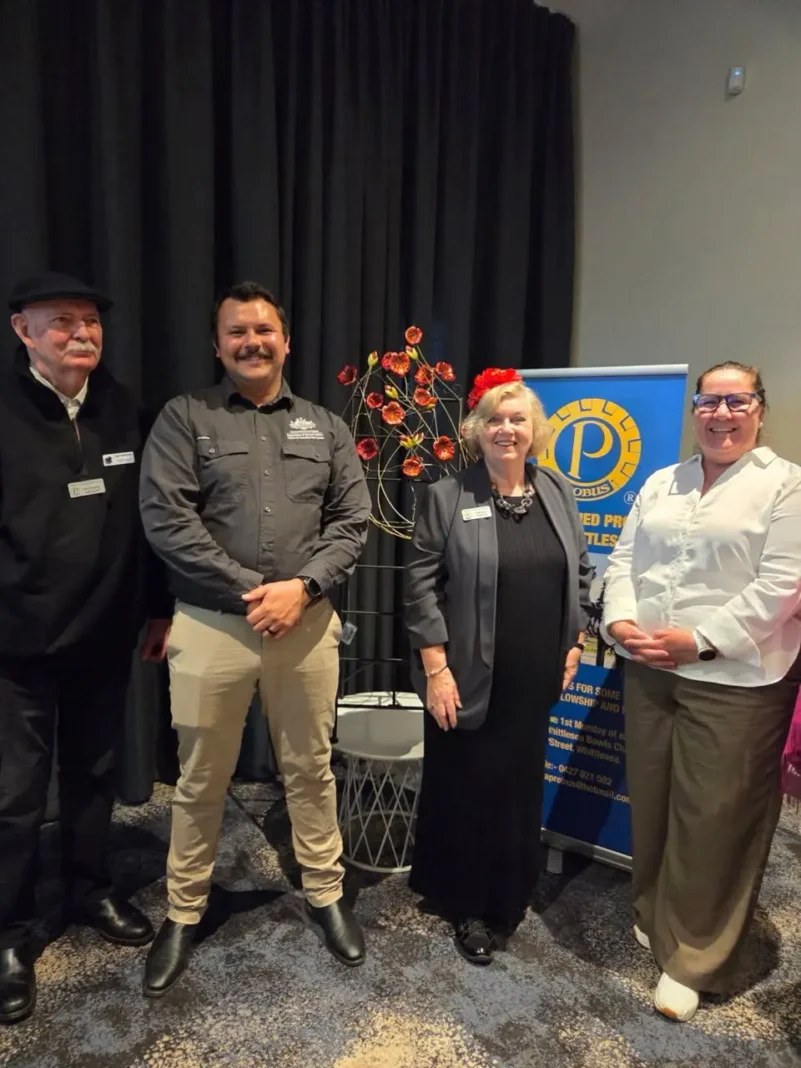
THE Combined Probus Club of Whittlesea has paid tribute to those who gave their lives in service to the nation.
When planning the club’s November meeting, organisers felt it fitting to dedicate the occasion to remembrance and reflection. An approach to the Office of Australian War Graves (OAWG) was met with strong support, resulting in a memorable presentation on Monday, 3 November 2025.
The club welcomed Sheena Lambie, Assistant Director of Official Commemoration and Information Services, and Samuel Convey, Acting State Operations Manager Victoria, who spoke about the vital work of the OAWG in preserving Australia’s war history and honouring its fallen.
“Australia has been committed to the commemoration of our war dead since the First World War,” Ms Lambie told members.
She explained that the OAWG was established in 1975, evolving from the former Anzac Agency of the Commonwealth War Graves Commission (CWGC), and gained statutory status under the War Graves Act 1980. Today, the OAWG cares for the commemorations of more than 356,000 Australian servicemen, servicewomen and veterans across more than 2,300 sites of commemoration in Australia, Papua New Guinea and the Solomon Islands.
As an agent of the CWGC, the OAWG maintains official war cemeteries and individual graves of Commonwealth personnel who died during the two World Wars. The office also provides perpetual commemoration for Australian service personnel who died during or as a result of operational service in later conflicts.
Members were deeply engaged by the presentation, which featured a series of powerful images showing the scope of the OAWG’s work. Mr Convey detailed the extent of his own area of responsibility, which stretches as far as Hay, NSW, and includes 17 commemorative sites.
The professionalism and dedication of the presenters left a lasting impression on attendees, who expressed their gratitude and admiration for the work of the OAWG.
The meeting concluded with heartfelt thanks to Ms Lambie and Mr Convey, and a reminder of the enduring importance of remembrance and respect for those who served.
THE City of Whittlesea is taking steps to refine and strengthen how local heritage sites are protected, with councillors resolving at the recent Council Meeting to seek authorisation from the Minister for Planning to prepare and exhibit proposed Planning Scheme Amendment C280wsea.
The amendment aims to update the information and details for a number of properties already listed in the Heritage Overlay, Council’s key planning tool used to conserve places of cultural and natural significance. No new heritage places are being added as part of the proposal.
A recent review recommended updates to 66 existing heritage sites that require revised citations and Statements of Significance, with a further seven sites identified for other site-specific changes. In total, 73 sites would be affected by the amendment.
Mayor Cr Martin Taylor said the updates would play an important role in ensuring the City of Whittlesea’s heritage continues to be accurately documented and carefully managed.
“Heritage plays a vital role in the City of Whittlesea’s community identity by providing a lasting link to our rich cultural and natural history,” Cr Taylor said.
“Heritage places boost our local economy through tourism and allow future generations to enjoy and learn from these significant sites.
“The proposed amendment will ensure that Council, as well as developers and property owners, have access to the most accurate information about our precious heritage sites. This will help to inform decision-making and streamline the planning permit process.”
If the Minister for Planning authorises the amendment to proceed to exhibition, affected property owners and occupiers will be contacted and invited to provide feedback during a comprehensive community consultation period.
Council says the revised information will improve clarity for developers and landowners when lodging planning applications, and allow for more consistent and efficient permit assessments.
EACH year, as the clock strikes 11 on the 11th day of November, we pause for a minute of silence. For some, it’s a long-standing ritual; for others, it’s just another day in a fast-paced world that rarely stops for anything. Yet Remembrance Day, born from the armistice that ended the First World War, still carries a deep and enduring relevance to who we are today.
In 2025, few among us have a direct connection to those who served in the World Wars. The last living links to that history are fading, and with them, perhaps, a sense of immediacy. But remembrance is not about glorifying war, it’s about understanding the cost of peace. It’s about acknowledging that the freedoms and opportunities we enjoy were not inevitable but built on the sacrifices of those who came before.
Remembrance Day remains as important now as ever. It is not simply a commemoration of battles fought long ago, it is a reminder of the price paid for the peace and freedoms we often take for granted. The names etched on memorials across our towns and districts represent real people who once walked our streets, went to our schools, and shared the same dreams as we do today.
In an age of constant distraction, social media noise, political division, and global uncertainty, Remembrance Day invites us to slow down and reflect on values that transcend generations: courage, mateship, duty, and compassion. These are not relics of a bygone era; they are qualities that still define what it means to be Australian.
The relevance of Remembrance Day also extends beyond military history. It’s a reminder of our shared humanity, that war leaves scars on all sides, and that peace is something we must continually strive to preserve. As new conflicts emerge across the world, the lessons of the past remain painfully important.
Young Australians may not feel the same connection to the trenches of Gallipoli or the beaches of Normandy, but remembrance gives them a bridge, a way to understand that sacrifice and service come in many forms. Today’s service members, emergency responders, and even community volunteers embody the same selflessness that those earlier generations showed.
So yes, Remembrance Day still matters. It matters because it asks something rare of us: to stop, to think, and to remember not just what was lost, but what was gained, a nation shaped by resilience, unity, and hope.
Taking one minute each year to stop and remember may seem small, but it is a powerful act of respect. It honours not only those who fell in war, but also the enduring hope for peace that their sacrifice represents
MEMBER for Euroa, Annabelle Cleeland, has tabled a petition in the Victorian Parliament calling for urgent safety upgrades at the intersection of Hamilton Street and High Street in Broadford.
The petition, initiated by the Broadford Residents Action Group, has received an impressive 1160 signatures, reflecting the depth of community concern about the dangerous crossing.
Residents are urging the State Government and Inland Rail to include traffic lights and pedestrian safety measures in the new bridge project, warning that the current design will make an already risky intersection even more hazardous.
Ms Cleeland said she was proud to bring the community’s voice to Parliament.
“Broadford residents have been raising alarm about this intersection for years,” Ms Cleeland said.
“With the new bridge being built higher and steeper, it’s unacceptable that the plans don’t include traffic lights or proper pedestrian safety. These are simple, sensible measures that could save lives.”
The petition highlights that the new bridge will be 1.7 metres higher than the current road deck, with a 54-metre descent leading directly into the High Street intersection – a design that locals fear poses serious risks for motorists and pedestrians alike.
“Locals are frustrated and rightly so. They’re not being listened to by State or Federal authorities,” Ms Cleeland said.
“This is about basic duty of care. The community deserves a say in decisions that affect their safety.”
Ms Cleeland thanked BRAG for their strong and ongoing advocacy.
“This group has worked tirelessly to push for safer roads and better planning in their town,” she said. “Their persistence shows just how much the Broadford community cares about protecting one another.”
Ms Cleeland has called on the Victorian Government to work with Mitchell Shire Council and the Australian Rail Track Corporation to ensure traffic lights and pedestrian crossings are delivered as a priority before the bridge opens.
“Broadford deserves infrastructure that makes life safer, not harder,” she said.
MEMBER for Northern Victoria Wendy Lovell has urged the Minister for Transport Infrastructure to meet with local business owners from the Doreen Business Precinct to discuss their calls for additional car parking and a bicycle depot near the new Yan Yean and Bridge Inn roads intersection.
Business owners have voiced growing concern about the impact of the Yan Yean Road Stage 2 upgrade, warning that the new road alignment and landscaping could harm visibility and access to the precinct.
Recently released reference designs and artist impressions of the intersection show plans for tall trees surrounding the Old General Store and Post Office. Traders fear these trees could obscure the view of the precinct from both Yan Yean Road and Bridge Inn Road, reducing exposure to passing traffic and potentially affecting their signage rights, assurances they say were made when roadworks began.
Ms Lovell said she has raised these issues in parliament, calling on the Minister to meet directly with traders to understand their concerns and consider practical solutions that would help sustain local trade.
“I call on the Minister to meet with traders, and consider their proposed solution that includes new public car parking sites, as well as a bike depot and secure storage area to encourage active transport, all of which will help maintain visibility of the business precinct from the road,” Ms Lovell said.
Retailers have long argued that the redirection of traffic away from former entry points to the precinct will reduce passing trade and accessibility. They believe that extra parking and a dedicated bike facility would not only support local businesses but also promote sustainable transport options for the growing Doreen community.
WINNERS have been coming in thick and fast for local trainers during the spring racing carnivals.
Kilmore trainer Alicia MacPherson scored an impressive win with 4 year old maiden Frosted In Time at the Kilmore meeting on October 31.
The 4 year old led virtually led for the entire race! Eventually, winning by 9 lengths in the hands of jockey Cory Parish. MacPherson also won with You’re Two Vain at Corowa last Monday. The 4 year old Magnus gelding remains unbeaten after two jumpouts and three raceday starts.
The Melbourne Cup day meeting at Mansfield provided rich pickings for Seymour trainers.
Ron Hockley scored a double with Lord Chapel and Not Fake. Gordon Strang won with First Venture and maiden mare Couldbetracy ran a valiant second placing.
Don Dwyer started These Boots in a field decimated by scratchings and the 4 year old Proisir gelding won for the third time in as many starts since joining the Dwyer stable.
Further south at Bairnsdale Steve Noble scored a win with Charming Di in a benchmark 52 1200 metre event in the hands of daughter Samantha.
On Sunday Barry Malanczyn won with Second Nature in a 0-56 2050 event at Wodonga.
Rhys Archard took out the final race on the card with Warakurna, a five year old half brother to Royal Lass, another recent Seymour winner.
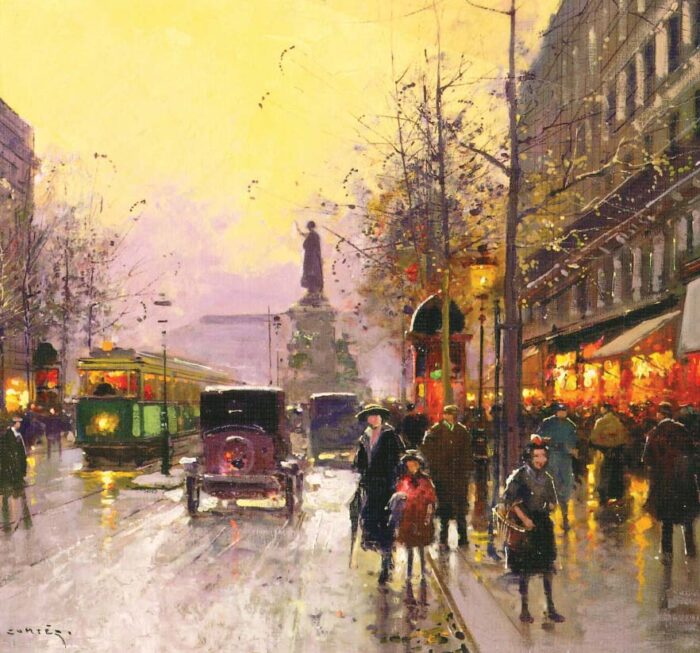
The accompanying scene is of Paris on Remembrance Day more than a hundred years ago. World War One had not long ended and its carnage and loss of millions was very poignant. On today, November 11 crowds gather in many lands, including Australia to mark Armistice Day and honour the supreme sacrifice of so many including more than sixty thousand of Australians “forever young”.
***
There have been numerous great accounts of the World Wars by distinguished writers. Top of the list in this country are the late Les Carlyon and prolific author Peter FitzSimons. Both wrote moving and factual books which became best sellers. FitzSimons wrote in one of his books about an incredible game of cricket as follows.
It was undoubtedly the most extraordinary game of cricket played. History records not a jot of who batted, bowled or fielded, nor even whether there was a result, but its extra-ordinariness relies on nothing as trivial as the score. It was where it was played that counts, and in what circumstances.
Gallipoli, December 1915. The battle had been lost, the struggle foregone. General Kitchener gave the orders to pull the Anzacs out and send them on to the Western Front in France. Under cover of darkness, the evacuation began on December 8. Over the next 11 nights, 35,445 men were safely evacuated on to the ships, suffering only one minor casualty in the process.
As the ranks begin to noticeably thin, it is decided that something should be done to alleviate whatever suspicions Johnny Turk might be harbouring about the decreased activity. The orders go out from First Division command that each battalion is to be as active as possible within sight of the Turks, primarily to create the impression that these visible men are the tip of the iceberg of the troops still in the trenches (many of whom have since departed).
Each battalion is to interpret these commands as it sees fit. Many choose to have men loitering about, gazing at the sky, just beyond the range of the enemy guns. Some men from New South Wales 4th Battalion have other ideas, though. Why not a cricket game? (Apart from mortar and rifle fire from the trenches above, that is.) The relationship between the Turks and the Anzacs have evolved by this time to the point where taking potshots at distant figures is not absolutely automatic but, on the other hand, the departing hospital ships are full of diggers who have trusted this line of reasoning too far.
It is a tentative group therefore who, on the afternoon of December 17, set foot onto the pockmarked patch of ground known as Shell Green (so named because it is under permanent Turkish artillery fire). The Turks in the trenches above must be wondering what on earth is going on as the game starts. Is this grenade-throwing practice? Or perhaps a method of whacking incoming grenades back to the trenches whence they came?
Who knows what they think, but for the first two hours of the game the Turks hold their fire and watch. But after two or three , hours the Turks have had enough of this strange spectacle, and start to send down some mortar fire to clear the Australians out. The Turks probably still didn’t know what was happening, but wanted whatever it was stopped. Did the mortar stop the cricket cold? Not bloody likely. According to the diary of one Granville Ryrie, quoted in Bill Gammage’s book The Broken Years, the game continued anyway, ‘just to let them see we were quite unconcerned … and when shells whistled by we pretended to field them. The men were wonderfully cheerful and seemed to take the whole thing as a huge joke.’
‘The shrapnel cut and hissed across the pitch and the outfield,’ the Australian War Memorial chronicles, ‘and there was as great a risk of lost life as a lost ball.’
When the Australians still didn’t retire, the Turks unleashed doubly heavy salvos of mortar fire and, to use Gammage’s phrase, ‘the Australians reluctantly called it a draw and retired to tea’.
Happily, there is no record of any player having to ‘retire hurt’, or worse, during the game.
Two days later, all players were safely evacuated to either be killed on the fields of France or to survive and make it homehome to Australia.
Shell Green now serves as a cemetery for fallen Anzacs.
VARIA
The opening Ashes Test begins at Perth Stadium on November 20. Sellout crowds are assumed at each of the five venues, especially on the first three days. The epic rivalry dating way back to 1877 has enthralled countless millions and inspired vast amounts of books – both prose and poetry. Pace bowlers are likely to dominate the series.
IT was a strong showing for local trainers at Kilmore’s Thursday afternoon meeting on November 6, with the eight-race card producing several impressive results for district stables.
Darraweit/Bolinda trainer and part-owner Alexandra Hurley added another win to her tally when Spun Silver took out the 1690-metre La Dimora Retirement Resort Pace. With regular reinsman and neighbour Tristan Larsen in the sulky, the improving six-year-old mare who began from the second line, enjoyed a perfect trail behind Joeys Hangover and finished strongly to win by 1.4 metres. The victory capped another fine training effort from Hurley, who has turned Spun Silver into a consistent performer. The mile rate was 1:59.2.
Former Kilmore trainer Wayne Potter, now based in Shepparton, struck with promising two-year-old Floppa in the J & A Mazzetti Painting 2YO Maiden Pace. Driven by his daughter Tasmyn Potter, the Ultimate Sniper–Itz Queenofbroadway colt fought out a tight finish before claiming a last-stride win in 1:56.2 — a performance that suggests more success ahead.
Sutton Grange horseman Ross Graham produced the training double of the day, taking out both trotting events. Three-year-old filly Lillys Tiger showed real talent in the Broadstead Kilmore Trotters Mobile, charging home from the rear to score by more than nine metres. Stablemate Quirky Character filled third place. Graham then combined with reinsman James Herbertson to land the MC Labour Pace with veteran mare Final Bow. The eight-year-old notched her 30th career win from 179 starts — a remarkable milestone for owner-breeder Ivan Collison — cruising home 13 metres clear in 2:00.7.
Other local highlights included Brett Cole’s Metro Memory, trained at Woodvale and driven by 18-year-old Riley Pace, who produced a strong finish to take the C&M Build Concessional Drivers Pace in 1:56.4.
Meanwhile, Heathcote’s Jim O’Sullivan and Avenel’s David Harris both recorded wins with Atomic Glory and Direct Command respectively, while Longlea trainer Glenn Sharp’s Midnite Muscle led throughout to claim the Picklebet Vicbred Voucher Trotters Mobile.
Kilmore will host its next meeting on Thursday, with local stables again expected to feature prominently.