Home Blog Page 855

DPV Health to improve LGBTIQ services

By Aleksandra Bliszczyk

DPV Health will take steps towards more inclusive services as it releases the final report of a needs analysis on improving the health and wellbeing of lesbian, gay, bisexual, transgender, intersex, or questioning people in the Hume and Whittlesea municipalities this week.

Jacqueline Tomlins, a consultant on the You Are Who You Say You Are report, and a teacher, researcher and member of the Victorian Ministerial LGBTIQ Task Force, said it revealed gaps in local support for members of the queer and transgender communities.

“What we found from talking to a range of different people of different ages who lived around the catchment areas is that there were a number of significant ongoing challenges both for younger people in school and study, and older people in employment, in accessing services or the lack of services and the sense of cultural visibility or safety in the area,” Ms Tomlins said.

The five areas of priority identified by the report were feeling included and affirmed in their identities; having their names and pronouns respected; safety; community connection and belonging; public celebration.

More than 150 LGBTIQ people were surveyed and many reported not feeling safe to be open about their sexual orientation or gender identity to their GP or other health professionals. Some were driving long distances for peer-supported services where patients felt they could rely on a sense of trust and understanding from the health professional.

The analysis was a part of DPV Health’s Rainbow Tick Accreditation, a national framework that helps organisations show they are safe and inclusive services for the LGBTIQ community.

One of the recommendations of the report, and a part of obtaining the Rainbow Tick, was providing education and awareness training to all staff.

“That’s the sort of thing that any organisation needs to be doing on an ongoing basis,” Ms Tomlins said.

“To ensure that the staff on any given day if somebody comes in, that person is going to get a welcome, that they aren’t going to be misgendered, that they won’t get a sense that they don’t have a place or belonging, that they won’t be asked unnecessary invasive questions, and that doctors and counsellors will be able to provide an informed service.”

When asked about the wider community, some respondents reported feeling unsafe in certain areas, at night, or being identifiably queer in any way, such as holding hands with their partner.

Low-level, ongoing hostility in respondents’ daily lives was common and something that many took for granted, while some experienced name-calling, bullying, harassment, aggression, hostility and violence.

The issue of visibility also emerged as an important factor in the focus groups and interviews, and the online survey.

The report found that visibility in the form of symbols like Rainbow flags, LGBTIQ groups and activities, and public celebration of annual events and significant dates was fundamental to creating cultural safety.

“It’s a huge protective factor for people that we need to have a sense of belonging and a sense of connection, and people talked about [how] it would be really nice to walk down the high street and see a Rainbow flag on a shop, or a cafe that has a rainbow symbol or a poster advertising an event … that was something that people really felt was missing where they lived,” Ms Tomlins said.

In May 2020 the City of Whittlesea hosted a Rainbow flag raising ceremony on the International Day Against Homophobia, Biphobia, Transphobia and Intersex Discrimination, a move which Ms Tomlins called simple but ‘quite a powerful thing’.

DPV Health will launch the report at an open online forum for LGBTIQ people on Wednesday at 6pm, to coincide with the International Day for Transgender Visibility.

Ms Tomlins will be the key speaker at the event, where she will acknowledge the significance of both the day and the steps DPV Health has taken to improve their services for LGBTIQ people.  

“We know that the health and wellbeing outcomes for [the LGBTIQ] community are not good, broadly, so this work is incredibly important and has the potential to save lives,” she said.

“I think it’s lovely that DPV Health have decided to launch on this day as an acknowledgement, and that’s the sort of thing that any organisation, any service in the region could acknowledge in some way. Put a trans flag out.”

DPV Health chief executive Don Tidbury said all its employees gathered on Thursday to celebrate the Rainbow Tick Accreditation, awarded by Victorian Commissioner for LGBTIQ+ Communities Ro Allen.

“To achieve Rainbow Tick certification on top of the hugely demanding COVID year is nothing less than amazing. Most importantly, over time it will make an enormous difference to the lives of LGBTIQ people in outer Northern Melbourne,” he said.

Registrations for the free You Are Who You Say You Are LGBTIQ forum are essential and can be made at www.eventbrite.com.au/e/lgbtiq-forum-you-are-who-you-say-you-are-tickets-141247780915.
Outcry over bunny dumped at Yarrambat Lake

By Aleksandra Bliszczyk

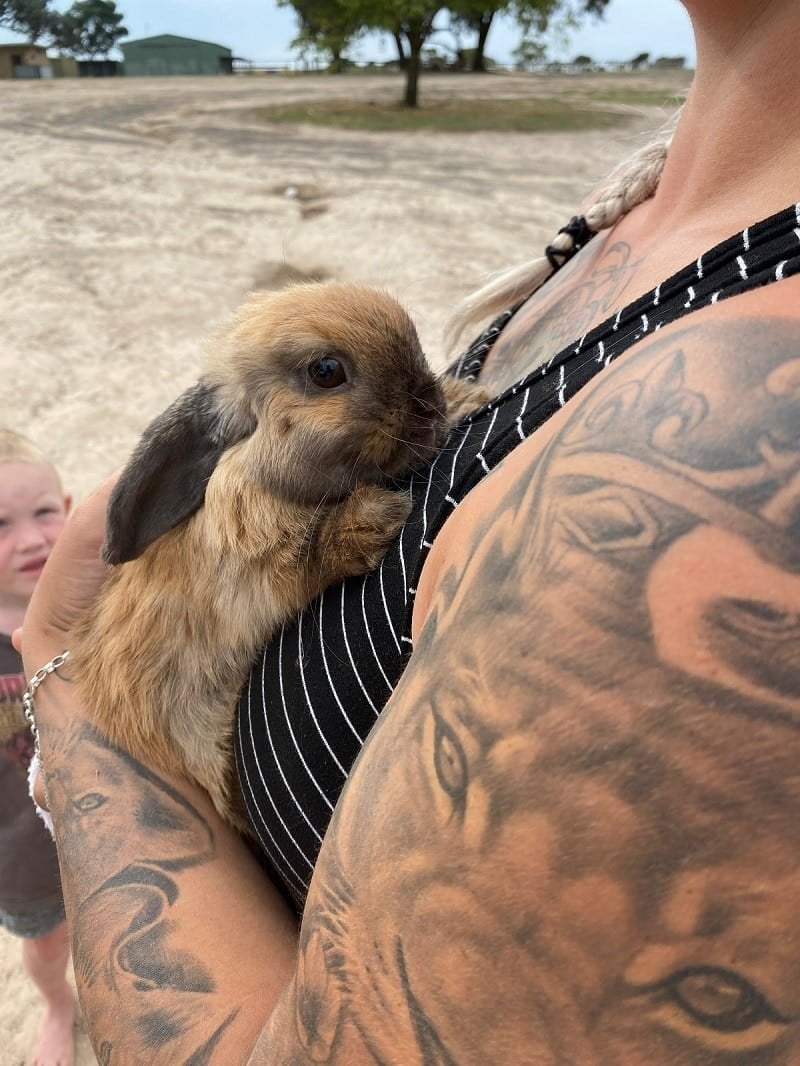
DOREEN resident Taylor Wyld was appalled at a pet bunny’s condition after rescuing it from Yarrambat Lake last weekend.

Lucy the rabbit has since undergone urgent surgery and medical attention after a man in a dark blue hatchback parked at the lake, put the rabbit on the ground, took a photo or video of her and drove off.

“I noticed him get out and I noticed that he’d grabbed something small and fluffy. I said to [my husband] he’s dumping something, but I wasn’t sure what it was,” Ms Wyld said.

“I [saw] this little tiny rabbit just sitting where all the wild rabbit holes were, and the poor thing was shaking, I went straight over to it, it didn’t even try and run away from me.”

She quickly noticed that Lucy’s jaw and teeth were misshapen, and realised the medical attention the rabbit needed might have been the reason for her abandonment.

bunny teeth
Lucy the bunny’s misshapen teeth.

“They could’ve at least tried to find a rescue or taken her to a vet, but I knew if she had’ve been taken to a vet, the chances of her being put down were very high,” she said.

After some online research she contacted the Bluey and Alice Bunny Refuge in Cockatoo, a 90-minute drive south of Doreen, where the carers determined her physical disability was most likely the result of incorrect backyard breeding.

Backyard breeding describes irresponsible breeding of pets, sometimes due to neglect when a pet becomes pregnant, but also often as a business.

In 2017 the Domestic Animals Act was amended by the State Government, making it illegal for pet shops to source and sell puppies and kittens unless they were from an approved shelter, rescue or pound, but backyard breeding is still practised nationwide and can lead to unwanted animals being mistreated or abandoned.

“When they had a look [under general anaesthetic] they were very shocked at what they had found. They didn’t realise that her mouth was so bad.” Ms Wyld said.

“Her whole jaw is misaligned, her molars don’t touch, so she is now going to be a very special needs bunny.”

bunny2
Lucy the rabbit gets some special attention.

Lucy will now live at the refuge where she can receive what may be ‘thousands and thousands of dollars’ of specialised care, to which is funded by the community donations.

Ms Wyld posted Lucy’s story on the Doreen Community Voice Facebook group and was overwhelmed with the hundreds of comments she received.

“I was absolutely blown away at how many people had commented and offered donations to her,” she said.

A friend of Ms Wyld’s started the GoFundMe page to originally cover her $120 adoption fee but raised more than $300 in five days, which will now be donated directly to the Bluey and Alice refuge.

Ms Wyld hopes her story will encourage people to think twice about buying pets from backyard breeders, and care more for animals.

“People that do this are heartless. They obviously have no heart and just care about the money that’s coming in their pockets,” she said.

“Seeing this makes you think, how many people think this is okay?”

.

Old Goulburn River Bridge to undergo $4.3 million restoration

By Colin MacGillivray

MITCHELL Shire Councillors credited the hard work and dedication of the Seymour community after endorsing a strategy for the restoration of the Old Goulburn River Bridge.

The bridge, which was first built in 1863 and updated in 1892, had been used as part of the Hume Freeway before its realignment, but was closed to vehicle traffic in 1987 and has been closed to pedestrians since 1998 because of vandalism.

Councillors voted in favour of a $4.3 million restoration package of the bridge at last week’s ordinary meeting.

Included in the package are provisions for the full restoration of all remaining timber bridge piers and abutments to ensure their long-term viability from conservation and load-carrying perspectives; the installation of a new six-metre wide, 108-metre long multi-span lightweight bridge structure on top of the restored bridge piers and abutment works; and three lightweight bridge trusses per span supporting a timber decking.

The bridge deck would be marginally below what council officers calculated would be a one-in-100-year flood level on the Goulburn River.

Cr Fiona Stevens said bridge restoration would support pedestrians and cyclists, but not vehicle traffic.

“Council has a legislative responsibility … to maintain the bridge to the extent that its conservation is not threatened and to ensure that the structure does not fall into a state of disrepair,” she said.

“[The community was] hopeful of a full restoration, and of course in an ideal world if we could rebuild this wonderful structure the way it was 100 years ago that would be fantastic, but the reality is we can’t, so the next best thing is making it look like she used to look as best we can, being true to the design as best we can and working with what’s available to us in this day and age.

“Heritage Victoria will have requirements that have to be met, but the closer we get her to the original design in the way she visually looks, the stronger the chance we have of getting that permit granted.”

Cr Stevens said the cost of $4.3 million was only indicative, and a more accurate figure for the cost of the restoration would be known after a structural report was undertaken.

Cr Annie Goble said the bridge was one of the most important parts of Seymour’s history.

“The Old Goulburn River Bridge is recognised for its heritage value, both by local, state and national authorities. It is included on the Register of the National Estate, the National Trust Heritage Register, the Victorian Heritage Register and a Mitchell Shire heritage overlay is on it,” she said.

“I want to applaud the community of Seymour and surrounds for not giving up on the project, because I don’t know if I would have had the strength to keep going.

“I think it will be an incredible multi-generational legacy, and I am proud to be a part of it.”

Cr Bill Chisholm said fundraising efforts by the community had played a large part in progressing the bridge restoration.

“The community have shown their support for this over the years. [They] have really stumped up and had significant funds that they’ve been prepared to put into this restoration. That’s a big tick by any measure,” he said.

Cr Rob Eldridge said the project was a ‘must-do’.

“We’re running out of time to save this bridge,” he said.

“It’s a very significant part of older Seymour, and it gives us the opportunity to open that up and have pedestrian traffic and bikes, and reinvigorate that area.”

Wallan comedian Jai Cameron back on stage

By Steph McNicol

AFTER a year of not being able to perform, Wallan-based comedian Jai Cameron is ready to get back on stage as part of the Melbourne International Comedy Festival in April.

The former Assumption College student started his comedy career in 2017 when he wrote his first show – Would You Like Fries With That?

“I was a crazy person and wrote an entire show … with no experience or practice, and over the course of four years my comedy voice has developed more and more,” Mr Cameron said.

“Comedy is certainly the hardest artform I’ve done, and I’ve sang, acted, danced and hosted television and radio in some pretty stressful situations but stand-up comedy is by far the hardest.

“The audience will either laugh or not laugh and there have certainly been nights where they haven’t laughed. But I have to solider on regardless so yes, I guess you need to have a thick skin doing comedy.”

Mr Cameron, 22, said 2020 presented several challenges for him career-wise and in his personal life.

“Working in the arts, we were the first industry to close and we are certainly slowly reopening. Of course, I sympathise with my fellow Victorians going through months of lockdowns,” he said.

“Personally, my wife Makayla worked on a COVID ward for three months at the Royal Melbourne Hospital, which was terrifying – worrying about her safety each day as well as my sister Stephanie working in emergency at the Alfred Hospital.”

Mr Cameron also had his wedding postponed twice – the second time during Victoria’s five-day snap lockdown.

“It was certainly the most heart-breaking moment I’ve ever experienced. Within 10 minutes I was on the phone to our guests and suppliers cancelling everything. But we managed to get married on February 21,” he said.

Mr Cameron said he was excited to return to the stage to perform his show titled Domestic.

​“My last comedy performance was in March 2020 at the School House Theatre at Seymour Performers Workshop. Little did I know I wouldn’t return to the stage for 13 months,” Mr Cameron said.

“I sense after the year Victorians have been through, we are all ready to sit back and laugh.

“Laughter is certainly the best medicine and I feel this is the best show I’ve written so far so I’m really excited to get it in front of people.”

Mr Cameron said the show explored him taking the role of a house husband during COVID.

“The audience are invited to my final therapy session after a year in therapy with my therapist Carol,” he said.

“It really questions what if we reversed the stereotype of the 1960s housewife and subsisted it with a house husband in a modern-day setting.”

Shows are on April 10, 11, 17 and 18 at 2pm, and April 12 at 7.45pm, at Storyville Melbourne, 185 Lonsdale Street, Melbourne. To book tickets, visit comedyfestival.com.au.

Kilmore Art Expo flooded with sculpture entries

WITH Kilmore Art Expo just over two weeks away, entries have flooded in for a new sculpture category.

The expo, from April 16 to 18, has always attracted a range of quality entries in both painting and photography categories, but will feature sculpture exhibits for the first time this year.

On display will be a wide range of sculptural artwork: large sculptural pieces suitable for indoors or outdoors, and smaller decorative exhibits in wood, metal, ceramic and glass.

Kilmore Art Expo director Andrea Willis said the sculpture category would be ‘an exciting addition to the expo for both the artists, the community and our visitors’.

Several award-winning sculptors from both metropolitan and regional Victoria are set to have their work featured at the expo, including Marija Patterson, who specialises in smaller figurative sculptures in a range of different materials; and Anne Anderson, who creates sculptural work of animals and humans using a variety of materials, cement fondu, ceramics and bronze.

Other artists featured include Gillian Govan, Chris Anderson, Amanda Aish, Ilona Herreiner and Darren Gilbert.

Chris Anderson Kilmore Art Expo sculpture 1

Mr Anderson is from the Mitchell Shire and designs and creates his artwork from wood he has collected – natural tree branches, stumps, twigs and leaves – which are sometimes carved and then assembled. His work is large-scale and ideal for either indoor or outdoor display.

A preview night on Friday, April 16 from 6.30pm at Kilmore Memorial Hall will feature live music, food and drinks, with $25 admission and a chance for patrons to admire the artworks. The expo is from 10am to 4pm on April 17 and 18, with $7 entry.

Patrons can view, enjoy and buy artwork during the expo. More information is available at www.kilmoreartexpo.com.

The Kilmore International School celebrates culture with International Day

THE Kilmore International School celebrated its annual International Day in vibrant style, transforming the school grounds into a festival, with exciting cultural activities, food trucks and performance song and dance.

The vision of the day was to host a fun-filled gathering for students, and their parents and guardians, where all could experience the diversity the school offers.

Principal Peter Cooper said the event was a special way to come together as a community after a long time apart.

“The weather was perfect, the timing and variety of events and performances was great, food was spot on – all carried out within COVID guidelines and the ever-present threat it could have been called off at any moment,” he said.

‘What stood out to me was the wonderful community feel.”

School captains and the student representative council from years three to 12 planned and coordinated student-led activities, providing numerous avenues for leadership skills to shine.

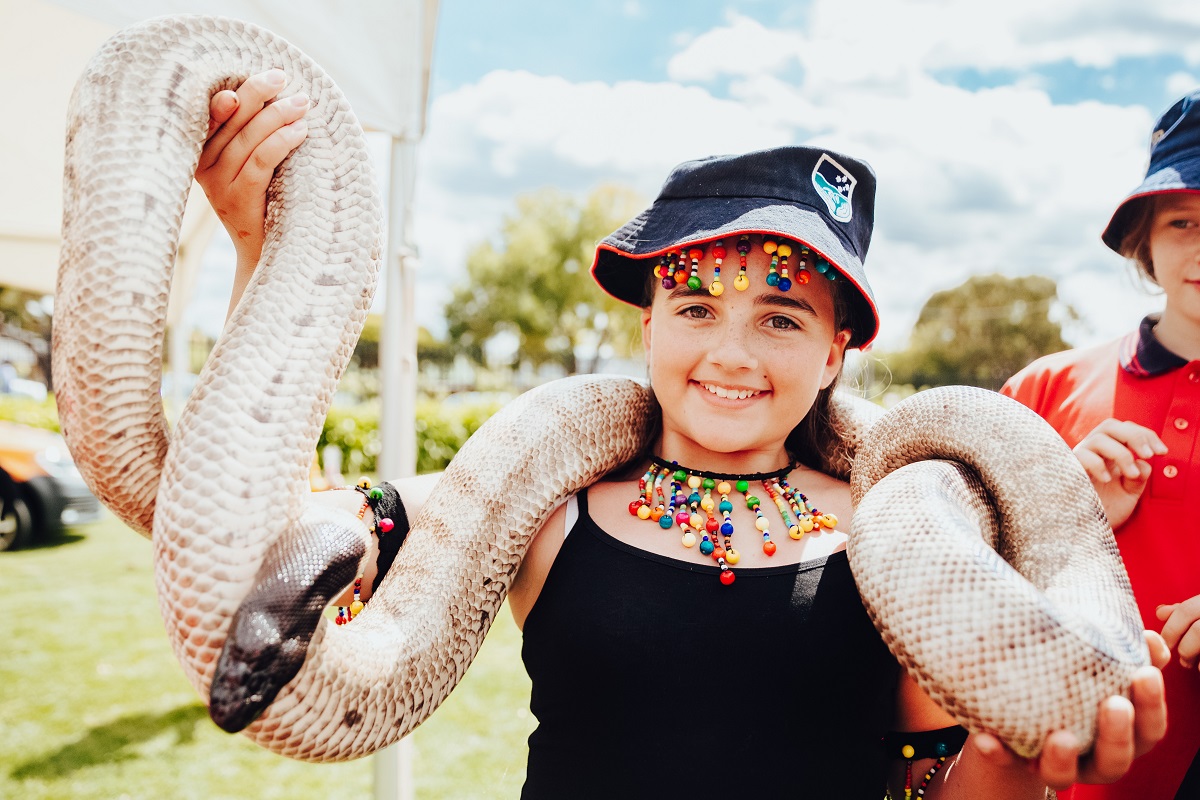
The main stage showcased the student body, with displays of cultural music, instruments and dance, along with original pieces developed by rising musical talent. Students and families were also treated to an Australian wildlife show where students were able to interact, up close and personal, with the animals.

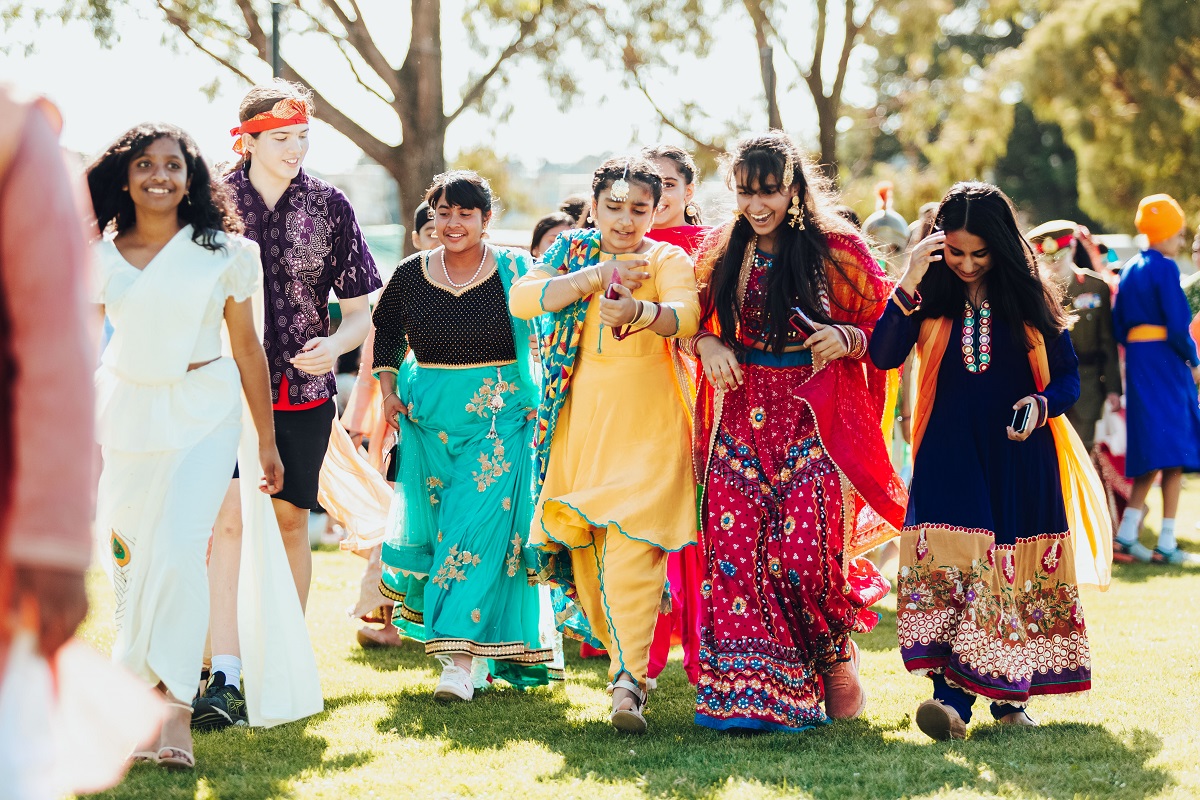
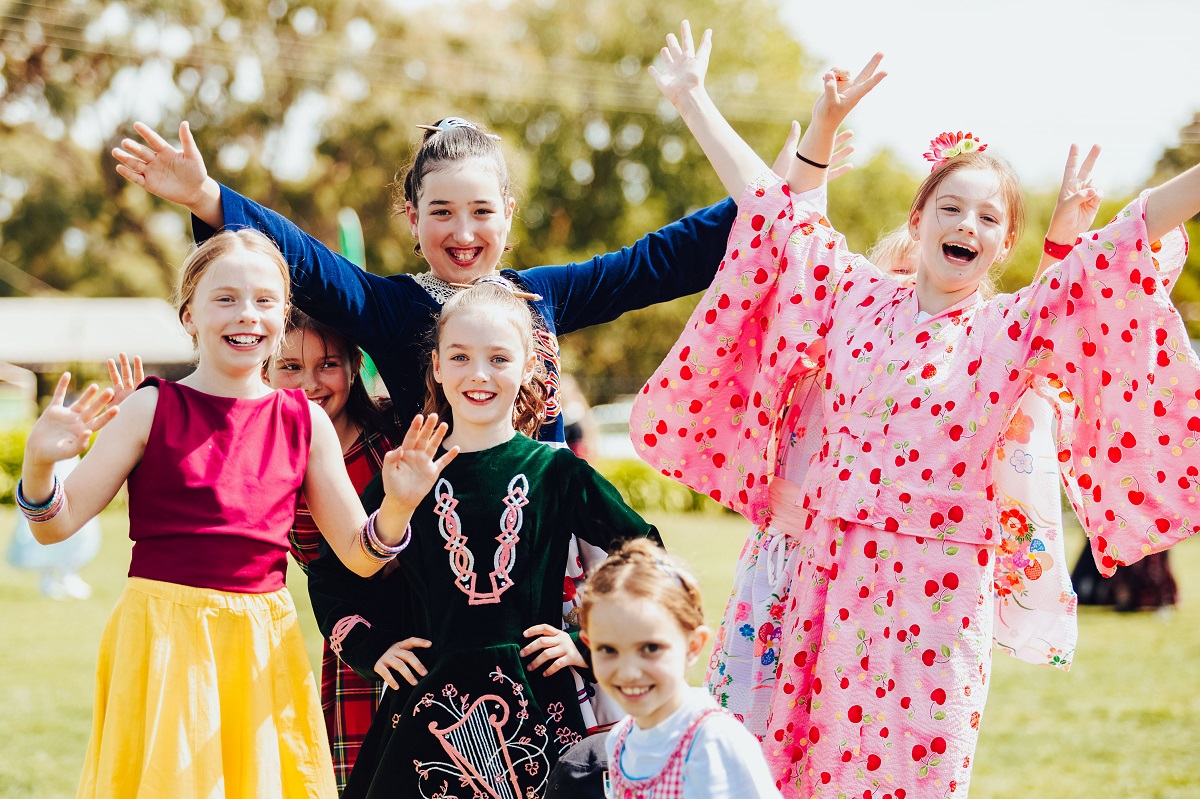
Students and families shared in cultural presentations of traditional items and a variety of games and activities such as Indian rice art, Japanese writing and origami, as well as Indian henna and Chinese dance.

  • MG 0631
  • MG 9192
  • MG 9229
  • MG 9475

Sports activities were played out with competitive spirit, while a robotics display showcased innovation – the robot wars were a hit.

A flash-mob dance was coordinated throughout the morning, culminating in a school-wide and community dance on the school’s oval – the finale capturing cultural diversity and joy.

The school is improving accessibility to its world-class education, with a train ride on the V-Line service and connecting shuttle buses to the school.

The school has partnered with coach service provider Seymour Coaches to offer transport connections. A new bus route has been established in Craigieburn, with additional routes in Gisborne and Whittlesea-Mernda, which extends as far south as Mernda train station.

Applications for The Kilmore International School are invited, with enrolments open for 2021-2023 across all year levels.

Numerous scholarship opportunities are also available, including the innovation scholarship initiative, open for applicants in years five to 10 in 2022. Applications close on April 9, 2021.

The scholarship focuses on creative thinking and presentation skills, awarded to recipients for the duration of their schooling at The Kilmore International School.

Further information can be found at www.kilmore.vic.edu.au.

House fire in Kilmore

The Country Fire Authority was called to a house fire on Kilmore’s Royal Parade at 9.57am this morning.

Six CFA vehicles, from Kilmore, Broadford, and Wallan brigades plus a District 12 support vehicle, attended the incident, adjacent to the Kilmore Public Cemetery, as well as two ambulances and three police vehicles.

All members of the household were accounted for and two people were treated by Ambulance Victoria after they were affected by smoke.

Kilmore Police Sergeant Wally Siebold, who was on scene, said the fire was contained to the garage, which appeared to be used for storage, but that the cause was unknown.

The fire was brought under control at 10.23am, before fire investigators were brought on scene to determine the cause.

COVID-19 vaccine rollout frustrates Mitchell Shire doctors

By Colin MacGillivray

MITCHELL Shire medical clinics have voiced their frustrations at the Federal Government’s COVID-19 vaccine rollout after being swamped with bookings from new patients.

Phase 1b of the rollout campaign began yesterday, with people aged 70 and above, health care workers, Aboriginal and Torres Strait Islander people aged 55 and above, and people with disabilities or underlying medical conditions all eligible.

Phase 1a, which was delivered to frontline health care workers and aged care residents and workers, was orchestrated in the Mitchell Shire region by Goulburn Valley [GV] Health in Shepparton, but phase 1b will be delivered directly by GP clinics under direction from the Federal Government.

.

Kilmore Medical Centre practice manager Ram Lakshmipathy said the clinic had been inundated with calls from new patients wanting to book a vaccination appointment.

“We’re really stretched … we’ve been thrown in the deep end,” he said.

“We’ve had massive demand. We’ve had people who are not regular patients at this clinic calling from far-off places.

“I was under the impression that a few other clinics in the region were coming on board as well. I thought all these clinics were coming on board and that we should jump on as well to help the local community.”

Mr Lakshmipathy said the deluge of calls had created administration headaches for clinic staff.

“It’s not just giving the jab and sending away the patients, we have to do a lot of administration work. That’s why it’s not attractive for the clinics, because there is nothing much in return. Everything costs, and it’s not worth it for them,” he said.

“The modules that the doctors are mandated to do for training are pretty stringent. It takes about five hours even though they say it’s a three-hour course.

“We’ve got limited doctors who are able to do that, and the support [from the government] comes in dribs and drabs.”

Seymour Medical Clinic practice manager Rebecca O’Loughlin said her clinic had been forced to prioritise existing patients as new patients tried to make bookings.

“We’ve been inundated with people who aren’t our patients, which is quite frustrating because we do ideally want people to see their regular GP. They have their health history on file,” she said.

“We’re not turning anyone away by any stretch of the imagination, but we are dealing with our patients first. We’re referring them back to their regular GPs, who eventually will have them in stock themselves if they’re taking part in the rollout.”

Nexus Primary Health chief executive Amanda Mullins said the group’s Wallan GP super clinic had signed up to be part of the vaccine rollout, but had not yet received shipments of the vaccine.

She said she was unsure why the clinic did not appear on the government’s list of participating clinics.

“We’ve received a signed contract, so the GP super clinic should be on there as a vaccination clinic. It has all been approved and we had a site visit from them,” she said.

“We haven’t received any vaccines yet, but as soon as we do we’re good to go. The staff have been trained.

“We’ve been getting a lot of calls, and we’ve been telling people that as soon as it’s up and running we’ll let them know. We are 100 per cent committed to assisting the community and supporting our local partners.”

Kilmore District Health chief executive David Naughton said the health service would continue to follow the direction of GV Health and was not included in phase 1b of the rollout.

“The GPs who have been asked to start delivering phase 1b and then 2a and 2b for the broader community are part of the Commonwealth process. GP clinics are run by the commonwealth, and it’s a commonwealth program. Our line of sight on this sits with the public health unit [at GV Health] in Shepparton,” he said.

“Our job will be to make sure our residents and our 1a staff have access to the vaccine, so we’re expecting that to come in the next little while.”

Mr Naughton said he understood the frustration of clinics in Mitchell Shire, but said the best thing people could do was remain calm.

“Despite the challenges – and it is a massive process to vaccinate tens of thousands of people – from a risk perspective, it’s low at the moment,” he said.

“There’s no known community transmission, there are good structures and processes in place and we’ve maintained a good standard of screening and testing, so we remain in a low-risk area.”