Home Blog Page 155

Ninety days to change a habit

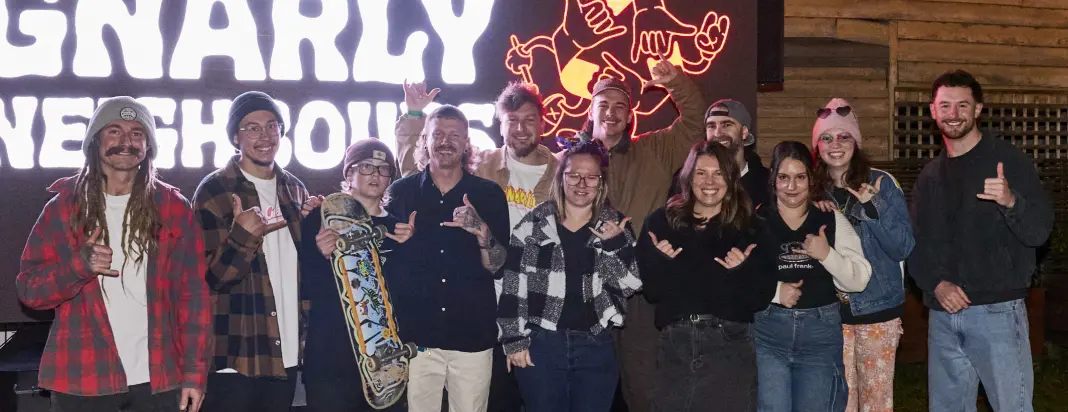
GNARLY90 is a bold new chapter for a local team of advocates making a difference for youth mental health as the idea that 90 days of action leads to lasting change.

The founder, Jayden Sheridan speaks openly about growing up without a positive role model and instability at home.

By 15, Jayden experienced the systematic problems that accompany the circumstances, he was on the path to addiction, homelessness, jail or worse.

Still a teenager, at 17 Jayden found out he was going to be a dad. He made a promise to change the narrative for his son Brooklyn and in doing so he became a changemaker for many disadvantaged youths in Seymour, which ranks in the top nine per cent of Australia’s most disadvantaged communities.

Jayden launched the Gnarly Neighbours Social Enterprise in August 2021 and in 2024 he was recognised as one of four finalists for the Young Australian of the Year Award.

“Gnarly Neighbours has shown what’s possible when we lead with lived experience and back young people early,” he said.

At Gnarly Neighbours Jayden voluntarily teaches young people how to use their skateboards because it is good for their self-esteem and Jayden said that fronting up to a fear fuels mental wellbeing.

“When we engage in a challenge a part of the brain [the right frontal cortex and the brainstem]is stimulated and if you don’t use it, it doesn’t grow.

“It is so important because that part of the brain sets you up to take on challenges later in life,” he said.

The social enterprise also fosters the belief in young people that they can develop entrepreneurial relationships, greater self-esteem and possibly a career in hospitality or printing and graphics as the social enterprises retail departments provide training and skill development.

Now 30, Jayden is determined to further his reach.

“Seymour is just the beginning as we are taking Gnarly Neighbours across the nation now with the GNARLY90,” he said.

“History is repeating itself and the only solutions to these systemic problems come after the fact.

“We need to stop waiting for the situation to turn to crisis before we act!

“Prevention, connection, and creativity should be the baseline not the backup plan.”

The fundraiser promotes community cohesion which will change the narrative for many people in Seymour and beyond. The program was launched online last week and every dollar raised will go towards creating safe places for young people.

“We know that it takes 90 days to shift a habit (or make a new one),” Jayden said.

“It’s about showing up, taking action, and building resilience, so no young person has to walk through life alone.”

A Broadford resident Jenn O’Connor has joined the movement by setting a goal to propagate plants from her own garden and she plans to hand out one each day while also encouraging everyone to support the GNARLY90.

Mrs O’Connor was a key player in growing a community garden at the Broadford Community Living and Learning Centre.

Happily married with two young children, Mrs O’Connor shared that her maternal family struggled to find good mental health support before it was too late and that gardening helps.

“In my past, as a child of four under a single parent, we were knocked around day care centres a lot and we were kicked out of most.

“Poor mental health responses and systems have led, in some parts to the death of my mother Heather. [She] died by suicide in 2002 after several failed attempts and hospitalisations.

“In 2016, my sister Stacey died from acute alcohol toxicity after her release from rehabilitation and an accidental drowning death of my brother Scott three years later.

“I was five months pregnant with my son at the time.

“Gardening is vital in how it lets me create and grow a safe haven where I can feel at peace and connected to the world around me.”

O’Connor’s original goal was to raise $90 for each family member she lost, but already, thanks to her community sponsors she has raised $1,716 as at September 1, 2025.

Jayden himself will be seeking sponsorship for his GNARLY90; a long distance run from Seymour to Brunswick.

In preparation he is planning the safest route and has engaged with a personal trainer.

“I hate running, I absolutely hate running,” he said.

“This challenge is going to test me, but I will crawl across the finish line on my hands and knees if I have to.”

Sponsors and supporters are welcome to cheer Jayden across the finished line afterwards at The Ramblin Man on Sunday, November 18.

The GNARLY90 team needs businesses to come on board as every dollar helps fund free programs for young people.

“We have had in-kind sponsorship from Hebron Films that helped us to package our vision into a video, and we have Bronze, Silver, Gold, and Platinum sponsorship options available,” said GNARLY90’s Marketing and PR Lead Jessica Ware.

“We encourage schools to host school-wide events such as wellbeing weeks and businesses can do this too.

“The more businesses that can sponsor us the better supported the cause will be.”

To learn more, drop in to Gnarly Neighbours at 12 Crawford Street in Seymour or visit gnarlyneighbours.com.au.

If you or anyone you know needs help: Kids Helpline – 1800 55 1800 Lifeline – 13 11 14 Beyond Blue – 1300 22 4636 Domestic Violence Helpline – 1800RESPECT.

To donate or register for the GNARLY90 scan QR Code on this page.

QR code replaced Gnarly 90 1068w WebRdy

Celebrating science week

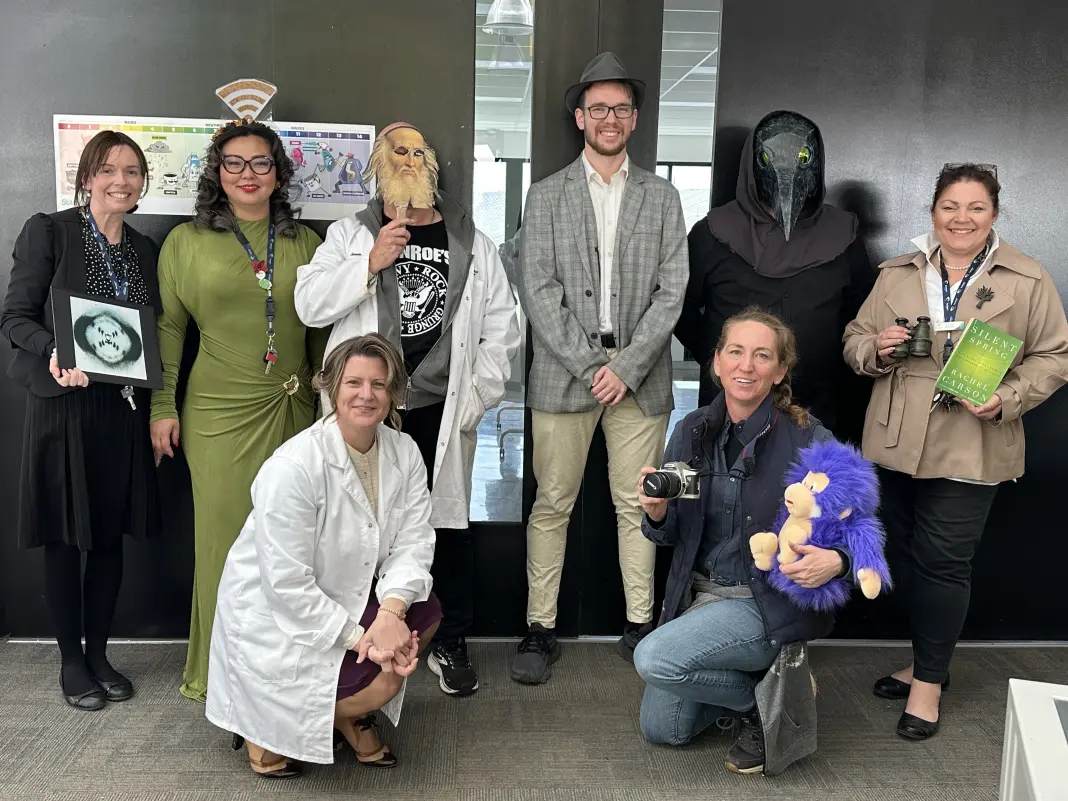
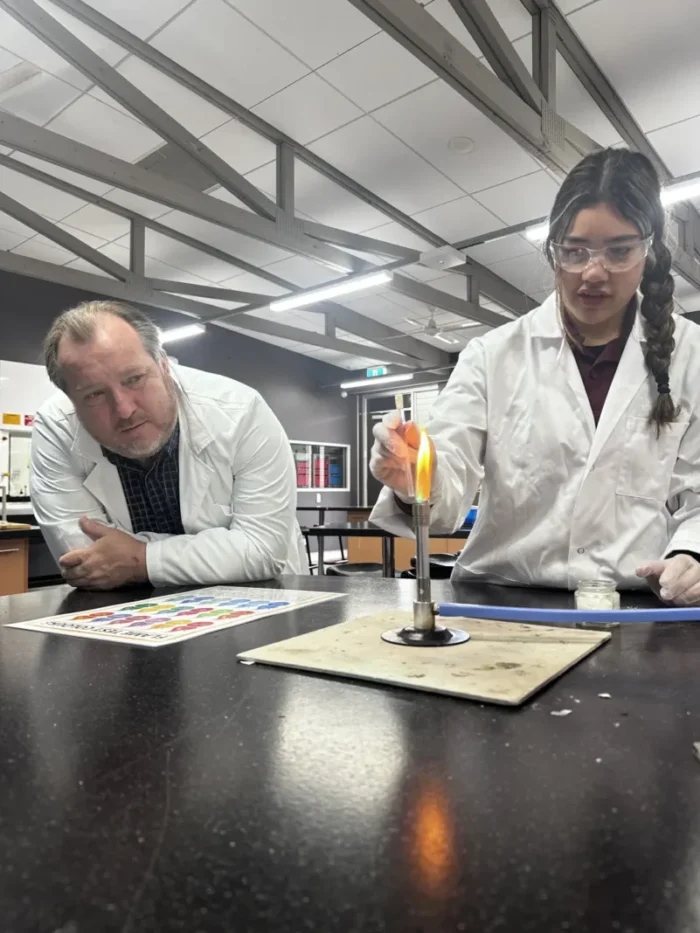
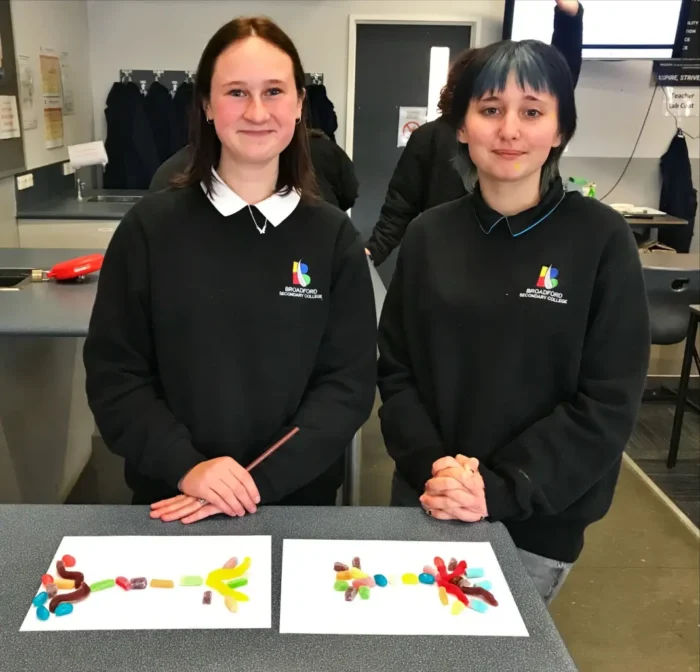
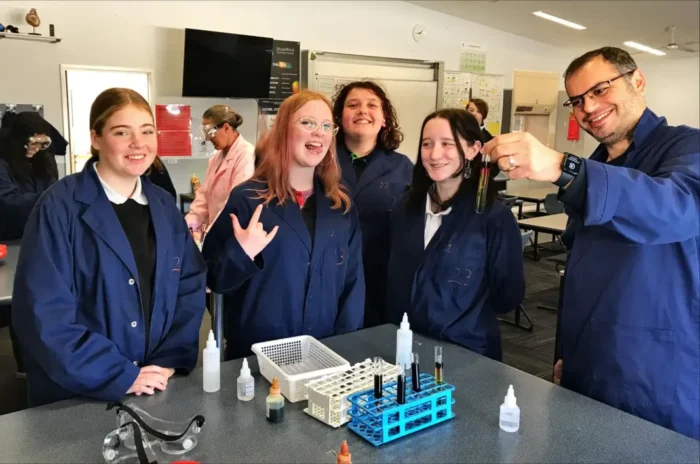
LOCAL schools embraced the wonders of science as part of National Science Week, with students diving into experiments, innovation challenges, and real-world problem solving.

Classrooms were buzzing with curiosity as teachers introduced engaging activities designed to spark interest in STEM (Science, Technology, Engineering and Mathematics).

Locally, Wallan Secondary College celebrated Science Week with a range of activities designed to spark curiosity and highlight the importance of science in everyday life. The highlight of the week was the school’s “Brain Break” morning tea last Thursday, giving staff and students a chance to connect over science-themed treats, games and experiments.

Science Week Rob Mitchell with Yr 9 Wallan Secondary School student Azariah Hapeta 1068w WebRdy

METHODS: Member for McEwen Rob Mitchell pictured with Wallan Secondary College Year 9 student Azariah Hapeta.

Broadford Secondary College already has a strong STEM infrastructure enabling students to explore topics such as sustainability, robotics, environmental science, and space exploration, while building critical thinking and teamwork skills.

National Science Week is Australia’s largest annual celebration of science, providing an opportunity for schools to showcase innovative teaching and inspire young people to see science as a part of everyday life. This year’s theme encouraged creativity and inquiry, with many Victorian schools hosting science fairs, guest speakers, and excursions to museums, research facilities, and local environmental sites.

Education leaders have praised the event for giving teachers valuable resources and lesson plans to bring science to life in the classroom. By making learning hands-on and relatable, the initiative aims to strengthen students’ confidence in exploring scientific ideas and applying them to real-world challenges.

In support of Science Week the State Government is boosting science education in Victorian primary schools with the release of new lesson plans designed to spark curiosity and build confidence in young learners.

The resources target all teachers across the state, providing ready-to-use lesson sequences, slide decks, practical experiments, and built-in assessments.

The lesson plans cover topics from plants and animals to the solar system, weather, sound, and properties of materials, all aligned with the revised Victorian Curriculum in science. Designed to promote consistency and quality across classrooms, each lesson includes clear learning goals, step-by-step explanations, and opportunities for students to practice new skills.

Teachers and schools can access the lesson plans immediately, and families are encouraged to explore National Science Week events across the state at scienceweek.net.au.

Beveridge growth plans stalled

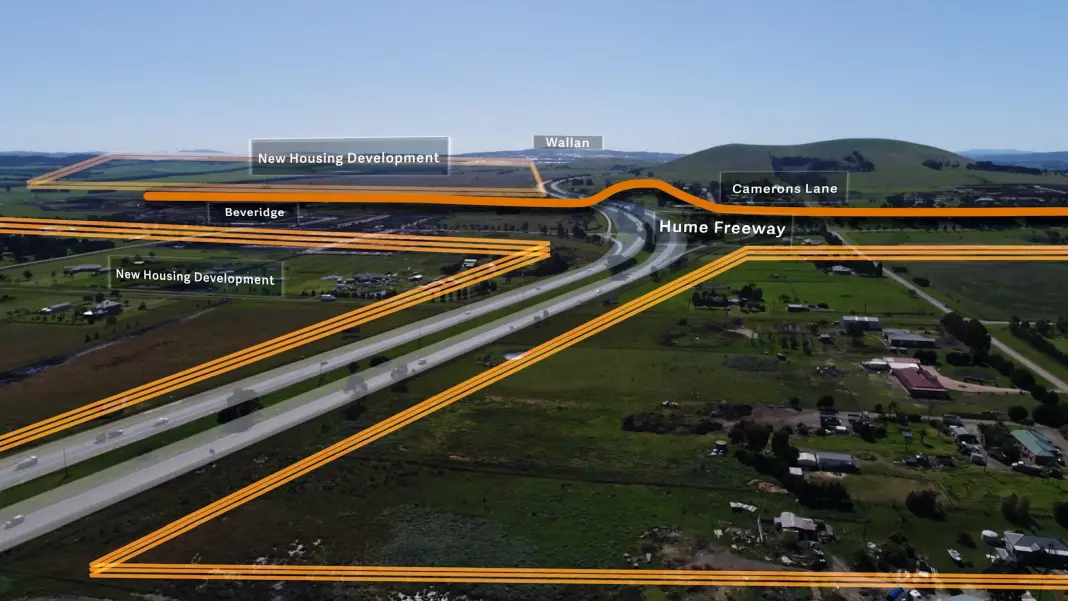
WHILE the green light has been given for the mega-suburb in Beveridge North West, a development that will eventually house around 47,000 residents in 15,000 homes, much of the growth hinges on a crucial freeway interchange that may not be operational until 2031.

Approved by the Victorian Government last week, the Beveridge North West Precinct Structure Plan includes four town centres, eight schools, nearly 80 hectares of parkland, and employment for up to 3000 people. The first stage will deliver about 2400 homes on 140 hectares.

Victorian Planning Minister Sonya Kilkenny said the project will help deliver more homes, more jobs and better services for one of Melbourne’s fastest-growing communities.

However, the bulk of the development can only proceed once the long-awaited Camerons Lane interchange is built on the Hume Freeway, providing direct access to the suburb and linking it to the Beveridge Intermodal Precinct.

In May 2024, the Federal Government committed $900 million to the interchange, calling it “a vital connection for residents and freight alike.” The Victorian Government has completed early planning, but with the project not expected to open until around 2031, many fear the community will be left waiting for key infrastructure.

Public transport is already strained. Beveridge has no train station and commuters must travel to either Wallan or Donnybrook to catch a train and rail upgrades, including reopening Beveridge Station, are still only on the drawing board.

Urban planning experts also point to other gaps—schools, health services and shops will need to be rolled out in step with housing growth to avoid creating under-serviced estates.

Adding to the challenge, the Hume Freeway has become notorious for its chronic traffic congestion due to rapid housing developments both to the south and north of Beveridge that have dramatically increased vehicle volumes on this stretch, turning what should be a smooth-flowing freeway into a frustrating “carpark” for daily commuters.

Peak hour gridlocks frequently extend for several kilometres, causing significant delays and adding to the stress and cost of travel for thousands of drivers.

As new housing continues to expand rapidly, the existing road infrastructure is struggling to keep pace with the surge in demand.

Residents and transport experts warn that unless substantial investments are made soon, particularly in key infrastructure like the Camerons Lane interchange and improved rail services, the freeway will remain gridlocked for years to come.

Adding to community unease is the State-approved quarry within the precinct, slated to operate until 2052. Residents have expressed concern about dust, noise, and its proximity to future housing, though the government insists it will be rehabilitated into public open space once closed.

Despite these challenges, Minister Kilkenny insists the project will transform the area.

“This is about building a complete community, with homes, jobs, and services all in one place,” she told one news outlet.

But with key road access years away, the boom may be built on a bottleneck.

Australia Day returns to awards title

MITCHELL Shire Council has voted to restore the words ‘Australia Day’ to its annual community awards, reversing a decision made two years ago to remove the national day from the title.

In 2023, the ‘Mitchell Shire Australia Day Community Awards’—traditionally presented on January 26—were renamed the ‘Mitchell Shire Community Awards’, a move many saw as a deliberate step away from explicitly linking the honours to Australia Day.

Councillor Riley Evans, who spearheaded the change, said recent events in capital cities had prompted him to push for the original name to be reinstated.

“With the support of my fellow councillors, as of Australia Day 2026, the ‘Mitchell Shire Australia Day Community Awards’ are back,” Cr Evans announced on social media.

The decision drew a wave of support from residents on social media.

“This is Australia, and we all should be grateful and thankful to live in such a beautiful and safe country,” wrote resident Mitchell Ord.

Other locals echoed the sentiment.

“No one should be mad about this,” wrote Ben Ruddick, while Robbie Fowler added, “Top stuff Riley.”

“Fantastic! Be proud to be Australian!” Paul Gaynor said.

Andy Thomas likened the decision to other council moves he approved of, such as quarry approvals. “Another move in the right direction. Prioritise the three Rs: Roads, Rubbish and Rates,” he said.

Cr Evans said the restored name would take effect for the January 26, 2026 awards ceremony.

New penalties for filming offences

CRIMINALS who share their disturbing crimes on social media will face extra jail time under new laws.

The Crimes Amendment (Performance Crime) Act 2025 outlaws the cowardly behaviour of ‘posting and boasting’ about certain crimes on social media and messaging apps.

The new offence targets those who publish content bragging about their involvement in serious crimes such as affray, burglary and robbery, car theft, carjacking, home invasions and violent disorder. 

This includes anyone encouraging or facilitating these crimes so there is no room to hide behind the ringleader.

These laws respond to the dangerous trend among young people chasing clout on TikTok and Snapchat about their heinous crimes which encourages copycat offending, re-traumatises victims and deeply disturbs the community. 

Anyone found guilty of a specified serious offence who has also posted and boasted about it will face up to two years’ jail time on top of any other penalty imposed for the substantive offence. 

Currently, posting and boasting can be considered as an aggravating factor in sentencing – but this new standalone offence will see offenders face tougher penalties, and sends a clear message that there’s no reward for crime.   

Attorney-General Sonya Kilkenny said it was designed to send a message to offenders that filming wasn’t on.

“Victorians are rightly disgusted by this heinous behaviour. These laws send a clear message to offenders that there are serious consequences for posting and boasting,” she said.

It was a message that was backed by Minister for Police Anthony Carbines.

“We’re silencing those boasting about their disgraceful crimes online and backing Victoria Police with more laws to keep cracking down on offenders,” he said.

Third parties who are not involved in the offending such as witnesses, bystanders and journalists will not be captured by the new offence. 

Fishing for a purpose

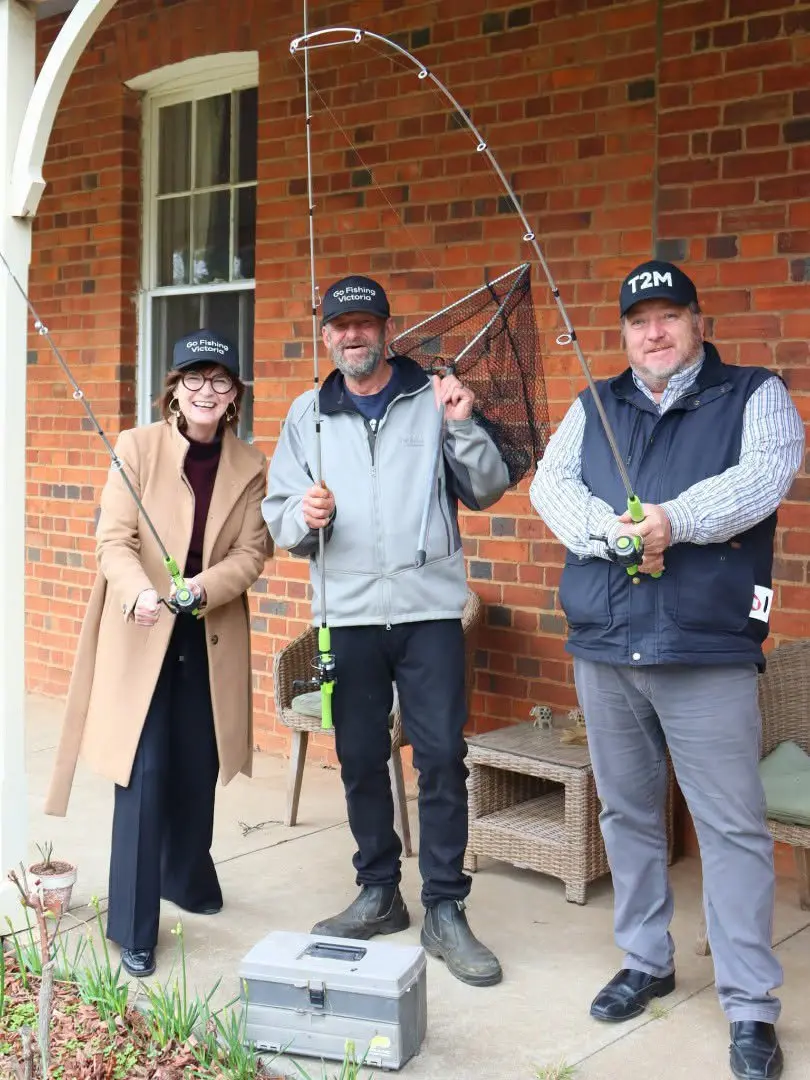
IN a bid to create the biggest fishing day ever, Jack Bamford speaks with a tone of genuine excitement about what he has in mind for September 6 at Kyneton’s Lauriston Reservoir.

All in the name of mental health, Mr Bamford says he wants to make the casual and calming mood of fishing one for people to talk about their problems and how they are dealing with it with strangers.

“The truth of the matter is, I’m not doing anything special,” he said.

“When I came up with the idea of fishing for mental health, I’ve always gone to the bush with the kookaburras and fishing and I took it for granted, and people take it for granted.

“But now it’s all laptops, phones and computers, and it’s not about grabbing a fishing rod and going over to chat to a total stranger.

“A problem shared is a problem halved, and that’s what I’m about, having a barbecue, having some music as well.”

Mr Bamford’s Fishing for Mental Health day will come at a small cost of $10 per head, which will include rods, bait, drinks and a barbecue, as well as live music from local bands Redgum and Lost Souls and mystery prizes on the day.

The 2024 edition was a success, but Mr Bamford is keen for more people to attend, particularly around the Mitchell Shire area, with the likes of Member for McEwen Rob Mitchell, Victorian Minister for Health Mary-Anne Thomas and Macedon Ranges Shire Council Mayor Dom Bonanno also attending.

“Last year, I averaged between 60 to 110 people for fishing trips. My fewest was 28 and that was because I did it with Victoria Police on a Wednesday. This time I am expecting a couple of hundred people, but it doesn’t matter if I get two people. If the message gets out to one, I have done my job,” he said.

“I’m excited. Bendigo Bank has been great from the start. I’ll be using their marquees and flags. Their small change grants have been great, and they’ve gone above the call of duty, because they believe Mental Health for Fishing is a winner.

“The Neighbourhood House Romsey and Lancefield are right behind me, as well as many small businesses such as Aussie Disposals in Sunbury, Romsey Hair Hub, IGA are donating the meat and so are Country Gourmet Meats in Gisborne. There’s so much support, it’s incredible.

“I have prizes for the biggest fish and smallest fish, which will win a new fishing rod; a raffle which is donated by Aussie Disposals in Sunbury, who is part of it. That will include a new rechargeable lantern and a fishing rod as well. We’ll also have the joke of the day, which will also win a new fishing rod, and we’ll let the crowd judge it.”

From Wallan to the Hinterland

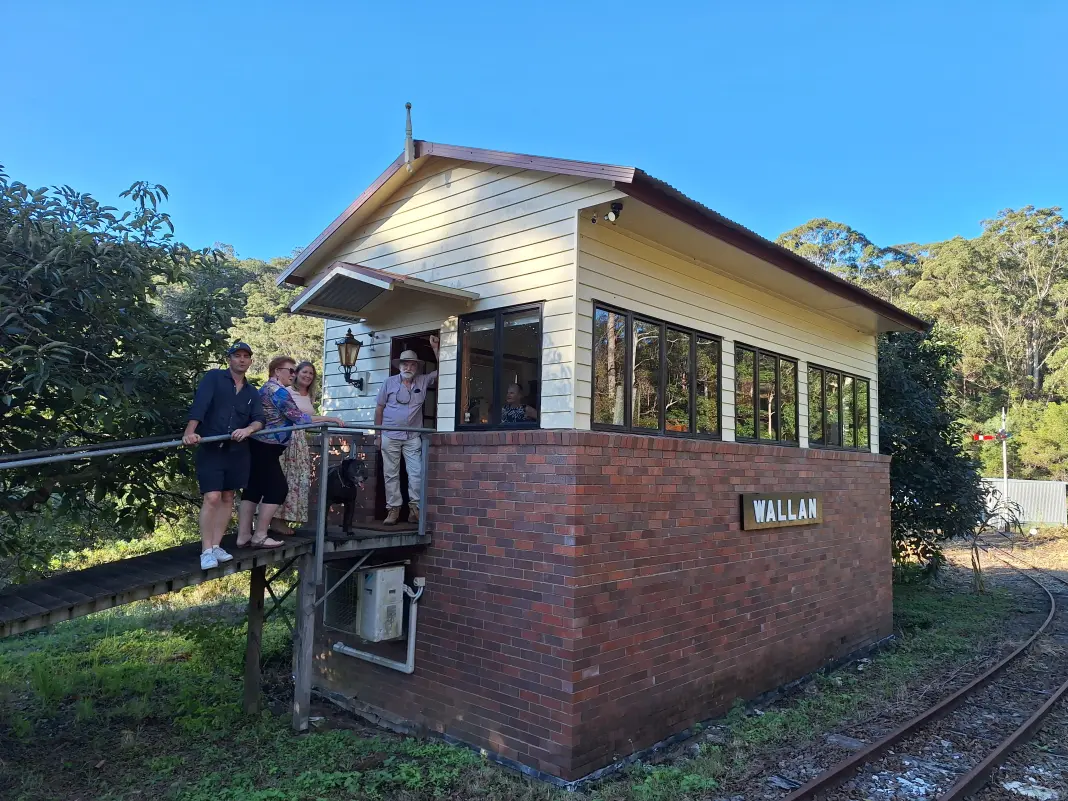
BY the time the last signalman closed the door on Wallan’s timber signal box, the building had already witnessed decades of railway history. Its levers once commanded a busy junction where the standard gauge mainline from Sydney met the broad-gauge route to Melbourne, directing trains through passing lanes and into sidings with clockwork precision.

In those days, the signal box was the nerve centre of Wallan’s rail traffic. The signalman’s job was a ballet of timing and muscle, pulling heavy steel levers in sequence, eyes darting between the track diagram on the wall and the rumbling trains outside. Freight and passenger services alike depended on the accuracy of those movements.

When the Victorian Railways decided the old box had reached the end of its working life, its fate could easily have been the scrapyard. Instead, in 1995, it found an unlikely rescue team in Russell and Gai Savage, a couple of Queensland train enthusiasts with a property in the forested hinterland behind Noosa.

train2 1068w WebRdy 1

The Savages dismantled the building and transported it north, where it spent four years in careful restoration before being reassembled in 2001. Today, the signal box is more than a museum piece, it’s an active part of the Savages’ own narrow-gauge railway, controlling the points and sidings much as it did on the busy mainline.

The couple’s railway, built with the help of Russell’s two brothers in the 1980s, is a feat of persistence. The narrow-gauge track, similar to those used by Queensland cane trains, threads its way through steep rainforest and up to a scenic lookout. It took more than two decades to complete, and maintaining it is an ongoing labour of love, replacing sleepers, checking rails, and keeping the line safe for the two-tonne locomotive that calls it home.

That locomotive, powered by a classic Holden Red Motor, is no toy. With a parking brake, hand throttles, manual braking, and forward/reverse controls, it’s every bit a working train, albeit on a smaller scale.

Beyond the engineering, the property is a haven for wildlife, from pythons basking near the track to goannas lumbering across the forest floor. It borders a national park, with the Savages’ land forming a seamless continuation of the bushland.

For Russell and Gai, the railway and the signal box are more than relics of the past – they are living, working reminders of Australia’s rail heritage. In the Wallan Signal Box’s levers, timber, and glass panes, the story of Wallan’s old railway history still clicks into place, one pull at a time.

Firearms seized in Tyaak

MEMBERS of the VIPER Taskforce yesterday seized eight firearms including shotguns, rifles and a handgun during a Firearm Prohibition Order (FPO) compliance search in Tyaak.

The 60-year-old man had failed to notify police of his change of address, a requirement for someone subject to an FPO.

The two searches were executed at residential addresses believed to be linked to the man in Tyaak and Forest Hill.

Police will allege the man was found in possession of a pump action shotgun, a handgun and over 100 rounds of ammunition, all of which were seized.

He is expected to be charged with firearms offences.

Investigators also seized two 12 gauge shotguns, three rifles and an air rifle which belong to the registered firearm owner living at the address.

The six firearms were lawfully obtained and stored but under Section 112 of the Firearms Act. It is an offence for the subject of a Firearms Prohibition Order to reside or remain at a location where firearms are present.

The six firearms will be stored by police until a suitable alternative location can be arranged.

Anyone with information on illicit firearm activity is urged to contact Crime Stoppers on 1800 333 000 or submit a confidential report at www.crimestoppersvic.com.au.

Pet of the week

This weeks VIP is dear in the hearts of Everyone who knew him.

Mac our beautiful Border Collie who sadly died on Easter Saturday aged 11


Mac, a beautiful Border Collie, sadly died on Easter Saturday, aged 11.
He loved to play ball and to go for long walks and car trips around Wallan.

Mac is sadly missed.

Thank you Jennifer and Gary for sharing your photo of Mac.

Do you own a Very Important Pet?

Email us their best picture to news@ncreview.com.au with their name, age and town or hand in a photo to our reception staff at 3/87 Sydney Street, Kilmore.

Just my opinion with Ian Blyth: August 19, 2025

WORK from home (WFH) in Victoria didn’t arrive by careful planning or thoughtful workplace reform. It was born in crisis, rolled out under Dan Andrews during the long COVID lockdowns when the CBD became a ghost town and kitchen tables were suddenly national infrastructure.

What started as an emergency measure quickly became a cultural shift and now, under Premier Jacinta Allan, it’s being locked in by law as if it were a flawless success story.

The timeline says it all. Back in 2020–2021, Dan Andrews’ government mandates WFH for all but essential workers during the world’s longest lockdowns. Office towers stand empty, and the CBD economy withers.

This lasted until 2022 saw restrictions lift, but many workers and employers keep WFH arrangements because they’re convenient, even as city traders beg for weekday crowds to return.

Then in 2023 the Andrews Government quietly accepts the “new normal,” offering little in the way of CBD revival strategies.

2024–2025 saw Jacinta Allan take over and double down, moving to legislate WFH as a right for at least two days a week, making temporary pandemic habits permanent policy.

The Allan Government’s latest announcement isn’t about if WFH should be a right, that’s already decided. Instead, they’re “consulting” on how to enshrine it in legislation, as if making remote work a legal entitlement will somehow be a neat fix for all sectors.

This is not leadership; it’s a continuation of Dan Andrews’ habit of imposing blanket rules that don’t account for nuance, then expecting everyone to adapt around them.

The truth is, WFH has not been a universal triumph. Productivity in some industries has slipped. Collaboration has withered as “teamwork” becomes a string of glitchy video calls.

Training young staff is harder when the only interaction is a delayed email. And while families save on commuting costs, CBD businesses, cafés, bars, lunch spots and retail have been gutted by the disappearance of weekday crowds. Entire streets in Melbourne’s city centre now feel like it’s Sunday afternoon… every day.

Yet the government is charging ahead, talking up the “economic benefits” of remote work while ignoring the boarded-up shopfronts that tell a very different story. It’s a vision of economic health measured not by bustling high streets, but by survey responses on Engage Victoria.

If Jacinta Allan and her Minister for Industrial Relations, Jaclyn Symes, were serious about balancing the needs of workers and the survival of the above mentioned businesses, they would leave WFH arrangements where they belong, in the hands of employers and employees, negotiated according to the realities of each job. Mandating it by law risks baking in the flaws we’ve already seen, and ensuring the mistakes made under Dan Andrews remain embedded in Victoria’s economy for years to come.

Yes, remote work has benefits. But it’s not a one-size-fits-all solution, and it shouldn’t be treated like one. The government should step back from the legislative sledgehammer and trust workplaces to find the right balance, without condemning the city to permanent half-capacity and calling it progress.

But then, that’s just my opinion.