

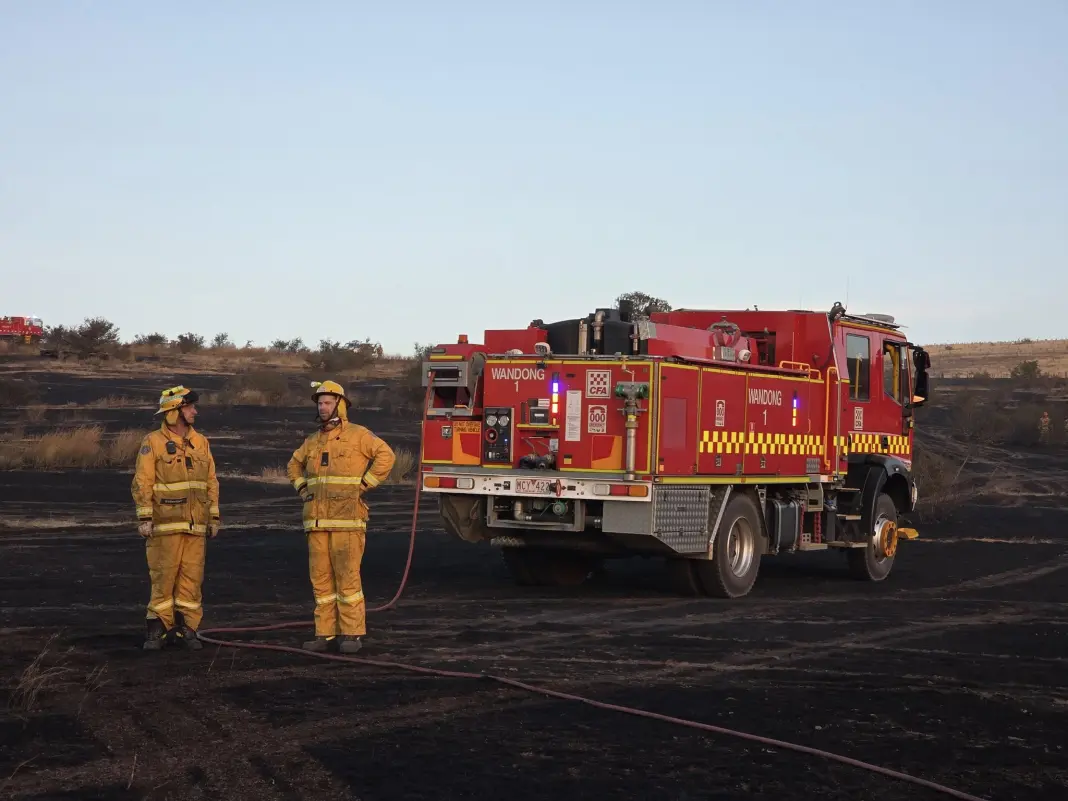



A SIGNIFICANT grass fire broke out last week at Clarkefield, near the southern edge of Mitchell Shire, burning through hundreds of hectares of grassland and sparking emergency warnings for communities across the region.
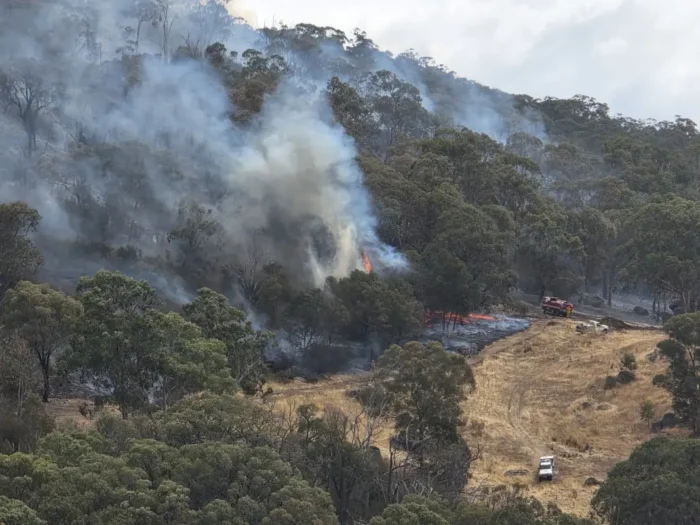
The fire, driven by hot, dry and gusty conditions common to Victoria’s 2025-26 fire season, prompted a major response from the Country Fire Authority (CFA) and other emergency services.
By mid-afternoon, the blaze had scorched about 400 hectares as it raced through the green-wedge areas and threatened residential communities in Beveridge, Darraweit Guim and surrounding localities.
As conditions deteriorated, authorities issued emergency warnings telling residents it was “too late to leave” and urging people to take shelter indoors immediately, particularly in Beveridge, Bolinda, Clarkefield and nearby areas.
CFA crews, backed by at least 88 emergency vehicles and aerial support, worked through the afternoon to secure containment lines and protect properties. A fortunate wind change and rainfall helped crews gain the upper hand, with the State Control Centre reporting the fire “under control” by Thursday morning.
Local CFA brigades were among the first responders. Volunteers battled shifting winds, advancing flames, and rugged terrain throughout the incident, coordinating closely with regional command to limit further spread. The volume of resources committed, including aircraft water bombers, underscored the seriousness of the threat as temperatures and fuel loads remained high.
Despite the Clarkefield blaze being brought under control, fire danger across much of the district remains elevated, with Total Fire Bans declared in recent days due to forecast hot, dry and windy conditions that elevate the risk of new outbreaks.
Statewide, authorities have repeatedly reminded communities that no fires can be lit or left alight on Total Fire Ban days, a precaution aimed at reducing the chance of further ignitions and helping firefighters prioritise existing threats.
The Clarkefield incident follows a devastating period of widespread fires across the region in early January, including the Longwood fire north of Seymour, which burned tens of thousands of hectares and forced lengthy emergency warnings for central and north-eastern communities.
Although the official State of Disaster declaration covering Mitchell Shire and other municipal areas was revoked in early February, recovery efforts and monitoring continue, with local brigades maintaining heightened readiness as the season progresses.
Emergency services remain on high alert across Mitchell Shire as bushfire activity continues to impact parts of the region, with the most significant current incident burning near Trawool.
The Trawool fire, which ignited in steep terrain near the Goulburn Valley Highway and the edge of the Tallarook State Forest, has burned more than 140 hectares and at one stage threatened around 30 homes, prompting emergency warnings for residents in surrounding districts.
Incident Controller Jamie Hansen from the CFA said crews have responded robustly and are continuing containment efforts as conditions evolve.
“We have still got an active fire edge right around the perimeter. Crews have been working overnight and will continue throughout the next few days establishing containment lines. We were able to save all those homes in the area, all we sustained was some damage to one shed,” Mr Hansen said.
“As we’ve been saying for a while now, the state is like a tinderbox, it’s just ready to go and this fire that travelled very quickly through this bush yesterday really proved that,” he added.
Federal Member for McEwen Rob Mitchell has also weighed in on the situation and the broader impact of the season.
“Our hearts are with those who have faced the threat of fire this season. The work of our volunteers and emergency crews has been nothing short of extraordinary, and we must continue supporting them, our communities, and families affected by these dangerous conditions,” Mr Mitchell said.
Over the next month bushfire risk will remain elevated on hot, dry and windy days, these conditions help fires start and spread quickly.
Below-average rainfall and above-average temperatures increase the likelihood that fuels (grass, scrub and forest litter) will dry out quickly and be flammable.
Fire danger ratings will fluctuate daily: on cooler, wetter days risk may be lower, but sharp spikes to high/extreme fire danger are possible — especially before or after heatwaves or dry wind events.

