




THERE exists an organisation called Council Watch. It is a team of volunteers with a keen interest and history in local government. Its focus is to advocate on behalf of all residents and ratepayers in Victoria.
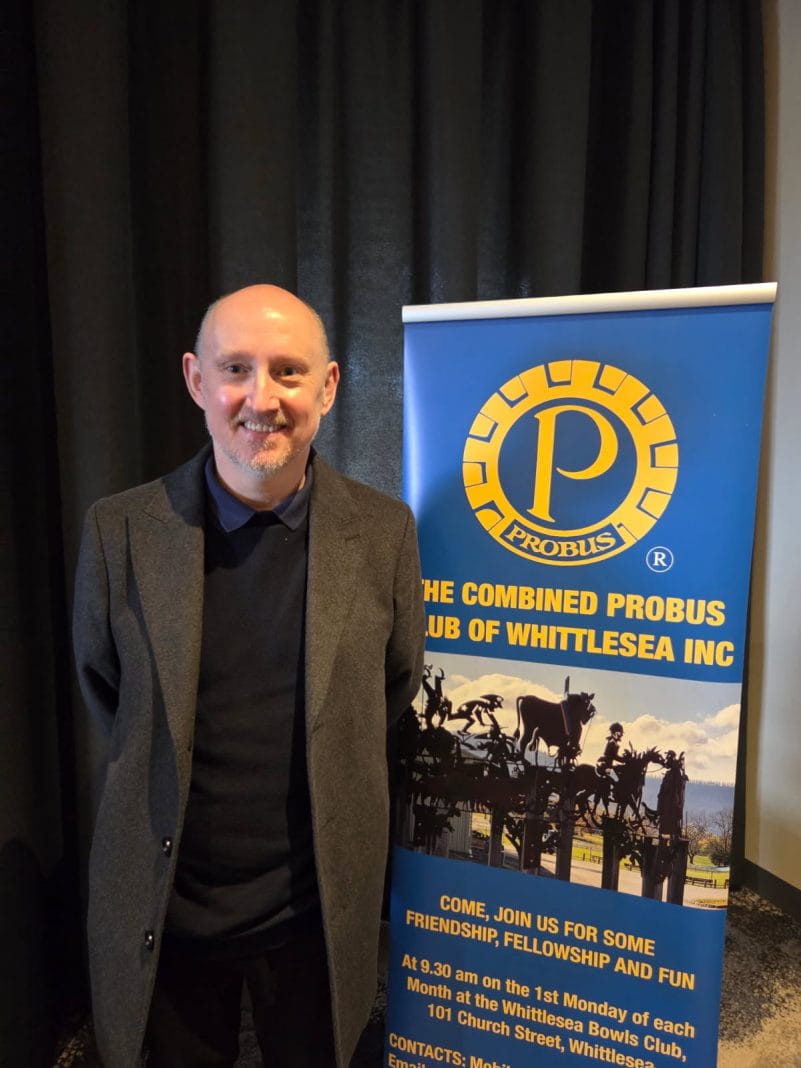
Dean Hurlston, president of Council Watch (CW) was the guest presenter at the September meeting of the Combined Probus Club of Whittlesea. He explained that CW exists to help people know their rights and to challenge council where they have acted inappropriately.
Good and bad arose from the Covid restrictions as most councils have continued to conduct meetings online. The upside is that CW can monitor meetings more closely and other meetings happening at the same time. The downside is that residents have also adopted viewing online and have lost the personal touch.
Somewhat reminiscent of a well-known international president, the chief executive officer (CEO) of local councils, except for Queensland, has absolute authority. Elected councillors have to accept decisions made by the CEO based on staff’s recommendations. In Victoria there are 79 unelected CEO positions which has a payroll bordering on $24 million. Many are only part time involvement as there is often no defined position description, so a second job and salary is possible.
Councils can make absolute decisions on new buildings or other infrastructure without a business case. All funding comes from collected rates and other imposts upon residents which are aggravated by the Government reducing funding and imposing levies.
The oft-banded “rates, roads and rubbish” came forth in discussion particularly in the topical issue of pot-holes. Mr Hurlston advised that although 85 per cent of Victorian roads are vested in local councils, less than five per cent of revenue is allocated to road maintenance. Councillors enter the profession often bright eyed and bushy tailed but soon find that bureaucrats hold the whip-hand.
Customer satisfaction with local council was addressed. Of a large sample of ratepayers these were some findings – 51 per cent said “no value for money”; 53 per cent could not afford rates; 40 per cent of revenue came from ancillary charges; 44 per cent said spending on staff too great; 70 per cent do not trust councillors and 94 per cent said councillors do not reflect community wishes.
Considerations on the above statistics are advanced. A neighbouring council to Whittlesea has $45 million in unpaid rates. Waste collection used to be in general rates but has recently become a special impost to overcome the rate cap. No concessions are afforded to pensioners or other welfare recipients. Council Facebook sites generally do not cover ratepayer’s need but are “look at me”.
As if taking on local government is not difficult enough, CW has a continual bombardment by groups that object to its existence. So much so that it has removed the names of the committee except for Dean and one other from its web site. Opposing organisations have targeted and harassed the committee (especially women) online.
Mr Hurlston and his associates have an unenviable task when taking on City Hall but they seem to have more runs on the board than the opposition which has unbelievable powers with little oversight, and more players from which to select.
Dean’s allocated time was insufficient to cover other issues, but the glossary gave members many things to consider. His presentation was acknowledged with applause and a small token of appreciation.


